 Civilnet
By Siranush Adamyan
Armenia’s parliament has archived the long-awaited report on the 2020 Nagorno-Karabakh war, classifying it as “top secret.” The decision means that even members of parliament can access it only with special security clearance. This non-transparent handling of a crucial national document has raised questions about accountability, democratic oversight, and lessons unlearned from one of Armenia’s greatest military failures.
Eduard Arakelyan, military expert at the Yerevan-based Regional Center for Democracy and Security, argues that Armenia’s approach starkly contrasts with international democratic practice, where governments facing military defeat often launch open, independent investigations to identify systemic failures, restore public confidence, and reform defense institutions.
“Secrecy may look safe politically,” Arakelyan says, “but in the long run it is strategically dangerous. Armies and states do not reform by hiding their mistakes. They reform by acknowledging them.”
International experience shows transparency strengthens the state
Israel has developed a tradition of publicly reassessing its military failures. The Agranat Commission (1973) investigated the Yom Kippur War, exposing major intelligence errors and prompting resignations among top commanders. Decades later, the Winograd Commission (2006) examined mismanagement during the Lebanon War, producing a detailed public report that triggered resignations of senior officials, including the defense minister and chief of staff.
“These commissions were not viewed as displays of weakness,” Arakelyan noted. “They became mechanisms of institutional renewal. Public accountability strengthened both the military and society’s trust.”
The United Kingdom followed a similar path after the Iraq War. A 12-volume report, published in 2016, concluded that the decision to invade Iraq rested on flawed intelligence and inadequate planning. Though former Prime Minister Tony Blair faced no legal consequences, the inquiry reshaped British doctrine on intelligence and civil oversight.
Georgia’s post-2008 war experience offers a partial contrast. While its report blamed Russia and avoided self-criticism, the very act of publishing it ensured minimal transparency and allowed public debate.
By contrast, Armenia’s parliamentary commission, created in 2022 by the ruling Civil Contract party, conducted its three-year investigation behind closed doors and delivered a report now locked in the archives. Parliamentary speaker Alen Simonyan’s office confirmed that only MPs with special clearance can view it, while no sections will be released to the public.
Prime Minister Nikol Pashinyan had earlier promised “continuous public communication” about the war and the peace process. Yet no such communication followed. Previously, commission chair Andranik Kocharyan had repeatedly assured the media that the report would be debated in parliament and partially published.
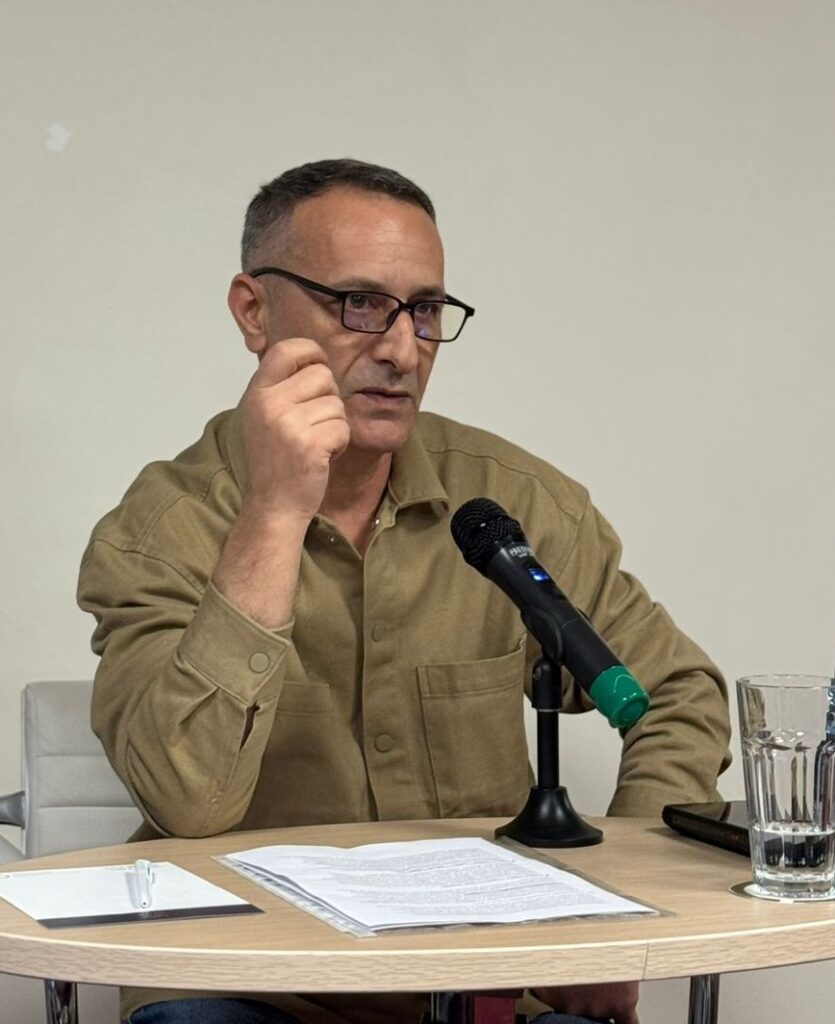
According to Arakelyan, the secrecy likely reflects political fear: “When officials hide the results, it usually means the findings are politically inconvenient. But shielding reputations comes at the cost of institutional learning.”
International experience shows that transparency in post-conflict reviews is not a threat to national security but a prerequisite for reform. “If Israel could publish the findings of the Yom Kippur and Lebanon wars—when its security risks were far greater—Armenia can do so as well,” Arakelyan concludes.
By shelving the report, Armenia risks turning a moment of reckoning into another episode of opacity. The decision may protect today’s leaders from short-term embarrassment, but it also weakens public trust, delays defense reform, and leaves the lessons of the 2020 war unlearned.
In democracies, Arakelyan reminds, “truth is not an enemy of the state—it is the foundation of its resilience.”

 Stories