 Civilnet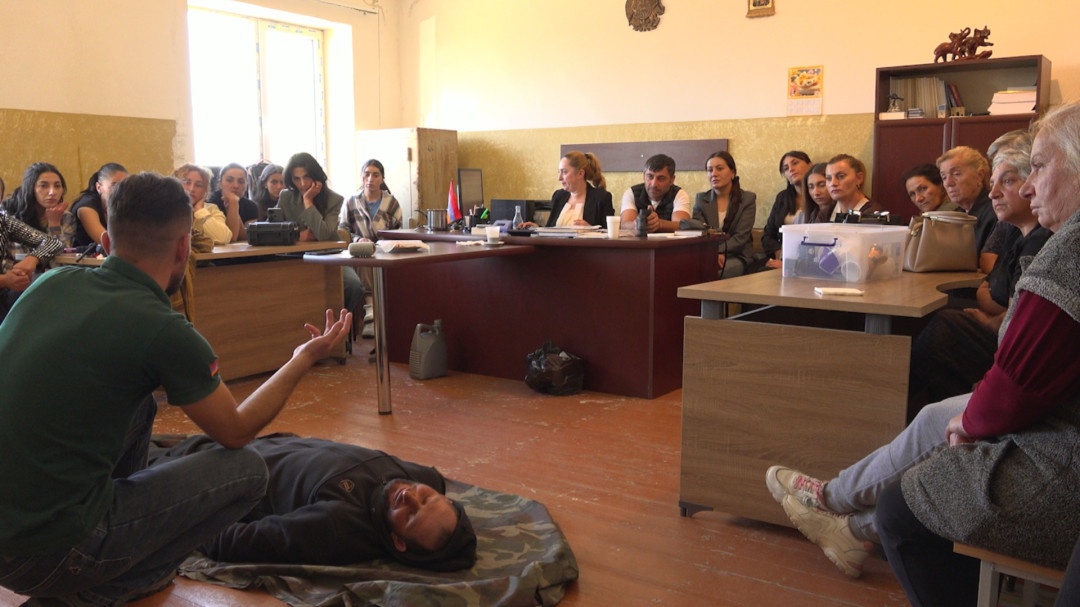
By Martina Sanna
The school is easy to spot. It is the biggest building nearby, surrounded just by a handful of houses and a small playground for the kids. But for the people of Tretuk, a village in east Armenia's Ghegarkunik region, this sunny October morning does not mark the beginning of a regular school day. Today they are getting their diplomas after attending a three-day civil first aid training in the context of conflict on how to treat injuries, especially in case of severe bleeding. The need for such training in the area is easily explained. The one-hundred and fifty residents of Tretuk live less than 10 kilometers away from the Azerbaijani border.
The training is organized by Armenia Peace Initiative (API). They work in bordering villages where the need for their on-the-field activities is most urgent. The French non-profit organization, active since 2020 in implementing transformative and sustainable projects in Armenia, had to put its focus on emergency actions especially after the 44-day war in Artsakh in 2020.
“After the war, we started selecting the villages that fell under the definition of Priority 1 (P1), located on a distance from zero up to 10 kilometers from the border,” says Patrick Aprile, a retired military from the French Army now acting as Civil Security manager for Armenia Peace Initiative.
Aprile coordinates the various first aid training in the area, together with a specialized trainer and an interpreter. Before coming to Ghegarkunik province, Aprile’s team operated in the Tavush region, in the North-west of Armenia. They visited more than 30 villages, and trained around 600 people on how to treat injuries in case of attack.
“When Azerbaijan attacked Armenia in September 2022, both in Ghegarkunik and in Syunik provinces, there were a lot of human casualties in the area but also a lot of injured people. Our training aims to make villagers able to avoid some of the casualties due to blood loss,” Aprile tells CivilNet.
In Tretuk, around twenty people attended the training, or 13% of the total population. The Azerbaijani military outpost is just above their homes, as they rush to class for their first-aid session. When the trainer enters the room, his audience is composed almost exclusively of women and teens.
“We noticed that also in Tavush, we always have an average of more than 80% of women attending our training,” says Aprile. “We found them particularly motivated and consistent in their participation.”
When asked about the major risks that people in the village face, Aprile mentions safety. “As is the case for any human establishment in the proximity of the border, they cannot consider themselves safe from new strikes from Azerbaijan.”
The newly elected mayor of Tretuk, 59-year-old math teacher Maksim Galstyan, confirmed that the population experienced some incidents, especially in 2022. The village was not damaged but the remains of explosive devices can still be found in the fields around the area.
“ I personally found an unexploded device there,” he confirmed to Civilnet. “We had it defused thanks to the competent authorities. But the area is wide, so it is possible that there are more.”
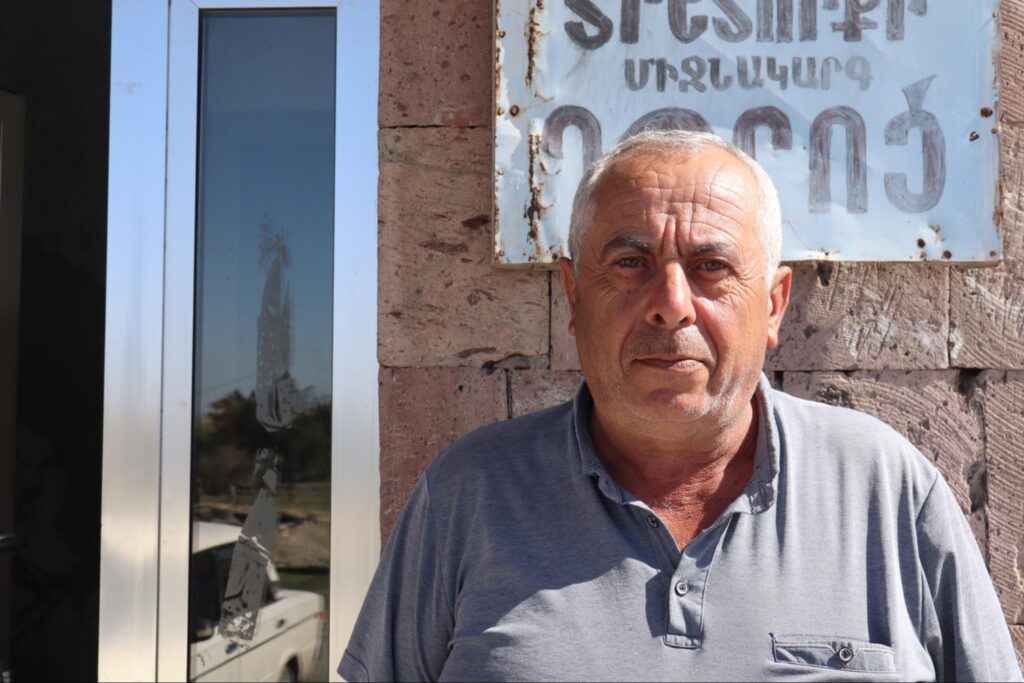
Galstyan also remembered the clashes between Azerbaijan and Armenia in 2022, when periodic violations of the 2020 ceasefire escalated in a two-day conflict resulting in the evacuation of more than 2700 civilians due to Azerbaijan’s attacks inside Armenian territory.
“It was on the night of 13 September 2022 around midnight,” he said. “I heard the explosions and I got out of my house. The whole sky was illuminated by the shooting coming from Sotk direction, passing directly above Tretuk. Everybody was panicking, we had to temporarily evacuate the women and the children. Three days later, the situation was more stable so we could let them come back” he remembers.
Still, not all the women were evacuated from the village. Viktoria Shorkova, one of the participants of the first-aid training, was among those who chose to stay.
She first arrived in Tretuk in January 1989, after leaving her native town of Sumgait in Azerbaijan. During the First Karabakh War in February 1988, the town became the site of a pogrom, one of the wider massacres of Armenian communities living in what at the time was the Azerbaijani Soviet Socialist Republic. Viktoria was not even fourteen years old when her family had to flee Soumgait and establish themselves in Tretuk.
“My father was Russian, but my mother was Armenian, so it was safer for us to leave,” said Shorkova.“I remember a specific day, it all started in the building next to ours. A group of 40-50 armed Azerbaijani invaded the building from the ground floor, people tried to run away but they closed the entrances. We were lucky to escape. Our Azerbaijani neighbours guarded our door and made sure they were not coming for us.”
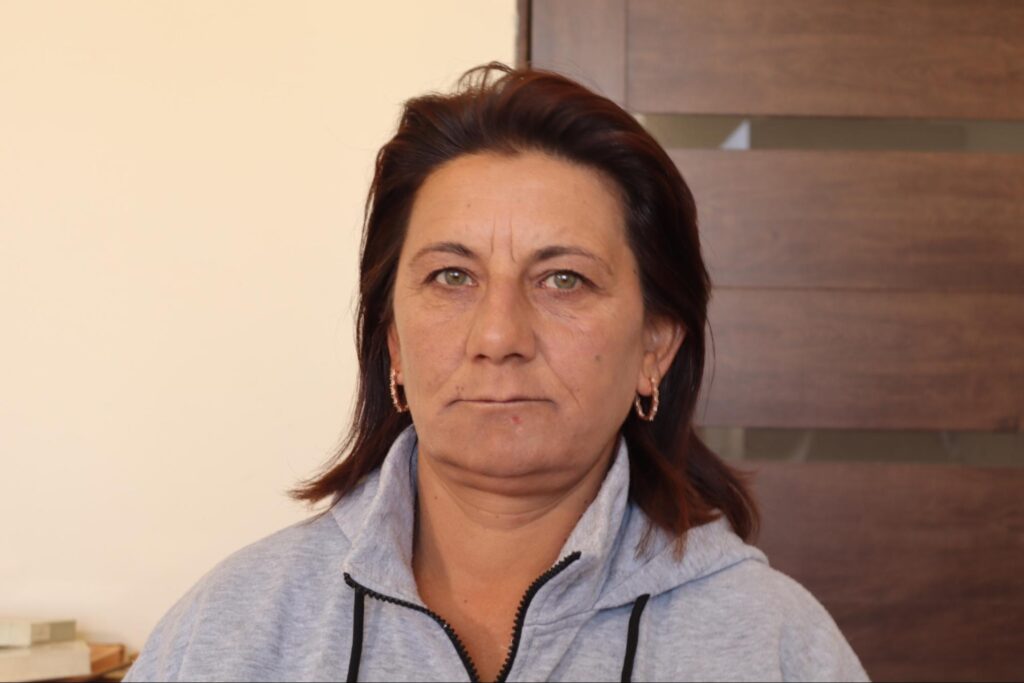
After relocating to Tretuk, in 1991-92 Shorkova joined the Armenian army as a volunteer.That’s where she had her first experience with learning first-aid care.
During the fighting in 2020 and 2022, Shorkova chose to stay in Tretuk to help protect the area. When the Armenian Peace Initiative implemented the program of first aid in the village, she was among the women who chose to attend.
“The training is very interesting, I learned modern ways of splinting and immobilizing broken bones. I’d never seen that before. Bandages and dressing for wounds are different now,” she said.
When asked how she would behave in case of future bombings on the village, Shorkova replied: “I will not leave. I will try to stay calm and assess the situation. If an Azerbaijani soldier was in front of me now, I don’t know how I would react. I have almost nothing at my disposal, but if I can do something useful, I will. We are tired of being afraid of Azerbaijan.”


 Stories