By Edgar Martirosyan
For five years now, I’ve contemplated what we collectively lived through. I had, admittedly, an expectation for “the day after.” When what was to come became clear—perhaps as early as a couple of weeks before November 9, 2020—I was certain of what that day would bring.
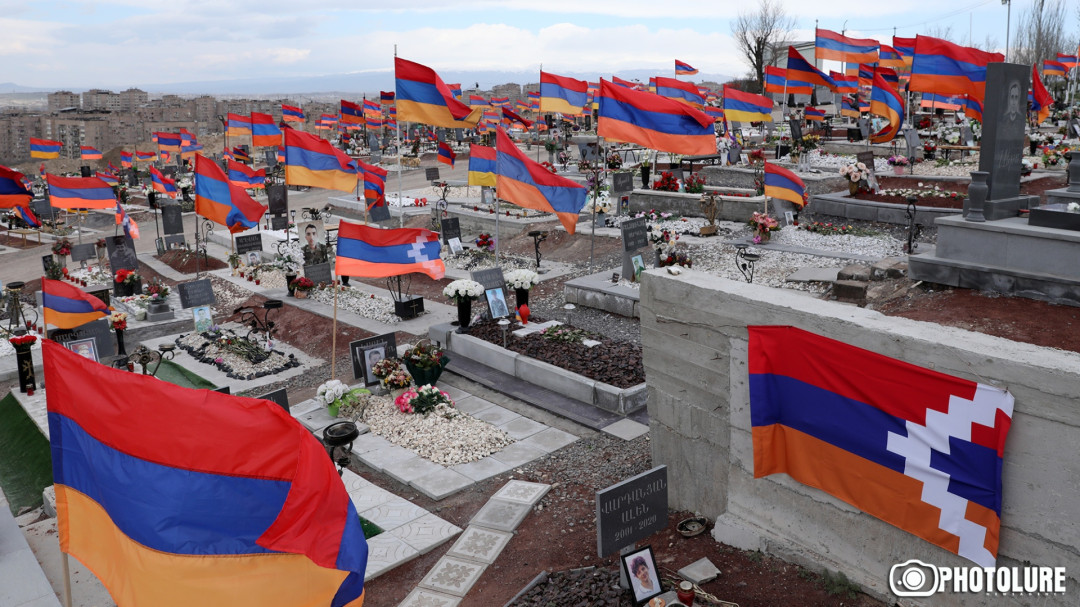
It would be a day of silence. A day of sober reckoning. A day of stillness—the kind that follows when pride collapses under its own weight. A day of somber grieving; a day belonging to the mothers who buried sons, to sons and daughters who buried young fathers, and to the soldiers who returned with hollowed eyes. It would be a day for those who believed that even in loss, there could be sacred rebirth.
But that silence never came. There was no reckoning for what we had lost, or why. Instead, we dissolved into grotesque theater. The tragedy, it seemed, was not only the war itself, but the meaninglessness — the quiet apathy — we embraced immediately afterward. We lost the war—then we lost the dignity to confront it. We lost ourselves.
In those first days, I still believed there was a chance—a narrow window to say: we have been broken, but not destroyed. A chance to face our reflection, to dispense with illusion, and to finally confront the only enemy that has always defeated us—ourselves. A chance to rebuild upon truth.
But truth, for us, seems unbearable. Those who led us into disaster—past and present—clung to narrative and power. Those who should have commanded introspection embraced distraction. Those who should have held our collective moral line instead joined the chorus. Silence, they feared, would be mistaken for guilt. And in that collective abdication—by politician, thinker, clergy, and citizen alike—the chance for redemption was buried with our dead.
We could have chosen silence. Instead, we chose noise.
Defeat has the power to cleanse. We simply refused the cleansing. Our collapse became a temporary glitch in the spectacle of our own politics—a macabre performance of pride and pretense we’ve all participated in for decades. Instead of lessons and accountability, we competed to see who could shout loudest, who could grieve more theatrically, who could display indignation more convincingly.
We buried, with our dead, our chance to rebuild. We buried our dead under noise and ego. We became a nation of denial, shouting to drown out our own reflection, intoxicated by our own hysteria—a tragic comedy unfolding before our enemies’ entertained eyes. We turned mourning into mockery, politics into parody, and pain into performative art. The tragedy isn’t that we haven’t healed; it’s that we never tried.
To heal, we must be honest with ourselves. Honesty demands courage—to admit that our institutions failed because we made them weak; that our politics remain barren because we value theater over competence; and that the rot we decry is merely the reflection of what we’ve seeded within ourselves.
A sober nation would by now have admitted that it deceived itself for too long. Instead, we turned the notion of resilience into a fatal lullaby.
For too long, we have mistaken survival for strength. But survival without reflection is to wander without direction—to endure without evolving. It is motion without meaning; existence without living. That is the kind of survival we have chosen: outrage instead of introspection; noise instead of truth; movement without ever arriving.
The war stripped us bare. Instead of covering our nakedness with humility and thoughtfulness, we covered it with more noise and pride—our peculiar ritual of denial that endlessly corrodes our will to survive.
And yet, I still believe our awakening is possible. History is merciless to those who refuse to learn, but it has time and again forgiven those who do. There is still a future in which we rise—not through rage and slogans, but through quiet truth, sober healing, and deep introspection.
That truth begins by admitting that we lost—that each one of us lost; that we lied to ourselves too long; and that, in some measure, we earned it.
It is time to mourn not only our dead, but our greater loss: of ourselves, our moral compass, and the quiet dignity that once gave birth to a nation rising from the ashes of genocide. The day after our defeat should have been a day of mourning in silence—a sacred stillness not born of shame, but of reverence; of recognition for how far we had fallen, of the reckoning required to rise again.
The silence we refused will come—whether through reflection, or through collapse.
Edgar Martirosyan is a practicing attorney in Los Angeles.



 Stories