 Civilnet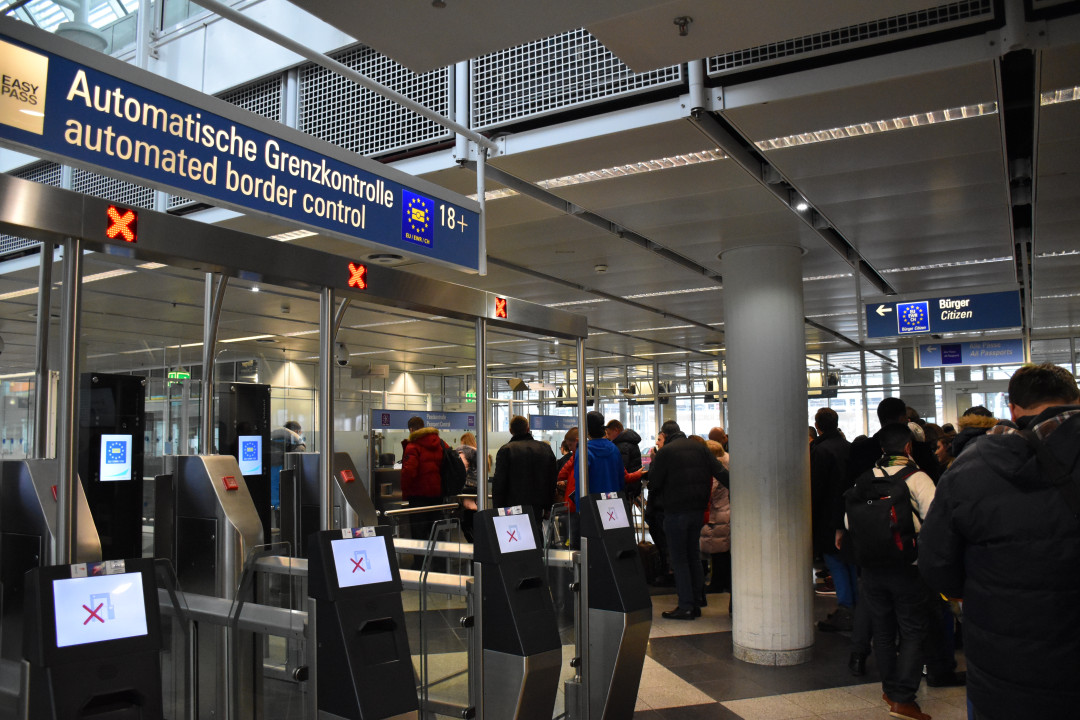
By Alexander Pracht
The European Union on Wednesday presented Armenia with a visa liberalization action plan, a detailed roadmap outlining the reforms the country must undertake to secure visa-free travel for its citizens to EU member states.
The document sets out the specific conditions and standards Armenia is expected to meet.
Why does Armenia have to make major reforms? Isn't the visa-free regime a political gesture?
Granting visa-free travel is linked to political developments, as it is often seen as an early step toward closer integration with the European Union. To obtain this privilege, a country must first meet a set of standards, though not as extensive as those required of full EU candidates.
This requirement stems from the EU’s core principle: while internal borders are open, external ones must remain secure. Currently, eight Eastern European nations enjoy visa-free travel to the EU: five in the Balkans, as well as Moldova, Ukraine, and Armenia’s northern neighbor Georgia.
Georgia, which gained visa-free status in 2016, has in recent years faced criticism from Brussels over democratic backsliding, suppression of protests, and pressure on the opposition, developments that have sparked calls within the EU to suspend its visa-free regime. Serbia, which secured the privilege in 2009, was this week rebuked by the European Commission for granting citizenship to dozens of Russian nationals linked to the Kremlin and Russia’s defense and intelligence sectors.
What’s the problem with just getting a visa?
At present, while EU citizens can travel to Armenia without a visa, Armenian nationals must apply in advance to enter the European Union. The process is often lengthy, expensive, and unpredictable as applications can be denied, and even successful ones require extensive documentation and waiting periods.
A visa-free regime would remove these barriers, making it easier for Armenians to travel for business, study, or leisure. Beyond convenience, it would strengthen people-to-people ties and help bring Armenia closer to the broader European community.
How the action plan works
For every country seeking visa-free travel, the European Union drafts a tailor-made action plan, a roadmap adapted to the specific circumstances of each partner. The plan can be reviewed and adjusted if there is a substantial change in the situation, according to the document released by the European Commission.
The roadmap is structured around two tiers of benchmarks. The first tier focuses on policy and legislative frameworks, the foundation for reform. The second tier assesses whether those reforms are being effectively and sustainably implemented. Progress will be monitored through regular European Commission reports, with on-site evaluations carried out by experts from EU member states.
Armenia is expected to supply detailed data, including statistics and financial plans, to help assess compliance. The Commission will also keep track of visa refusal rates, the number of Armenians denied entry or found staying illegally in the EU, and the number of asylum applications filed by Armenian citizens.
While no deadline is set, the EU says that measurable improvement in these indicators during the course of the dialogue will serve as a key reference point.
Is universal health insurance a requirement?
The EU action plan does not explicitly mandate universal health insurance. Instead, it addresses the matter more indirectly, calling on Armenia to “enhance cooperation with the EU to effectively address the issue of non-recovery of debts incurred by Armenian nationals staying within the Schengen area in relation to the healthcare systems,” and to develop information campaigns on this issue. It also says the EU will continue monitoring cases of misuse of tourist visas for medical treatment among Armenians before the visa-free regime is granted.
Travel document security
One of the key requirements set out by the EU is for Armenia to strengthen the security of its identity and travel documents. The most immediate issue is that Armenia currently does not issue biometric passports, despite having done so in the past.
Nelly Davtyan, head of the Migration and Citizenship Service at the Interior Ministry, said in April that introducing a biometric identification system remains a central demand from Brussels.
Biometric passports typically include a microprocessor chip storing data such as a digital photo, fingerprints, or an iris image of the holder.
The production of new biometric passports and ID cards is planned to start in late 2026, with a French-led consortium overseeing the project. Armenia had previously issued biometric passports between 2012 and 2017, but the program was suspended due to contractual complications.
The EU’s action plan also calls for registering all Armenian citizens in a unified and secure electronic population database, eradicating corruption and informal practices in the issuance of passports and IDs, and ensuring full cooperation with Interpol on lost and stolen travel documents through its dedicated database.
Border, migration, and asylum management
The EU’s action plan emphasizes the need for Armenia to establish “comprehensive control over borders,” a task that could prove particularly challenging. While Russian border guards, who had been stationed across most of Armenia’s frontiers since the early 1990s, were withdrawn from all entry checkpoints last year, they continue to patrol the borders with Iran and Turkey.
Yerevan has not yet announced whether or when it intends to remove Russian personnel entirely, but doing so will likely be necessary to qualify for visa-free travel with the EU. Another complication is the border with Azerbaijan. While there are no communities under Azerbaijani control, in several sections Baku’s troops remain on Armenian soil, and demarcation efforts have stalled since April 2024.
Yet, there is precedent for flexibility as Cyprus achieved visa-free travel and even joined the EU despite lacking control over nearly half its territory, which remains under Turkish occupation.
For its part, the EU is calling on Armenia to implement what it terms “integrated border management.” This includes systematic and efficient border checks, effective surveillance, and the creation of a comprehensive operational picture based on risk analysis, intelligence sharing, and access to relevant national and international databases.
In parallel, the action plan requires Armenia to adopt a clear migration policy aligned with EU and international standards. This involves regulating labor migration, supporting the integration of foreigners, and combating irregular migration.
Public order and security
Under the EU’s action plan, Armenia will be required to present a comprehensive national strategy and action plan to combat organized crime. A similar framework must be developed to tackle corruption, one that guarantees the independence, efficiency, and accountability of the bodies charged with investigating and prosecuting corruption cases.
The plan also highlights the importance of strengthening Armenia’s systems for anti-money laundering and countering the financing of terrorism, bringing them in line with EU standards. Closer, structured cooperation with Europol is expected to play a key role in these efforts, enhancing information exchange and joint investigations.
External relations and fundamental rights
The EU requires all visa-free partner countries to guarantee unrestricted freedom of movement within their borders for all citizens and legal residents, along with the absence of any discrimination in issuing travel documents. Armenia already meets these basic conditions, as no such restrictions currently exist.
However, the action plan calls for deeper reforms to align Armenia’s legal framework with European standards. Specifically, it urges the adoption of a comprehensive anti-discrimination law, as recommended by UN and Council of Europe monitoring bodies, to promote equality and ensure effective protection against discrimination. This includes establishing a dedicated equality body and harmonizing national law with the European Charter for Regional or Minority Languages.
The EU also emphasizes the importance of enforcing legislation on racism, intolerance, and hate crimes. The action plan concludes by urging Armenia to ensure the effective socio-economic inclusion of displaced Armenians from Nagorno-Karabakh.
Treaties and conventions
Finally, the action plan lists a number of international conventions that Armenia is expected to sign and ratify before visa-free travel can be granted. These include:
- Council of Europe Convention on Laundering, Search, Seizure and Confiscation of the Proceeds from Crime and on the Financing of Terrorism;
- Convention on Jurisdiction, Applicable Law, Recognition, Enforcement and Cooperation in Respect of Parental Responsibility and Measures for the Protection of Children;
- Council of Europe Convention on the Protection of Children against Sexual Exploitation and Sexual Abuse;
- Additional Protocol to the Criminal Law Convention on Corruption;
- Second Additional Protocol to the European Convention on Mutual Assistance in Criminal Matters;
- Additional Protocol to the Convention for the Protection of Individuals with Regard to Automatic Processing of Personal Data Regarding Supervisory Authorities and Transborder Data Flows;
- Protocol Amending the Convention for the Protection of Individuals with Regard to Automatic Processing of Personal Data;
- Committee of Ministers of the Council of Europe Recommendation No. R (87) 15 regulating the use of personal data in the Police Sector.


 Stories