 Civilnet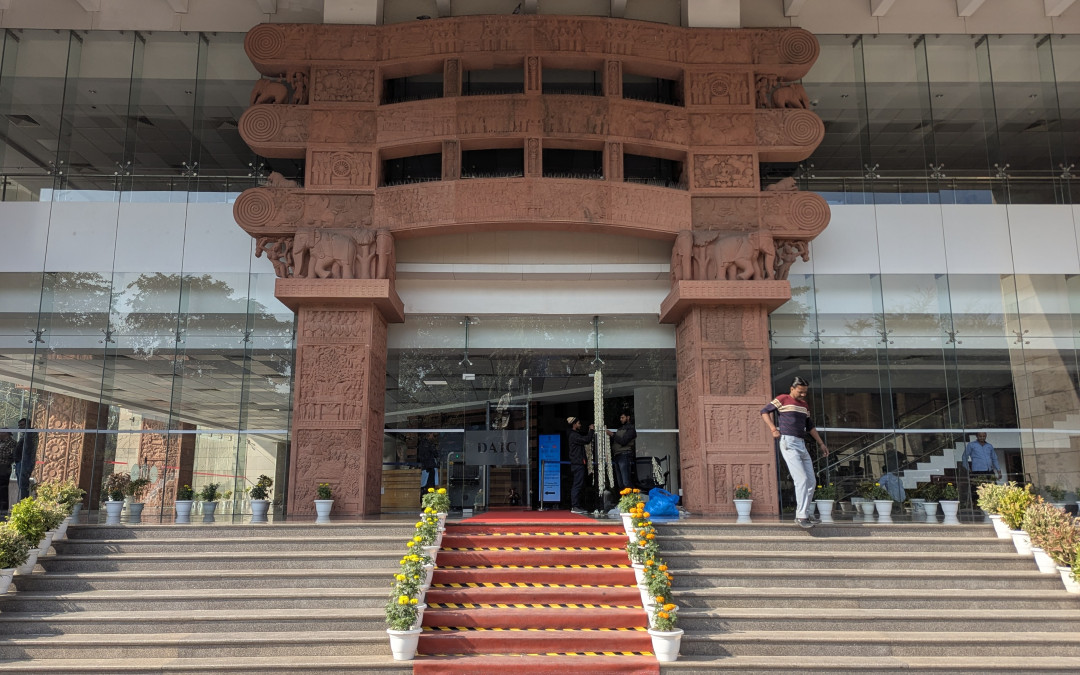
By Karen Harutyunyan, reporting from New Delhi, India
Armenia is roughly 500 times smaller than India by population and more than 110 times smaller by territory. Yet India’s rising engagement across Eurasia — and particularly its growing strategic interest in Armenia — emerged as a key theme during a December 11 briefing at the Observer Research Foundation (ORF), a leading Indian think tank. The discussion was held with international journalists invited by the Government of India.
India’s expanding footprint in the South Caucasus
According to Aleksei Zakharov, a Fellow in ORF’s Strategic Studies Program, India’s engagement with the South Caucasus is no longer marginal.
“Over the past several years, we can see India rising its presence across Eurasia, particularly in the South Caucasus,” Zakharov said. “You must have noticed that the Indian–Armenian relationship has improved significantly, most visibly in defense, but also in connectivity.”
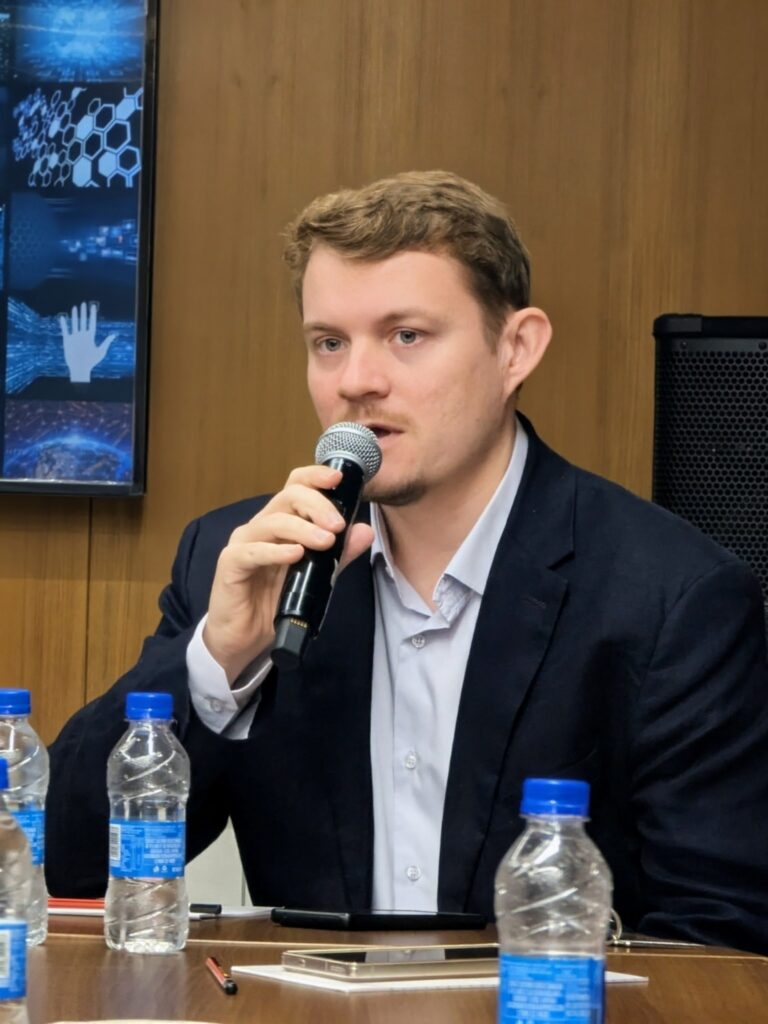
Pictured: Aleksei Zakharov
Zakharov noted that New Delhi’s approach is shaped partly by its own national security sensitivities.
“For India, it’s important to factor in the country’s position on the issue of Kashmir. That’s where differences with Turkey and Azerbaijan come to the surface,” he explained.
Despite India’s ongoing economic cooperation with Turkey and Azerbaijan — including “energy projects with Azerbaijan” and “strong economic cooperation with Turkey” — ORF experts stressed that Armenia today stands out as India’s closest partner in the region. Georgia also features in New Delhi’s considerations due to transport and connectivity potential.
“Georgia is trying to present itself as a transport hub,” Zakharov said. “There are attempts to identify connectivity projects that can be complementary.”
He added that India continues to engage with Azerbaijan even as “serious security concerns” persist regarding the Turkey–Azerbaijan–Pakistan alignment.
“We saw a lot of use of Turkish drones by Pakistan in the recent summer conflict,” he said. “That threatens the relationship in multiple ways.” He was referring to the escalation that followed a major terrorist attack in the Jammu and Kashmir region earlier in the summer.
Antara Ghosal Singh, another Fellow in ORF’s Strategic Studies Program, emphasized that as India’s global role expands, so does its strategic map — and Armenia is now firmly on it.
“As India rises, our interests are not restricted to just Southeast Asia. Our challenges are going global,” she said. “Last summer, we had a conflict with Pakistan and saw Turkey and others pitching in, which made our conflict international.”
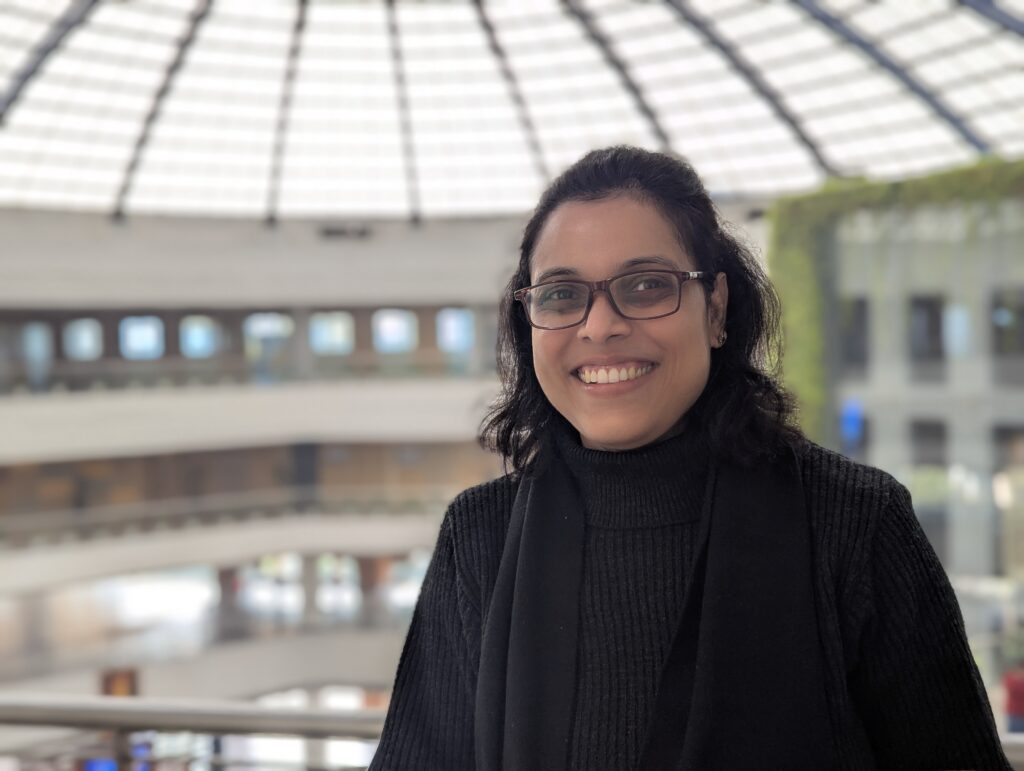
Pictured: Antara Ghosal Singh
“From this perspective, Armenia and Greece are becoming central to our strategic calculus,” she continued. “They never figured in it before, but now Armenia is so important to India’s strategic thinking… and we expect to build up these relationships significantly.”
Rajoli Siddharth Jayaprakash, Junior Fellow in ORF’s Eurasian Studies Program, highlighted India’s concerns about the trilateral cooperation among Pakistan, Turkey and Azerbaijan.
“Naturally, we watch the Azerbaijan–Turkey nexus with a level of caution, because of the support they give to Pakistan,” he said.
“We certainly understand that Armenia is a strategic partner for India,” he added, “and India will not do anything against Armenia’s interests.”
While acknowledging recent diplomatic gestures between Armenia and Turkey or Azerbaijan, Jayaprakash said New Delhi sees limited strategic convergence among those states.
“Even though relations between Turkey, Azerbaijan and Armenia have improved, they have not radically improved because there is no strategic convergence of interests,” he noted. “If there is an agreement on peace, India is okay with that.”
India’s view of the Trump Route
Asked about the so-called Trump Route (TRIPP) — a proposal unveiled by U.S. President Donald Trump in August 2025 to establish a land connection between Azerbaijan and its Nakhichevan exclave through southern Armenia under U.S. management — Jayaprakash said India viewed the idea with cautious optimism.
“So far we have welcomed the developments because they happened in partnership with all three countries [Armenia, Azerbaijan and USA] on board,” he said. “India welcomes the decision.”
But he also underscored remaining uncertainties. “It’s still early days. There are concerns regarding modalities… and the corridor has EAEU restrictions because the EAEU cannot operate with that end,” he explained. “At present, India welcomes that all the countries have come together, but it’s too early to see how it will work.”
While India is unlikely to distance itself from Azerbaijan or Turkey, ORF analysts repeatedly emphasized that India’s deepening cooperation with Armenia — especially in defense and connectivity — rests on strategic logic and long-term security considerations.
India–U.S. relations
Ajay Bisaria, veteran Indian diplomat and Distinguished Fellow at ORF, described the past year as unusually turbulent for India–U.S. relations, referring to the geopolitical environment as a “Trump storm” that strained partnerships worldwide. He said India’s long-standing multi-alignment strategy — manage China, engage America, reassure Russia, cultivate Europe, bring Japan into play, and lead the Global South — now requires recalibration, with the United States becoming “the most important and most volatile relationship to manage.”
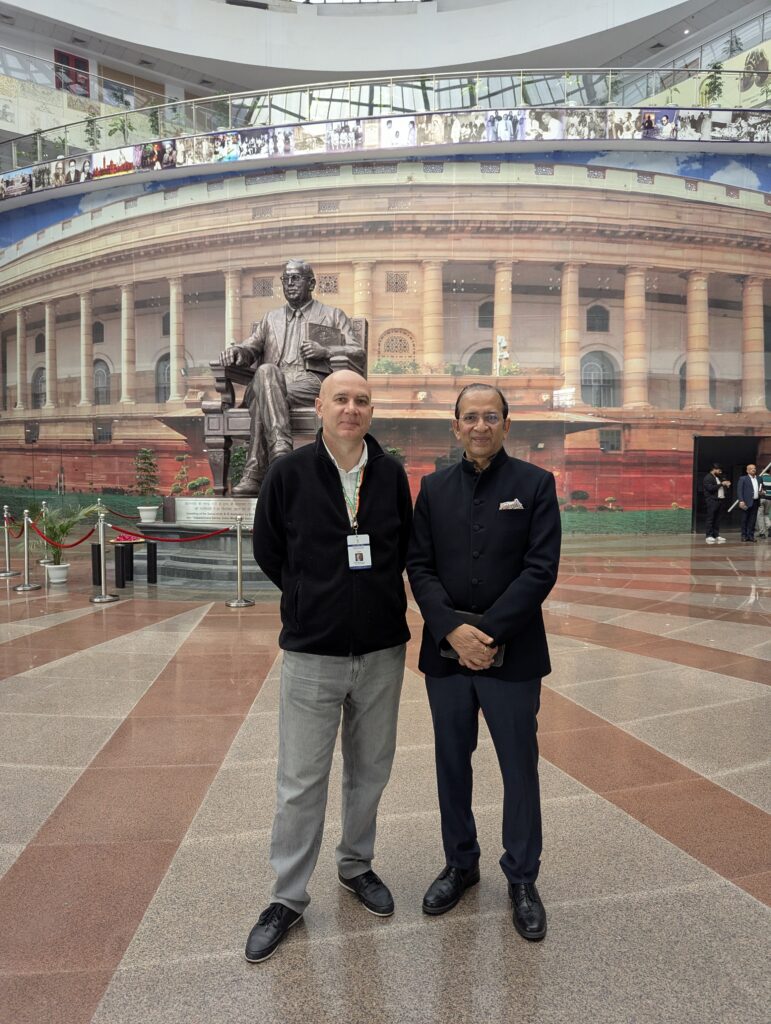
Pictured: Ajay Bisaria (right) with Karen Harutyunyan
Bisaria said India was following a pragmatic, short-term approach of “manage, keep calm and negotiate,” noting that a framework trade agreement is expected soon, followed by a broader bilateral pact. India’s strategic community, he said, had recently briefed senior U.S. officials on concerns about policy unpredictability in Washington, and this year had “undermined U.S. reliability as a partner,” even though the relationship remains indispensable.
In the medium term, India — like other middle powers — is diversifying its external ties. In the long term, he said, India sees no alternative but to strengthen its own economy and strategic capabilities.




 Stories