 Civilnet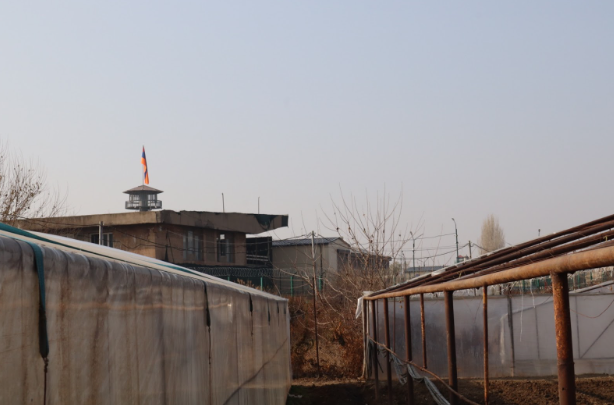
By Martina Sanna
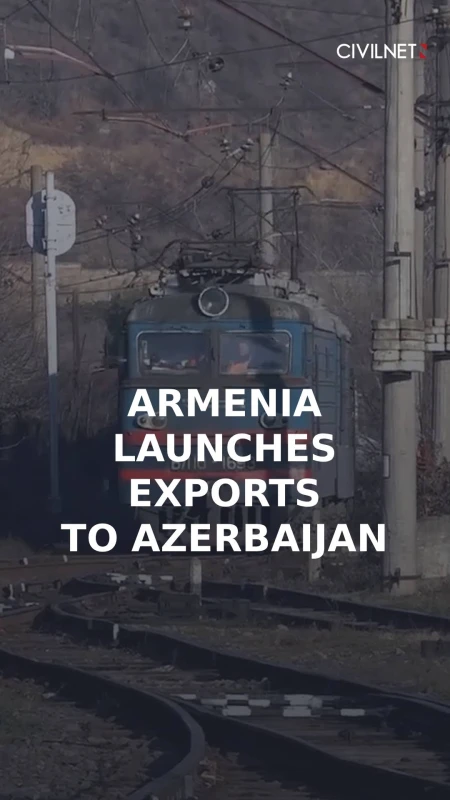
Speaking at an international conference last month, Armenian Prime Minister Nikol Pashinyan said that Yerevan is ready to provide cargo transit from Turkey to Azerbaijan—through Armenia’s Margara and Khndzoresk’s checkpoints. Pashinyan announced this shortly after Azerbaijani President Ilham Aliyev said Baku would lift its restrictions on passage of goods to Armenia.
This is the latest in the ongoing discussions on a possible reopening of the Armenian-Turkish border. Starting in 2022, the bilateral negotiations on the issue led to the full renovation of Margara checkpoint that sits on the Armenia-Turkey border, almost 40km southwest of Yerevan. The renovation was completed in 2023.
The 1,256 residents of the nearby Margara town haven’t seen the border gate open in 30 years. In 1993, Turkey unilaterally closed its side of the border after its close ally Azerbaijan was defeated by Armenian troops in Kalbajar during the First Karabakh war. The only exceptions were in February 2023, when Armenia delivered humanitarian aid to Turkey after the latter was hit by a 7.8 magnitude earthquake. Another reopening was in March 2025, again to facilitate the passage of humanitarian aid, this time to Syria.
The Armenian side of the border has been historically guarded by the troops of the Russian Federal Security Service. On March 1, 2025, the Armenian border troops took over border control from Russia.
“The soldiers are Armenians now. There are no Russians here anymore,” says Levon Karapetyan, former mayor of Margara.
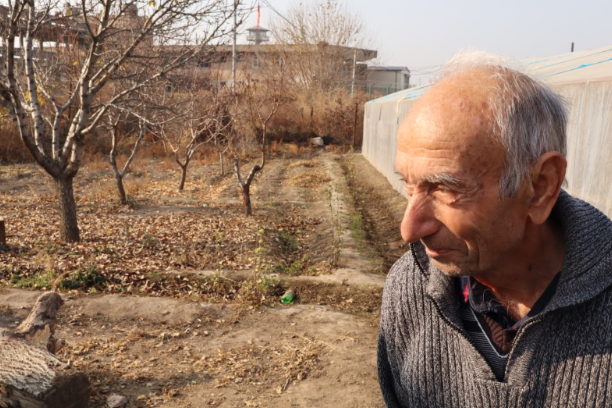
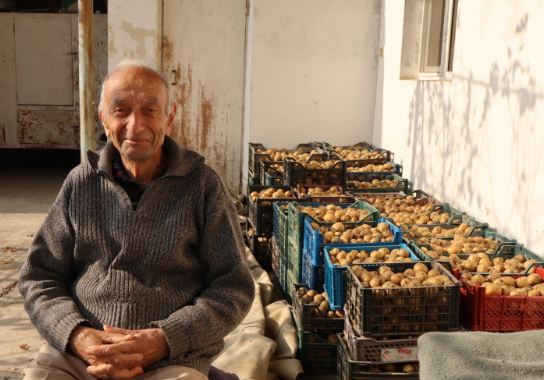
Like most villagers, Karapetyan works the land — growing tomatoes, peppers, grapes, and other vegetables. His greenhouse is less than ten meters from the border. The Armenian flag marking the checkpoint stands just above his home as he sips coffee on his porch, surrounded by boxes of potatoes he got from the market. He will plant them later.
Some Margara residents, living off their land like Levon, believe the potential opening of the border will risk flooding the market with cheaper imported produce, threatening the sale of local products. Karapetyan doesn’t share this attitude.
“We’ve been enemies with Turkey for so long, it can’t continue like this,” he told Civilnet. “We should have relations, there should be trade, so that war stays far from us. We don’t want war.”
The stabilization of Armenia’s relation with Azerbaijan, which has been Turkey’s main precondition to opening the border, is still far away but closer than in the past. On August 8, Armenian and Azerbaijani leaders initiated a peace agreement, mediated by U.S. President Donald Trump.
Among the main outcomes of this negotiation was Armenia’s agreement on the construction of the so-called Trump Route for International Peace and Prosperity (TRIPP) to connect mainland Azerbaijan and to its exclave of Nakhichevan.
The core objective of the initiative is to develop robust communications among Armenia, Iran, Turkey, Azerbaijan and Georgia by upgrading and constructing essential infrastructure such as roads, railways and power lines. These projects include the renovation and reopening of the Kars-Gyumri railway, which, like the Margara checkpoint, has been inactive for more than 30 years. Still the conditions for an upcoming reopening remain unclear.
“All depends on the conditions that the Margara checkpoint will operate in,” says Varham Ter-Matevosyan, professor and the Chair of the Political Science and International Affairs Program at the American University of Armenia.
According to professor Ter-Matevosyan, if the checkpoint is going to be opened for diplomats and third state nationals only, its full potential will remain underexplored and it will simply carry more of a symbolic purpose. However, if the border checkpoint is fully operational for the citizens and businesses of Turkey and Armenia, it will become an important hub for Armenia's development and regional transportation network. Ter-Matevosyan argues that once trust is built between the two states through trade and cooperation, a fully-fledged reopening is likely to bring economic opportunities for the border villages.
Security risks are always part of the discussion for any border. According to Professor Ter-Matevosyan, a reopening of the Turkish border will entail both risks and opportunities for Armenia, whose state institutions have, in his view, accumulated enough capacity to mitigate security related issues. Yet, Ter-Matevosyan also stresses how in recent years Turkey has become a transit country to illegal migration and a hub for human and arms trafficking.
“In 2024, the Turkish authorities reported about 225,000 illegal migrants in Turkey,” concludes Ter-Matevosyan. “These are all important considerations that Armenia's state institutions should be informed about.”


 Stories