 Tigran Grigoryan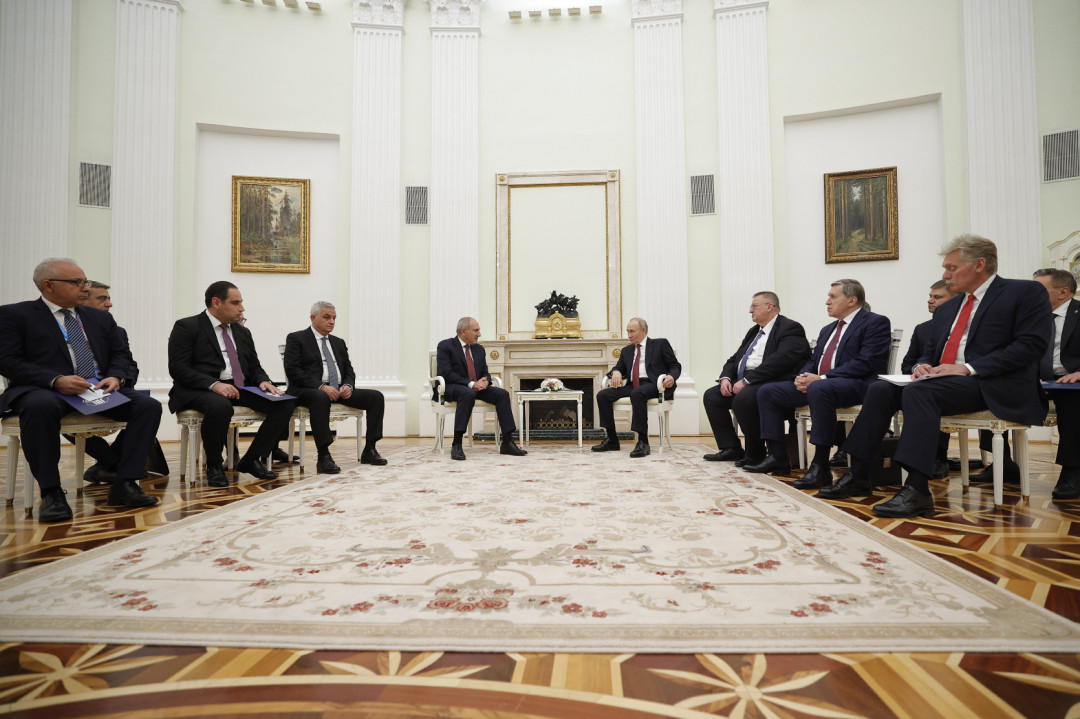
By Tigran Grigoryan
As 2025 comes to an end, Armenia’s foreign and security policy can be described in one word: adaptation. Faced with a rapidly shifting international environment, the declining reliability of traditional security arrangements, and heightened regional risks, Yerevan spent the year recalibrating its diplomacy in search of stability rather than strategic breakthroughs.
The government has repeatedly framed this course as “diversification,” but the experience of 2025 suggests that Armenia’s foreign policy evolution has been driven less by the execution of a long-standing grand strategy and more by responses to external shocks. Initially, diversification emerged as a reaction to the Russia–Ukraine war and the erosion of Russia’s capacity—and willingness—to fulfill its security commitments to Armenia. Over the past year, however, this reactive approach has gradually acquired a more systematic character, even if situational decision-making remains a defining feature.
Until recently, diversification largely meant a westward reorientation. Armenia sought deeper engagement with the United States and the European Union, while maintaining selective partnerships elsewhere—most notably with India in the defense sphere. In 2025, that emphasis became more diffuse. Alongside continued cooperation with Western partners, Yerevan initiated new strategic conversations with non-Western actors: establishing a strategic partnership with China, applying for membership in the Shanghai Cooperation Organisation, establishing a strategic partnership with Kazakhstan, seeking a strategic partnership with Iran, and conducting joint military exercises with Tehran for the first time.
These moves were not accidental. Political changes in Washington mattered. Under the previous U.S. administration, Armenia was careful not to cross perceived red lines—particularly regarding military cooperation with Iran. The arrival of a new, more transactional U.S. administration reduced those constraints, while also generating concern that Western engagement in the South Caucasus might weaken. In that context, deepening ties with Iran—an important actor on the ground with overlapping interests—appeared both pragmatic and necessary. The same logic applies to relations with China: Armenia has lagged behind its South Caucasus neighbors in deepening ties with Beijing, largely because of its heavy reliance on the West for deterrence against Azerbaijani pressure.
At the same time, Armenia did not abandon its Western track. Strategic partnership documents were signed with several countries, including the United States, the Netherlands, and Luxembourg, alongside a joint declaration on the strategic agenda with Germany and the advancement of a strategic partnership agenda with the EU. These documents expanded diplomatic and economic opportunities and opened doors in technology, trade, and investment. Yet their security impact remained limited. Even when security is defined broadly, these agreements have not fundamentally altered realities on the ground. Armenia’s leadership appears to be using diplomacy primarily to mitigate risks rather than to secure firm guarantees that no actor is currently willing to provide.
Nowhere was this balancing act more visible than in Armenia–Azerbaijan relations. The year began under ominous conditions. Baku hardened its rhetoric, particularly regarding transit routes, and President Ilham Aliyev openly hinted at the possible use of force. Accusations of ceasefire violations along the border became routine, creating a widespread perception that a new escalation was being prepared—an assessment reinforced by uncertainty over the new U.S. administration’s level of engagement.
Against this backdrop, Yerevan made significant concessions on the peace treaty agenda, agreeing to two previously disputed clauses on Azerbaijan’s terms. This unlocked a more active bilateral process, culminating in the July meeting in Abu Dhabi and, more decisively, the August Washington summit. That summit marked a turning point. While it did not resolve all outstanding issues, it helped stabilize the situation on the ground. Since August, the risk of major escalation has visibly declined, with Azerbaijani pressure shifting from military signaling to rhetorical and informational domains..
The improved atmosphere enabled some confidence-building measures, including transit arrangements through Azerbaijani territory and even Armenia’s purchase of fuel from Azerbaijan—developments that would have seemed unthinkable a year earlier. The most consequential outcome of the Washington summit was the agreement to establish the TRIPP project—a joint Armenian–American consortium intended to facilitate and manage transit through southern Armenia for Azerbaijani cargo and vehicles. Some progress has been made on this track, including the establishment of a bilateral U.S.–Armenian working group and the pledge of U.S. funding. Still, major questions regarding the project’s details and modalities remain unanswered. Only once these issues are agreed upon and formally codified between the sides will it be possible to assess TRIPP’s costs and benefits for Armenia’s sovereignty and development prospects.
One of the major expectations from the Washington summit was that it would trigger a breakthrough in the Armenia–Turkey normalization process. However, nothing substantial followed beyond symbolic visits and statements. Turkish officials have continued to openly link full normalization and the opening of the border with Armenia to progress in Armenia–Azerbaijan talks. There are credible reports that Turkey may move forward with opening the border for third-country nationals and diplomatic passport holders—an arrangement agreed upon in the summer of 2022 but never implemented. Even if this occurs, it would remain a symbolic rather than a substantive step.
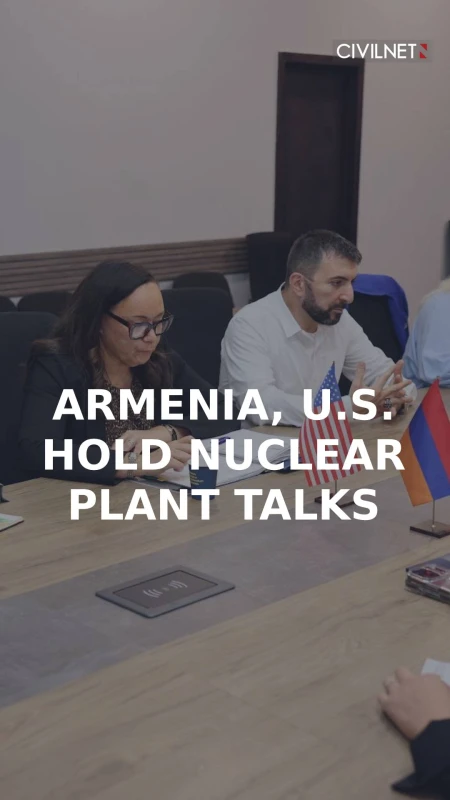
U.S.–Armenian relations, which were viewed with skepticism at the start of the year, ended 2025 on a more hopeful note. Despite fears that Armenia and the South Caucasus would rank low on the new administration’s priorities, the United States reaffirmed its commitment to the strategic partnership agenda signed in the final days of the Biden administration during the Washington summit. Several bilateral documents were concluded, creating conditions for more ambitious projects—from technology cooperation to potential U.S. involvement in the construction of a new nuclear power plant in Armenia. While the new U.S. National Security Strategy confirms that the South Caucasus is not a region of core U.S. interests, the administration’s transactional approach has paradoxically left room for targeted engagement, especially where relatively modest efforts can yield diplomatic results.
Relations with Russia during the past year were defined first and foremost by economic calculations. The long-noted paradox persisted: political and security ties continued to be strained, while economic relations remained strong. Despite a downturn compared to the previous year, Russia remained Armenia’s largest trading partner. For Moscow, Armenia’s membership in the Eurasian Economic Union now matters more than its frozen participation in the CSTO. Russian officials consistently emphasized economic interdependence, particularly amid discussions in Armenia about potential EU accession.
This dynamic reflects a broader shift. Under Western sanctions, Russia increasingly values economic ties with smaller partners like Armenia as channels for trade diversification. Armenia, in turn, has gained a degree of agency in its relationship with Moscow—but also faces greater uncertainty. Much will depend on how the war in Ukraine ends and on the long-term trajectory of U.S.–Russia relations, particularly if Washington continues to accept a world defined by great-power spheres of influence.
The European Union, meanwhile, achieved some of its most tangible gains with Armenia in 2025, even if it remained somewhat in the background. Relations are arguably at a historic high. The newly signed strategic partnership agenda includes, for the first time, a security component, and Armenia is set to receive €20 million from the European Peace Facility—a symbolic but politically significant step. Perhaps more importantly, Brussels’ perception of the region has shifted. With Georgia drifting away from the EU path, Armenia is increasingly seen as the Union’s primary partner in the South Caucasus.
This brings both opportunities and risks. On the positive side, investment and political engagement are likely to grow. On the negative side, the EU risks repeating mistakes made in Georgia—treating the current Armenian government as the sole guarantor of a pro-European trajectory and overlooking internal challenges in the name of geopolitics. By prioritizing the containment of Russia over values, the EU risks long-term reputational damage, both in Armenia and beyond.
Within Armenia, attitudes toward the EU remain broadly positive, but expectations differ. On one track, there is real and substantive cooperation with expanding opportunities. On the other, expectations—particularly regarding EU membership—are being exaggerated. The recent “EU accession” law was widely understood as a populist, pre-election move. Armenia is unlikely to apply for EU membership anytime soon, nor is it likely to leave the EAEU in the near future. These parallel realities—practical cooperation versus inflated hopes—risk undermining the EU’s standing in the country over the long run.
Taken as a whole, 2025 was calmer than previous years from a security standpoint. No major escalation occurred, giving Armenia valuable breathing space. That alone makes the year more positive than negative. Yet calm should not be confused with resolution. The effectiveness of Armenia’s foreign policy will ultimately be measured not by the number of documents signed, but by whether diversification translates into real resilience—greater security, economic development, and the ability to engage all power centers without becoming a battleground for their rivalries.
The challenge for the years ahead is to move beyond form and symbolism and to anchor Armenia’s foreign policy in substance. Only then can diversification become more than a survival tactic—and instead serve as a foundation for long-term stability.



 Stories