 Alexander Pracht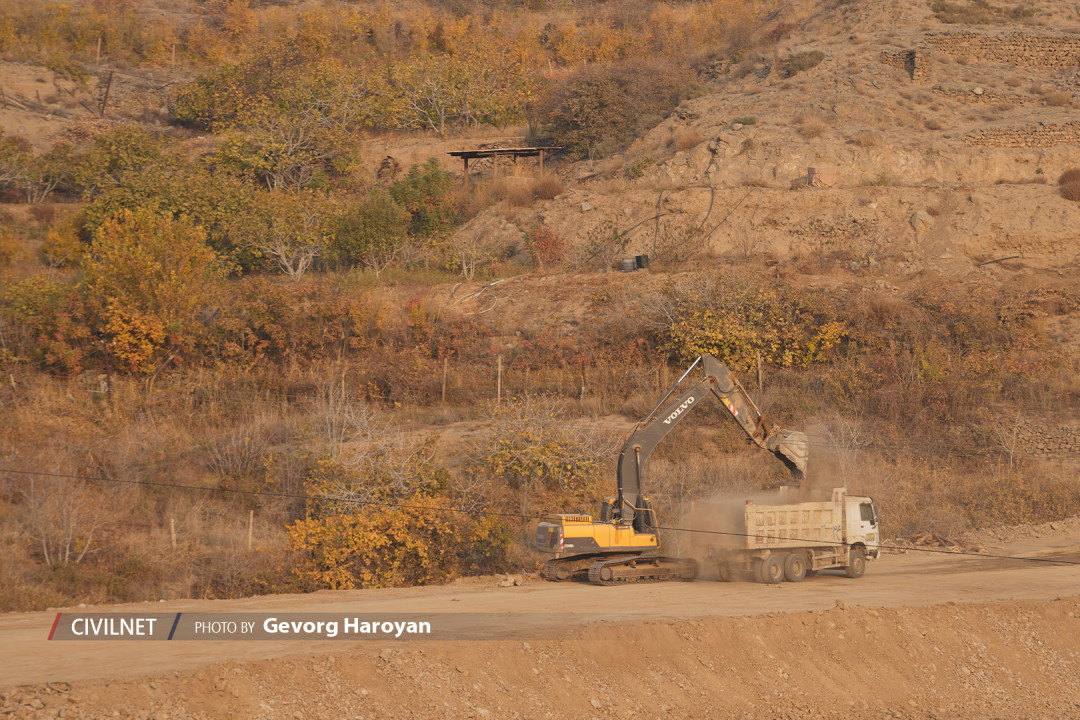
Five months after the announcement in Washington D.C., Armenia and the United States on Tuesday revealed details about ownership structure, management, and key infrastructure behind the so-called Trump Route for International Peace and Prosperity (TRIPP). The project is expected to link mainland Azerbaijan with its Nakhichevan exclave via Armenia’s southern Syunik province, and potentially provide reciprocal transit opportunities for Armenian cargo through Nakhichevan northward toward Yerevan.
The implementation framework unveiled so far is not a legally binding agreement, with a formal accord to be announced at a later stage.
Ownership structure
Perhaps the most revealing detail disclosed was the ownership structure of the joint Armenian–American venture that will manage the route. Under the framework, Washington will control 74% of the shares, with Armenia holding the remaining 26% – at least for the first 49 years of the project. Should the arrangement be extended beyond that spell, Yerevan’s stake would be upgraded to 49%.
At a press conference following the announcement, Armenian Foreign Minister Ararat Mirzoyan described the distribution as fair, explaining that the United States is expected to provide most of the funding for the project, while Armenia’s primary contribution will consist of development rights.
The framework also leaves room for a readjustment of the share proportion or other changes, such as the sale or donation of shares, but only with the consent of both governments. Azerbaijan, as expected, has no participation in the venture.
What the project includes
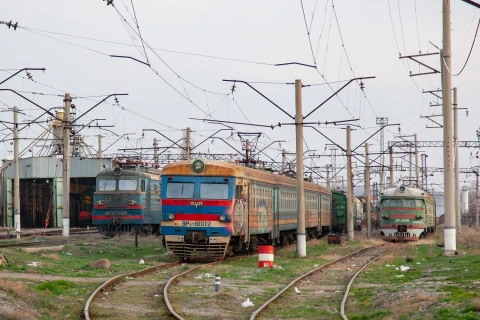
Running along the Iranian border, the area once hosted a railway line linking Nakhichevan with mainland Azerbaijan during the Soviet period. Most of the tracks were removed after independence, while the remaining sections are outdated and will need to be replaced.
According to the recently released framework, the project includes:
Rail infrastructure — railways, terminals, stations, rolling stock facilities;
Road infrastructure — highways, roads, bridges, tunnels;
Energy infrastructure — electrical transmission lines, oil pipelines, gas pipelines;
Digital infrastructure — fiber-optic networks;
Supporting infrastructure — administrative facilities, utilities, safety and security systems.
In an interview with CivilNet last month, U.S. Ambassador to Armenia Kristina Kvien said the railway line would be the priority at the initial stage, with other components of the project to follow later.
What Armenia concedes
With exclusive development rights, the TRIPP company will be in charge of the following:
Planning, design, development, construction, operation, and maintenance of the transit infrastructure;
Signing contracts with construction firms, operators, and service providers;
Generation and collection of revenues from infrastructure operations.
In practical terms, this means that technical decisions will most likely be taken by the company’s board of directors rather than by Armenia’s government. At the same time, the document notes that the involvement of the U.S. and Armenian governments in certain key decisions is expected.
What Armenia retains
Despite earlier concerns, southern Syunik will not have a status different from the rest of Armenia in any regard. The framework provides an explicit list of areas that will remain under Yerevan’s control.
Legislative, regulatory, and judicial authority, stemming from full sovereignty and territorial integrity over all TRIPP areas within Armenia’s sovereign territory, including the ability to enforce laws and regulations in line with Armenia’s domestic legislation and international agreements;
Control over national security and law enforcement;
Authority over border control and customs for trade and transit;
Authority over taxes, customs duties, and other mandatory fees on trade and transit;
Right of access;
Authority to enforce all Armenian laws.
This framework departs significantly from earlier reporting by Thomas Barrack, the U.S. ambassador to Turkey, who said in July that the United States would formally lease the territory from Armenia for 100 years.
It is also unlike the Russian-controlled solution initially agreed upon after the 2020 war in Karabakh but later abandoned. That arrangement envisaged control over the route by Russian border guards, potentially creating a legal and administrative grey zone.
How will border management work
Initial concerns around the project largely stemmed from Baku’s long-standing demand for what it has described as ‘unimpeded access’ along the route. Azerbaijani President Ilham Aliyev has repeatedly stated that Azerbaijani nationals should not have to interact with Armenian border guards when entering or exiting Armenia. This position, coupled with Armenia’s unwavering insistence on retaining full control over its borders, has created a complicated conundrum.
The TRIPP framework addresses this issue by introducing a two-layered border control system.
Under the so-called front office model, private operators contracted by the TRIPP Company will handle document collection for verification, provide information and guidance, and collect fees, taxes, and customs duties. These funds will then be remitted directly to Armenia’s state budget.
The back office, staffed by Armenian state officials, will retain full decision-making authority and will be responsible for:
Final customs decisions and clearances
Security screening and enforcement
Immigration control;
Law enforcement actions;
Permits and authorizations;
Inspection and examination.
The framework explicitly states that front office operators will not make any decisions and will act solely as an intermediary. “Armenia’s sovereignty and jurisdiction over border and customs operations are absolute and non-negotiable,” the document stresses.
Problematic areas
Commenting on the framework for CivilNet, Tigran Grigoryan, director of the Regional Center for Democracy and Security think tank, pointed to several problematic areas and issues the document fails to address.
He argued that while the front–back office model is an interesting diplomatic workaround, it lacks reciprocity.
“It is evident that Azerbaijan will never agree to similar arrangements on its own territory. This is not merely a symbolic concession on Armenia’s part; it could also create practical problems,” Grigoryan said.
He also noted that Azerbaijani authorities have consistently insisted that goods transiting from Azerbaijan to Nakhichevan should not be subject to Armenian customs duties, while Armenia would be entitled to collect customs fees on cargo originating in Central Asia and transiting onward beyond Azerbaijan. The published framework contains no reference to any such exemptions.
Nevertheless, Grigoryan described the TRIPP solution as “not the worst possible option,” especially when weighed against the risks of an Azerbaijani attempt to seize the corridor by force or a return to Russian management of the route.
“It is clear that Armenia’s choice was never between good options,” he concluded.



 Stories