 Alexander Pracht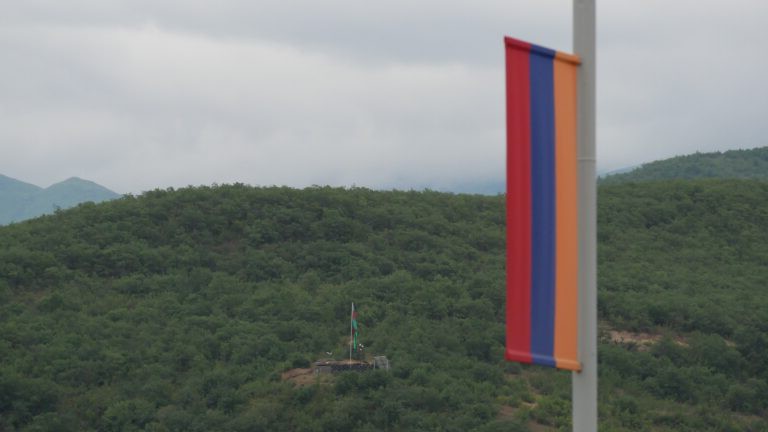
Armenia expects hybrid threats and foreign interference to intensify this year, particularly in the run-up to the country’s general elections in 2026, the Foreign Intelligence Service (FIS) said in its annual report published on Tuesday.
“Assessments on predicted foreign interference and hybrid threats [...] take up a lot of space due to the general elections scheduled in Armenia in 2026,” the agency said.
According to the report, the anticipated hybrid activities pursue several objectives, including sabotaging peace developments with Azerbaijan, spreading conspiracy theories suggesting that secret agreements have been concluded against Armenia’s interests, and what it described as exploiting the sensitive issue of Karabakh refugees.
The report did not specify what countries are expected to carry out such activities. It listed cyber operations against critical infrastructure, online disinformation campaigns, and economic and energy pressure among the key instruments.
The FIS warned that the Armenian public is likely to be targeted with fake, distorted, and out-of-context information aimed at influencing voters ahead of the nationwide election scheduled for June. These efforts are expected to rely on fake accounts, paid advertisements, bot networks, and an increased use of artificial intelligence.
“The most dangerous trend of malign influence operations will continue to be the seemingly subtle combination of fake information with true information, as well as its dissemination and consolidation through real platforms and persons with wide audiences,” the FIS said.
The agency also added it believes that businesspeople, religious and cultural figures, as well as organized crime groups linked to decision-making circles of a foreign country, may play a special role in such influence operations.
According to the report, these actors can be engaged during the pre-election and post-election periods, as well as on the voting day itself, to organize sabotage activities under the guise of acts of public disobedience.
On the prospects of peace and war, the FIS said the likelihood of military escalation has significantly decreased, while the chances of a peaceful resolution have increased.
“We assess a military escalation between Armenia and Azerbaijan […] as highly unlikely in 2026,” said the report.
The agency also said it is highly likely that progress will be made on border delimitation and demarcation with Azerbaijan, a process that has not advanced since May 2024.
Despite expectations of improved bilateral trade and connectivity, the report addressed Baku’s narratives about “Western Azerbaijan,” describing them as “state-promoted” and a risk factor with a significant negative long-term impact on peacebuilding.
According to the FIS, Azerbaijan has intensified the use of this rhetoric following the peace declaration signed in Washington in August. At the same time, the agency said it remains unclear whether these narratives are intended to create a justification framework for future aggression against Armenia or to use them as a foreign-policy bargaining tool, specifically to offset the issue of the return of Karabakh Armenians.
The term “Western Azerbaijan” is used by Baku to refer to the territory of Armenia, which it frames as “historic Azerbaijani lands,” as part of a broader state narrative aimed at redefining regional history. In recent years, several organizations describing themselves as “communities of Western Azerbaijani refugees” have been established, alongside a dedicated television channel and efforts to assign Azerbaijani-language names to towns and regions across Armenia. Recent reports have shown that these initiatives are funded from Azerbaijan’s state budget and are directly overseen by the country’s leadership.
At its peak in 1979, the Azerbaijani population of Soviet Armenia numbered around 160,000. By the late 1980s, amid the escalation of the Karabakh conflict, nearly all of them had left Armenia, as did the 483,000 Armenians who were simultaneously forced to flee Azerbaijan. Apart from Karabakh, they mostly lived in Baku, Kirovabad, Sumgayit and other major urban centers.
The Armenian government has consistently rejected Baku’s “Western Azerbaijan” narrative and ruled out any prospects of Azerbaijani repatriation to Armenian territory. In public statements, Yerevan has also said it does not seek the repatriation of Armenians to Karabakh or to Azerbaijan proper.

 Stories