 Alexander Pracht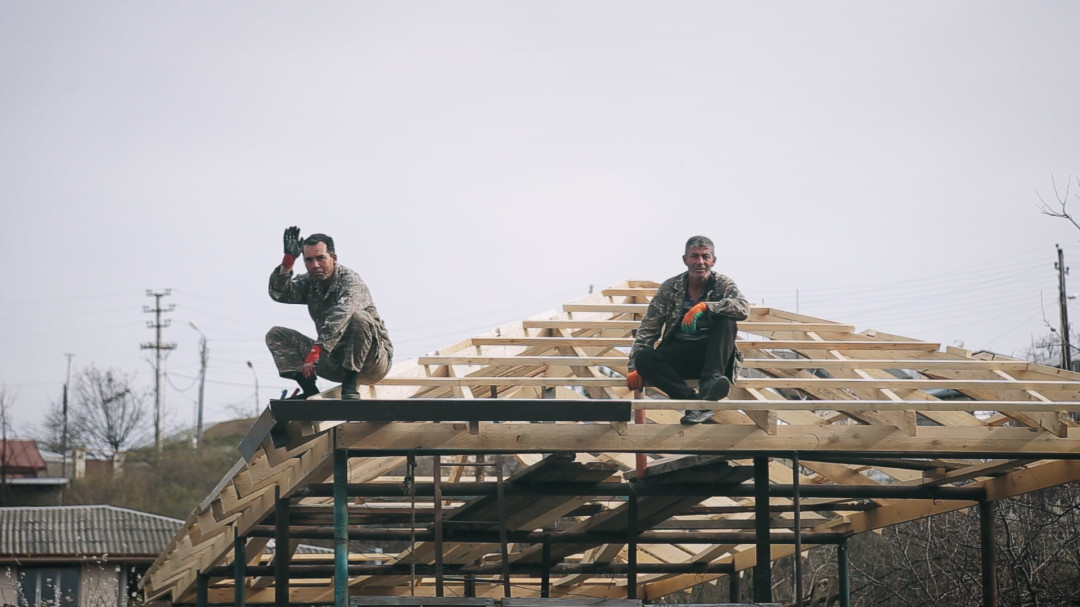
The Council of Europe has found Armenia non-compliant with several provisions of the European Social Charter related to labour rights, according to an annual report published on Wednesday. It highlights key concerns related to persistent gender pay gap, lack of access to trade unions for self-employed workers and law enforcement officers, and a prohibition on strikes for employees in a wide range of public services.
Gender inequality
The report noted that while Armenia has made progress in achieving gender parity in decision-making positions such as cabinet posts, no progress has been recorded in increasing the share of women on management boards.
The study suggests that the wide gender pay gap is largely linked to occupational segregation, with women predominantly employed in lower-paid sectors such as education and healthcare, and men more commonly working in higher-paid fields like construction and transport.
The report further criticized Armenia for the absence of a legal or case-law definition of “work of equal value,” which is essential for understanding and addressing pay disparities.
According to the Armenian Statistical Committee’s 2024 report, only 50% of women aged 15 to 74 are employed in the country, compared to 72.1% of men. Despite this, women account for 63% of those producing goods for household consumption, highlighting their disproportionate share of unpaid labour.
Prohibition of strikes
Armenia’s Labor Code explicitly prohibits a wide range of workers from going on strike, including police, the armed forces, security services, centralised electricity, heat and gas supply services, as well as emergency medical aid services.
While acknowledging that the right to strike may be restricted for certain professional groups, the Council of Europe stresses that an absolute ban applied to broad categories of public servants is incompatible with the European Social Charter.
“Simply prohibiting these workers from striking, without distinguishing between their particular functions, cannot be considered proportionate to the aim of protecting the rights and freedom of others or for the protection of the public interest, national security, public health, or morals, and thus necessary in a democratic society,” the report said.
The role of trade unions
The role of trade unions in Armenia remains marginal, according to the report, which points to excessively high minimum membership requirements and absence of effective measures to strengthen workers’ positive freedom of association, particularly in sectors with traditionally low levels of unionisation.
Self-employed individuals, the report noted, have no right to association in Armenia because they do not have an employment contract.
“Armenia’s legal framework does not extend trade union rights to workers engaged in non-standard forms of employment and as a result, thousands of workers, including couriers, ride-share drivers and others are denied access to basic protection such as collective representation,” the report said.
Armenia has seen a significant influx of foreign workers in recent years, particularly from India, Russia and Central Asian countries as the delivery and taxi sectors continue to expand rapidly.
The report argued that many workers in this “gig economy” are misclassified as self-employed and therefore denied labour protections.
In a 2022 survey, 60.8% of respondents in Armenia said there was no trade union at their workplace. Where unions do exist, membership was described as neither widespread nor impactful: 36% of union members said they only received material or moral support such as holiday gifts or invitations to social events, 19.1% cited access to affordable recreation, and 14.2% said union membership provided them with no benefits at all.
Despite the labor sector shortfalls, Armenia does not stand out as an outlier among Council of Europe member states. According to the 2025 findings of the European Committee of Social Rights, similar issues were identified in 25 of the organisation’s 46 members. The most persistent issues across Europe include excessive working hours, the gender pay gap, and barriers to effective collective bargaining. Several countries, including Serbia, Latvia, Montenegro and Georgia, face problems almost identical to those in Armenia.
Armenia ratified the Council of Europe’s European Social Charter in 2004.



 Stories