 Civilnet
By Anna Yeganyan
Armenia has taken a significant step into artificial intelligence infrastructure. This month, Yerevan State University launched the country’s first AI-focused supercomputing center, powered by NVIDIA chips, designed to support research and education.
The project is part of a broader build-out of AI and high-performance computing capacity now underway in Armenia, with additional academic and commercial systems expected to come online in the months ahead, including a major $500 million dollar data center that will be opening in the town of Hrazdan, northeast of Yerevan, aimed at growing a commercial AI services market.
Behind these developments lies a broader question. Can Armenia integrate into the global AI economy not as a consumer, but as a producer of computing power and technological solutions?
According to NVIDIA Vice President Rev Lebaredian, the idea of an AI supercomputer for Armenia emerged back in 2019, when Prime Minister Nikol Pashinyan first visited NVIDIA’s headquarters in Silicon Valley.
“At the time, the prime minister spoke with our CEO Jensen Huang about how to strengthen Armenia’s high-tech sector. His answer was simple: you need to develop researchers, scientists, computer specialists, and build a supercomputer, because the future of technology is built around AI.”
Since then, several directions have been developing in parallel in the country, and it is important to distinguish among them: existing computing capacities, the Graphics Processing Unit (GPU) supercomputer at YSU, and commercial AI data centers.
In May 2024, Armenia opened its very first supercomputing center, named after Charles Aznavour, at the Engineering City in Yerevan. However, as Hrant Khachatryan, head of YSU’s machine learning group, emphasizes, this project has a fundamental limitation because it lacks sufficient GPUs.
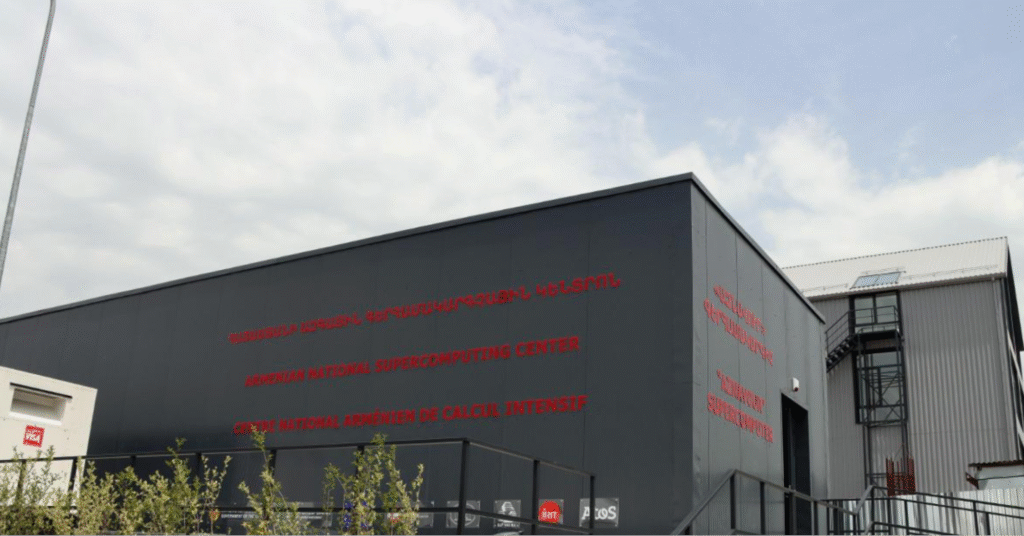
“GPUs (graphics processing units) are where AI computations are done, so ‘Aznavour’ is not suitable for building AI models, and is instead used for other tasks, for example in physics,” Khachatryan noted.
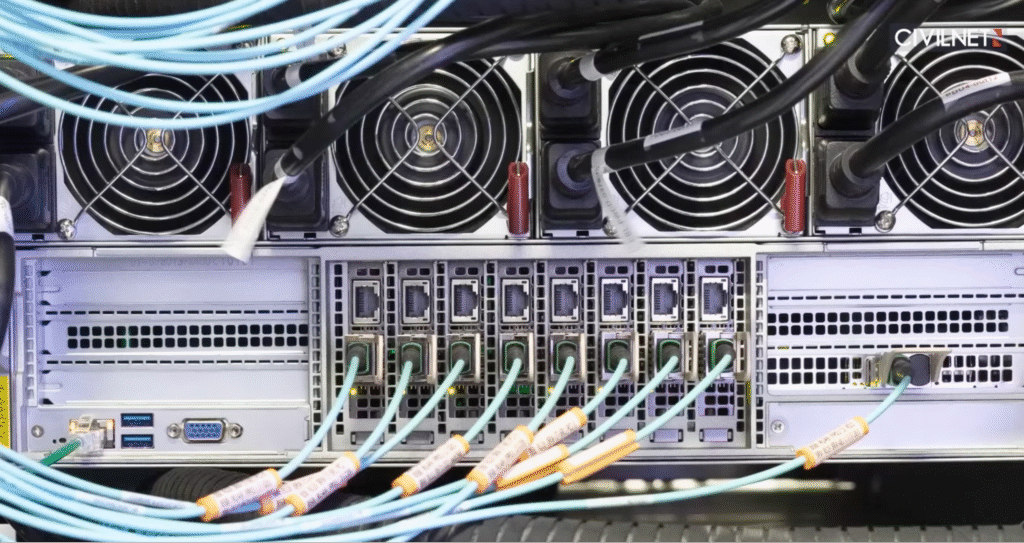
The new university cluster, on the other hand, is equipped with 64 NVIDIA H100 GPUs, the current industry "gold standard" for state-of-the-art AI infrastructure, and is expected to strengthen both fundamental research and applied development.
But hardware alone does not have an economic effect. The question is who will have access to these resources, and for what purposes.
“The cluster doesn’t directly create new jobs, but it does effect the quality of specialists. We will be able to solve larger scientific problems and build stronger AI models. Having more resources will make us more attractive to external partners,” Khachatryan explains.
He emphasizes that the value of such systems lies not only in computing speed, but also in changing the research cycle itself: ideas can be tested, scaled, and turned into applied solutions more quickly.
Some of the potential projects this would enable include computational models for drug discovery, analysis of satellite imagery, and processing radar data for autonomous systems. The more computing power you have, the faster the cycle from idea to model to validation.”
But as Armenia expands its AI infrastructure, an important question is who actually builds and controls these systems. While NVIDIA is a global technology supplier and partner in Armenia’s emerging AI infrastructure, it does not build or operate data centers in the country.
“NVIDIA does not build computers in Armenia. NVIDIA sells computers to those who build data centers. For example, when I say that we are installing 64 GPUs at our university, those GPUs were produced by NVIDIA. But we don’t even buy them directly from NVIDIA, we buy them from Supermicro, which integrates NVIDIA GPUs into computers,” says Khachatryan.
Lebaredian explains the difference with a metaphor: AI supercomputers are “factories,” unlike ordinary data-center “warehouses.”
“The data centers we have are like warehouses, where we store and move data. AI supercomputers are factories. You ‘feed’ them the raw materials of unprocessed data and energy, and at the output you get intelligence,” Lebaredian says.
By this logic, computing power becomes not just infrastructure, but an economic product comparable to industrial production.
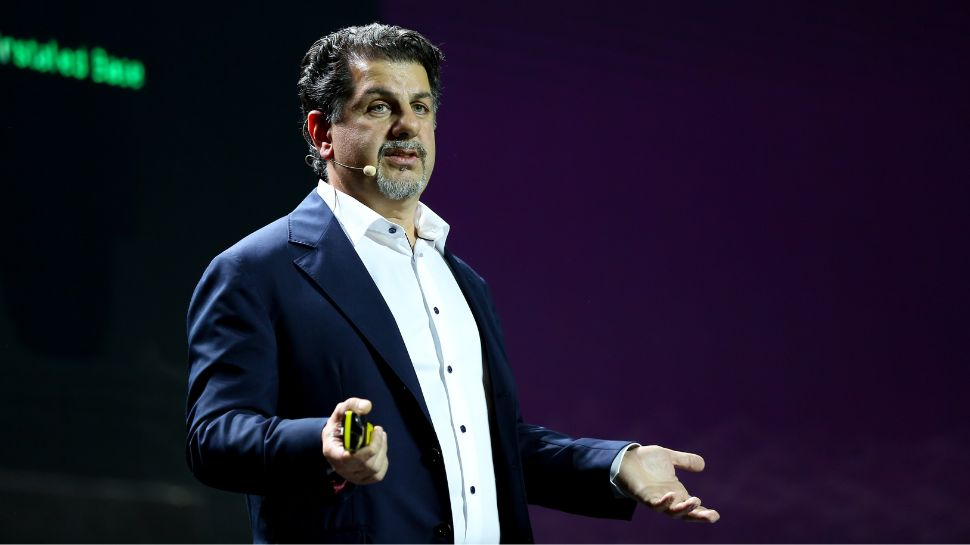
Lebaredian links Armenia’s prospects specifically to the energy factor.
“Today Armenia has an excess of electricity that is difficult to export as electricity. But if you turn that energy into computation, into what the AI world calls ‘tokens,’ they can be stored and transmitted over the internet. This way Armenia can export intelligence and AI services worldwide,” he says.
However, experts note that such a model requires not only computing power, but also resilient engineering infrastructure such as cooling systems, access to water resources, and transparent governance rules. For now, these aspects remain the least publicly discussed aspect of the plan.
Alongside the university center, a larger commercial infrastructure is being built in the industrial town of Hrazdan by the San Francisco and Yerevan-based AI cloud company Firebird, led by co-founders Razmig Hovaghimian and Alexander Yesayan. It is seen as one of the future nodes of a regional AI computing network.
“Part of the capacity will be allocated to Armenia: universities, researchers, educational organizations. This should become the foundation for developing our future high-tech sector and for the growth of future engineers and entrepreneurs,” Lebaredian emphasizes.
Public discussion focuses not only on the scale of Firebird’s investment, but also on risks, including strain on resources, transparency of governance, and environmental consequences. Experts and civil society members are calling for more public information on how the sustainability of such projects will be ensured.
In addition to Firebird, another major commercial AI project is taking shape in Armenia named eleveight.ai. According to international media reports, the data center has already been built and is expected to contain around 500 B300 Blackwell Ultra GPUs, the latest in state-of-the-art AI accelerators. This project is also focused on hosting high-performance AI computing for international clients.
If the announced plans are implemented, Armenia could gain a new level of research capabilities, train specialists capable of working with AI infrastructure, develop applied services, and export computing power and AI services.
But for this to move beyond attractive presentations and become a sustainable system, clear guidelines, transparency in decision-making, and accountability for consequences will be required.
How these issues are resolved now will determine whether Armenia’s bet on artificial intelligence becomes a long-term strategy or a temporary experiment.





 Stories