 Civilnet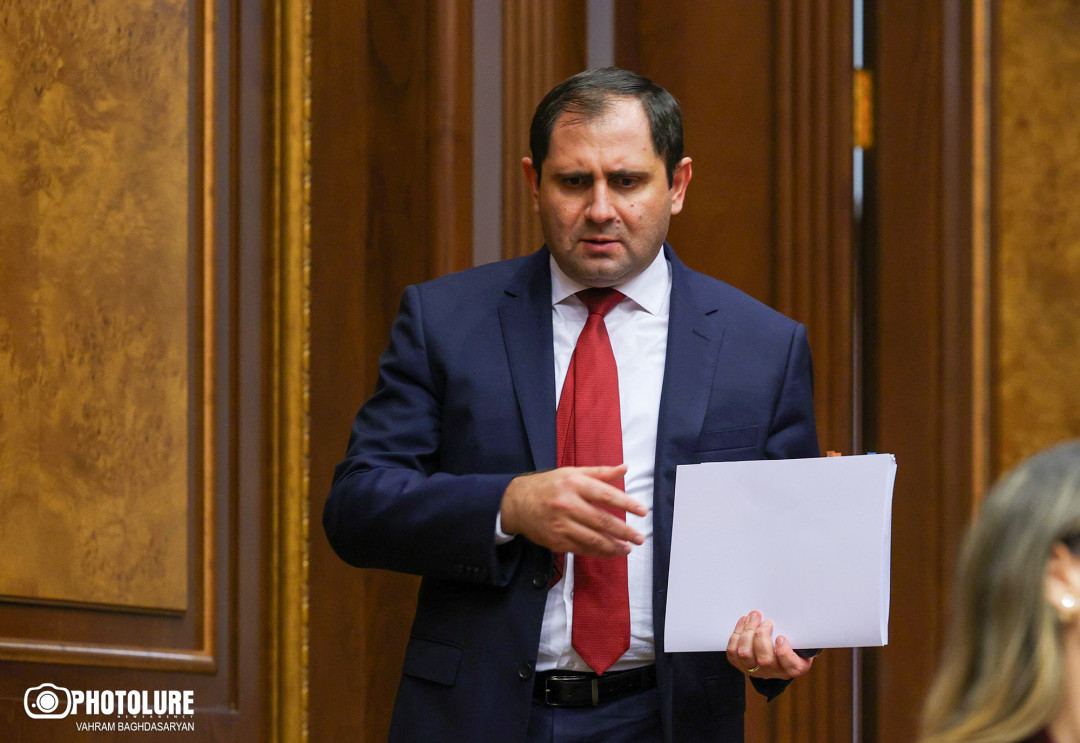
By Elen Muradyan
Armenia’s defense minister said the armed forces cannot function under “dual subordination,” defending a decision to dissolve the existing military chaplaincy structure and place all spiritual service under the military chain of command.
Speaking on Friday at a press briefing in the National Assembly of Armenia, Defense Minister Suren Papikyan said the reform does not end spiritual service in the army but changes its institutional framework.
“There can be no dual subordination… in the armed forces,” the defense minister said, rejecting claims that the government is removing clergy from military life.
Under a February 1st decree, the defense minister dissolved the long-standing chaplaincy system under which clergy appointed by the Armenian Apostolic Church served in military units. As of that date, those appointments were terminated. A new spiritual service is planned, with chaplains subordinated to the Armed Forces’ Department of Moral and Psychological Support within the General Staff.
Papikyan said clerics will still be able to serve in the military provided they have theological education from the Armenian Apostolic Church and agree to operate within the military hierarchy. He said contracts could be signed with qualified clergy, adding that suggestions the state is abolishing spiritual care for soldiers are misleading.
The move has drawn criticism from church representatives and commentators, who argue that the reform effectively sidelines the Church and undermines a tradition dating back to the 1990s, when the chaplaincy was established outside the formal chain of command.
In a column published by CivilNet, former military commander Grigori Sahakyan said the reform marks a fundamental shift in the relationship between soldiers and spiritual advisers.
Sahakyan, a reserve colonel who served in military and state positions in the Armenian army from 1993 to 2019, argued that chaplains’ prior autonomy allowed them to act as trusted confidants rather than as officers bound by command discipline. Turning clergy into commissioned officers, he wrote, risks eroding confidentiality and trust among conscripts and contract soldiers.
The defense ministry has said details of the new spiritual service are still being developed. Critics say the transition could leave some units without regular spiritual support, at least in the short term.
The chaplaincy reform comes amid broader tensions between the Armenian government and the Armenian Apostolic Church.




 Stories