 Alexander Pracht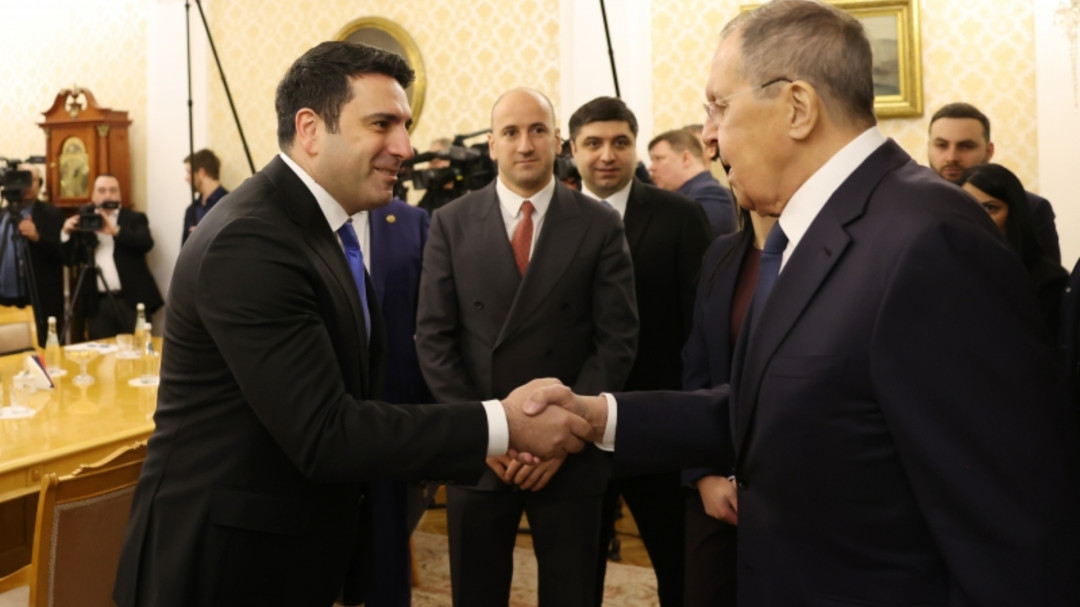
Armenia’s parliamentary speaker raised concerns about the increasingly unfriendly rhetoric from senior Russian officials and state television presenters in recent months during a meeting with Russia’s foreign minister in Moscow on Thursday.
“We are concerned by the rhetoric that we very often hear in the public space. This concerns not only us as officials, but Armenian society as a whole. It is very painful to hear such statements,” Simonyan told Sergey Lavrov, without explicitly referring to specific remarks.
The comments appeared to allude to repeated statements aired on Russian state television that Armenian officials have described as hostile. Last month, prominent TV host Vladimir Solovyov openly threatened Armenia and other post-Soviet countries drifting away from Russia’s sphere of influence, saying Moscow should use military force against them as it did against Ukraine. “To hell with international law and the global order,” Solovyov said.
The remarks followed similar statements by the same presenter in June, when Solovyov used a slur against Prime Minister Nikol Pashinyan and warned that Armenia could cease to exist as an independent state.
Earlier, last January, another leading state TV host, Dmitry Kiselyov, made a series of provocative claims during a prime-time weekly news program, including allegations that Armenia was “preparing for war” because of its arms purchases from France.
The broadcast also featured excerpts from Azerbaijani President Ilham Aliyev’s press conference, in which he labeled Armenia a “fascist state,” while maintaining a consistently pro-Azerbaijani tone. Kiselyov concluded the segment by warning that Russia could cut gas supplies to Armenia if Yerevan continued pursuing closer ties with the European Union.
On all three occasions, Armenia responded by summoning the Russian ambassador and delivering formal notes of protest.
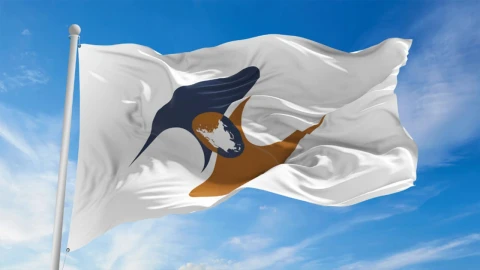
Armenia’s stated ambition to move closer to the European Union has in recent years prompted recurring criticism not only from state TV presenters but also from senior Russian officials, including Foreign Minister Sergey Lavrov, foreign ministry spokesperson Maria Zakharova, and Deputy Prime Minister Alexey Overchuk. While varying in tone, their statements consistently argue that Armenia’s EU aspirations are incompatible with its membership in the Eurasian Economic Union, a rivalling Russian-led trade bloc Yerevan joined in 2015.
Russian officials have described the EU as an openly anti-Russian, aggressive, and militaristic bloc, framing closer EU-Armenia ties as a challenge to bilateral relations. Yerevan, however, has not formally applied for EU membership just yet and has repeatedly said it has no plans to leave the EEU in the near term.
For his part, Lavrov pushed back against what he described as accusations coming from Armenian officials and the media.
“It is somewhat strange for us to hear statements claiming that some mythical attacks from the north are being prepared against Armenia, or talk of an existential threat coming from the Collective Security Treaty Organization,” he told Simonyan, referring to the Russian-led military alliance that Armenia formally remains a member of but has effectively suspended its participation. This happened due to the bloc’s failure to respond to Azerbaijan’s invasion of Armenia in September 2022.
Relations between Yerevan and Moscow have cooled in recent years amid a series of unresolved issues, including Russia’s failure to supply weapons already paid for by Armenia, largely due to Moscow’s invasion of Ukraine, and the inability of Russian peacekeepers to prevent the ethnic cleansing of Nagorno-Karabakh’s Armenian population between 2020 and 2023.

 Stories