 Civilnet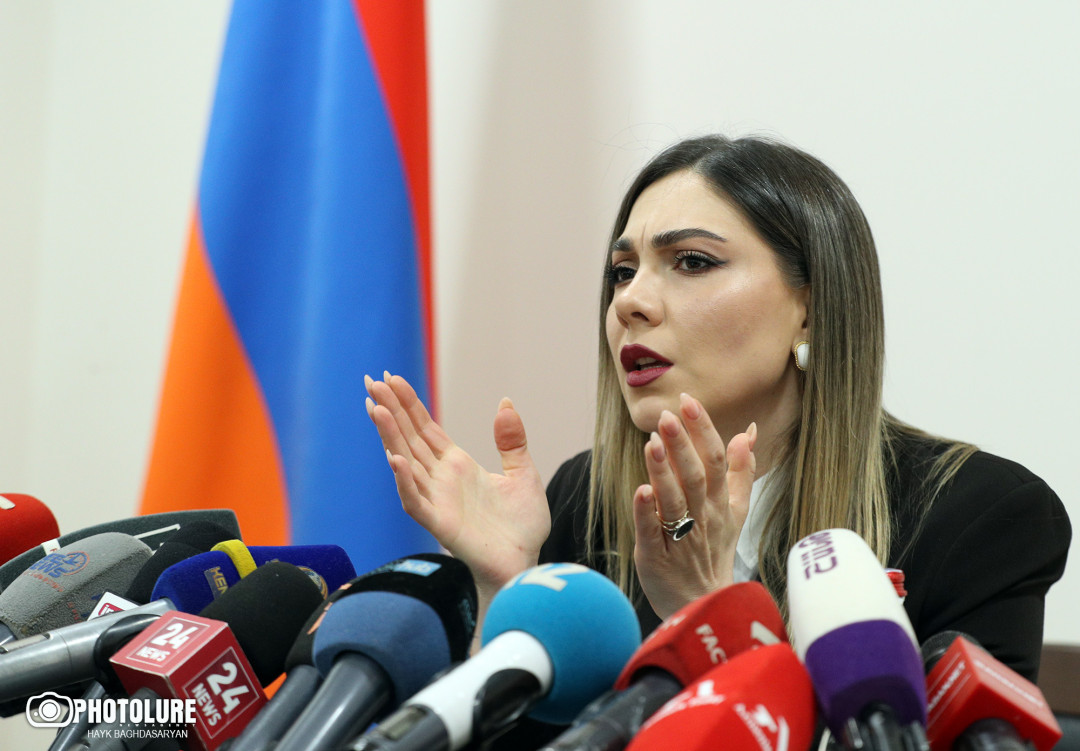
By Elen Muradyan
The draft of Armenia’s new constitution will be unveiled later this month for public discussion, Justice Minister Srbuhi Galyan said on Monday.
Speaking to reporters in parliament, she said the draft is “almost finished,” though key sections, including the preamble and parts of the first chapter, have not yet been finalized.
“We are open to any proposals,” Galyan said, describing the document as “an early edition subject to discussion.” However, she declined to clarify whether the preamble will retain references to the Declaration of Independence.
The preamble of Armenia’s current constitution refers to the 1990 Declaration of Independence. That declaration references the 1989 joint decision on the reunification of Soviet Armenia and Nagorno-Karabakh.
Also read: EXPLAINER: What’s behind Armenia’s potential constitutional changes?
In recent years, Baku has argued that references to the Declaration of Independence should be treated as territorial claims on Karabakh and has signaled that a constitutional amendment removing the reference is a precondition for signing a peace agreement between the countries.
Armenian officials deny that constitutional changes are tied to Baku’s demands and insist that the provisions of the draft peace deal override any domestic legislation. However, the question has become central to domestic debate.
Asked whether the reference would be removed, Galyan said no final decision has been made as the issue has yet to be discussed by the Security Council.
Galyan also said that the article governing future constitutional amendments and certain provisions related to the structure of government have not yet been finalized.
Controversial clauses
Beyond the preamble, Armenia’s constitution contains provisions that have in the past decade drawn criticism from legal experts and opposition politicians alike.
One such provision is the “stable majority” mechanism introduced by the 2015 constitutional reform. Under the rule, if no party wins more than 50% of the seats in parliamentary elections and the qualifying parties fail to form a coalition, a second round of elections is triggered.
In this runoff, the two leading parties from the first round compete, and the winner receives additional mandates to secure a majority in parliament, regardless of their initial vote share. Critics argue that it grants disproportionate power to a political force with relatively limited public support, undermining the fairness of representation.
Another point of concern has been the concentration of executive power in the office of the prime minister, raising questions about checks and balances in the political system.
Whether the new draft will address these issues remains unclear.

 Stories