By Hayk Ghazaryan
Armenia’s upcoming parliamentary elections on June 7 are unfolding against an increasingly geopolitical backdrop, with both domestic actors and international stakeholders viewing the vote as a contest over the country’s strategic direction.
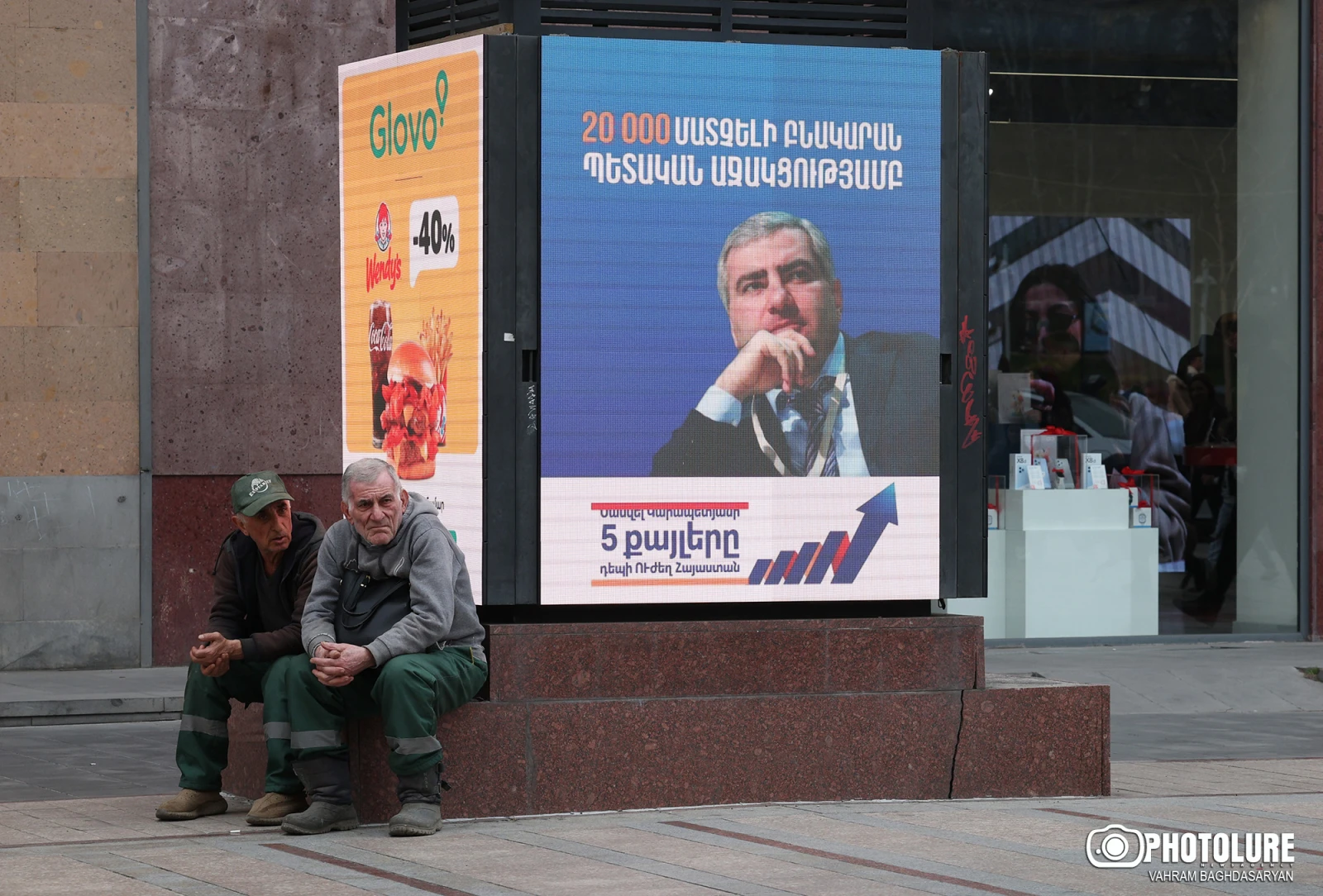
The campaign has been marked by heightened rhetoric, including warnings of potential conflict tied to the election outcome. Prime Minister Nikol Pashinyan has suggested that failure to secure a constitutional majority could lead to renewed war, while businessman Samvel Karapetyan, owner of the Tashir Group — a major real estate corporation operating in Russia and Armenia with diversified business interests — has warned of an “economic war” with Russia if the current government remains in power.
Also read: War and peace framing of Armenia’s parliamentary election
Narek Sukiasyan, a political science professor at AUA, says such narratives risk distorting democratic debate. “The fact that discussions about war are becoming a normal part of politics is not healthy and cannot positively influence informed decision-making,” political scientist Narek Sukiasyan said, describing the rhetoric as an attempt by competing sides to mobilize voters through fear.
Pro-Russian opposition and competing visions
Several major opposition forces participating in the election are broadly seen as favoring closer ties with Russia.
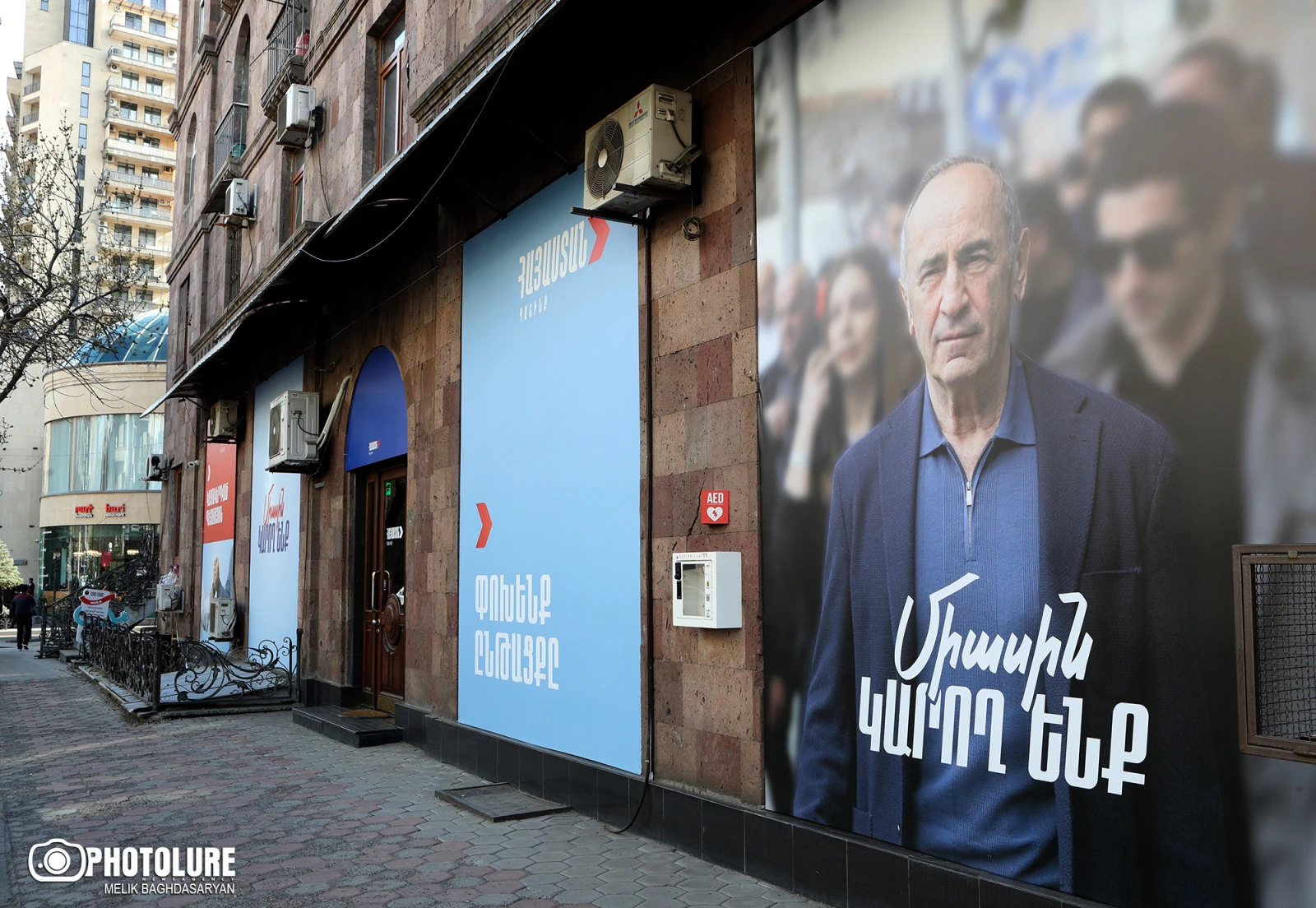
Former president Robert Kocharyan leads the Armenia Alliance, which has sharply criticized the peace agreement between Armenia and Azerbaijan initialed in Washington last August with mediation by U.S. President Donald Trump, as well as the TRIPP transport initiative — a proposed transport corridor through southern Armenia in which the United States is expected to have a role in oversight. The alliance frames these processes as undermining Armenia’s national interests.
Tycoon and leader of the Prosperous Armenia party, Gagik Tsarukyan, who is campaigning under the slogan “Proposal to Armenia,” is also associated with a pro-Russian orientation. He maintains close ties with Belarusian President Alexander Lukashenko, and figures at the top of his electoral list are widely viewed as aligned with Moscow.
Samvel Karapetyan, currently under house arrest, has formed the “Strong Armenia with Samvel Karapetyan” bloc. His platform emphasizes the economic importance of ties with Russia and calls for reassessing bilateral relations. At the same time, the bloc signals a pragmatic approach, saying it accepts the realities of recent years and does not question the TRIPP project or the ongoing peace process with Azerbaijan.
Former ombudsman Arman Tatoyan’s “Wings of Unity” party does not clearly align with either a pro-Russian or pro-Western camp. However, Tatoyan has recently drawn attention by calling for a park in the resort town of Jermuk to be named after Trump.
Government pivots westward amid security shocks
The ruling Civil Contract party has significantly reoriented Armenia’s foreign policy toward the West and Europe during its five years in power.
This shift accelerated after September 2022, when Azerbaijan attacked and occupied parts of Armenia’s sovereign territory. Russia and the Collective Security Treaty Organization (CSTO), of which Armenia is a member, did not intervene or issue a political response, prompting growing frustration in Yerevan. Since then, Armenia has effectively frozen its participation in the bloc.
Relations deteriorated further after Azerbaijan’s September 2023 offensive in Nagorno-Karabakh and the subsequent displacement of the region’s Armenian population. Russian peacekeepers deployed in the area were unable to prevent the outcome, deepening public and political distrust in Armenia.
Also read: Armenia’s ruling party no longer frames Russia ties as strategic alliance in new program
In 2025, Armenia adopted a law on pursuing future European Union membership. While the move does not formally launch an accession process, it has raised concerns in Moscow about Yerevan’s long-term trajectory.
Despite political tensions, economic ties between Armenia and Russia have continued to expand.
External actors and pre-election signals
The pre-election period is also marked by a series of high-level international events in Yerevan, which observers say carry political significance.
In early May, Armenia is set to host a summit of the European Political Community, bringing together leaders from several dozen countries. Alongside this, an EU–Armenia summit is planned, as well as a state visit by French President Emmanuel Macron.
Some observers interpret the timing of these events — just one month before the election — as a signal of European support for Pashinyan, given the unprecedented scale of such gatherings in Armenia.
The European Union is also expected to deploy a hybrid response team to monitor the elections, reflecting concerns over potential foreign interference, including disinformation.
Experts say the election is shaped by competing external influences. According to political analyst Tigran Grigoryan, both Western and Russian actors have clear preferences regarding Armenia’s political direction.
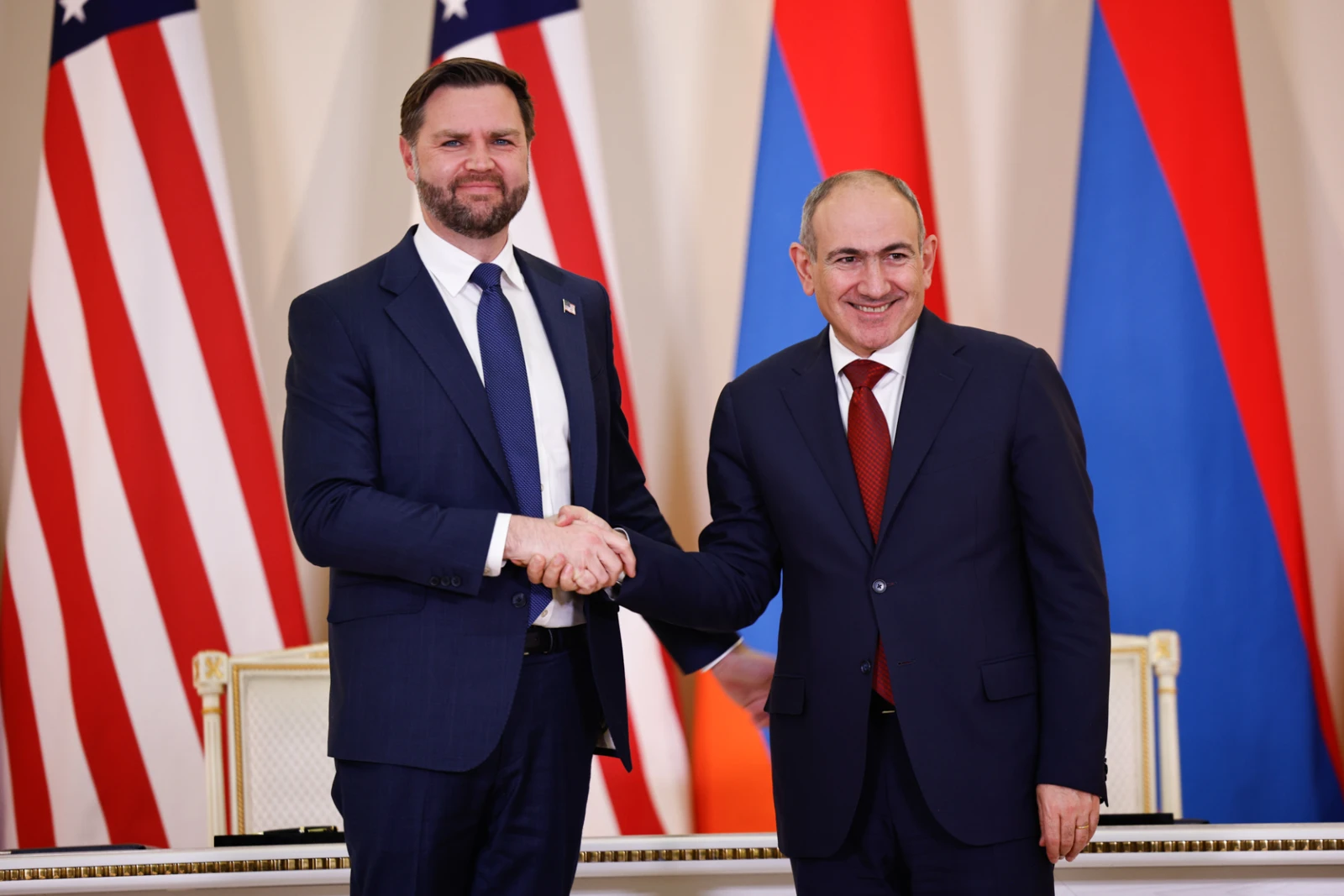
For the United States, the future of initiatives such as TRIPP is closely tied to the current leadership. During a visit to Armenia in February, U.S. Vice President JD Vance voiced support for Pashinyan, saying he was capable of building long-term partnerships necessary for such projects.
At the same time, some analysts point to Russian-linked disinformation campaigns as a tool of influence. Sukiasyan argues such efforts are less effective in societies where trust has already eroded, noting that negative perceptions of Russia have deepened since the 2020 war and subsequent crises.
They also caution that Western engagement can also be perceived as an intervention. High-level visits, summits, and public endorsements during the pre-election period may shape public perceptions, even if indirectly.
A vote shaped by geopolitics
Russia has signaled it is prepared to work with any Armenian government formed after the election. Following talks with Pashinyan in Moscow on April 1, President Vladimir Putin expressed hope that bilateral ties would continue to develop regardless of the outcome.
Alongside Western and Russian involvement, the roles of Azerbaijan and Turkey further complicate the geopolitical landscape, adding another layer of pressure to an already polarized campaign.
Also read: Putin warns on Armenian elections, EU shift

 Stories