By Melika Safaei
For decades, Naira Hovsepyan knew the patterns by heart. Like most master weavers at Artsakh Carpet, she spent her life knotting the geometric, fixed-color traditional rugs of her homeland.
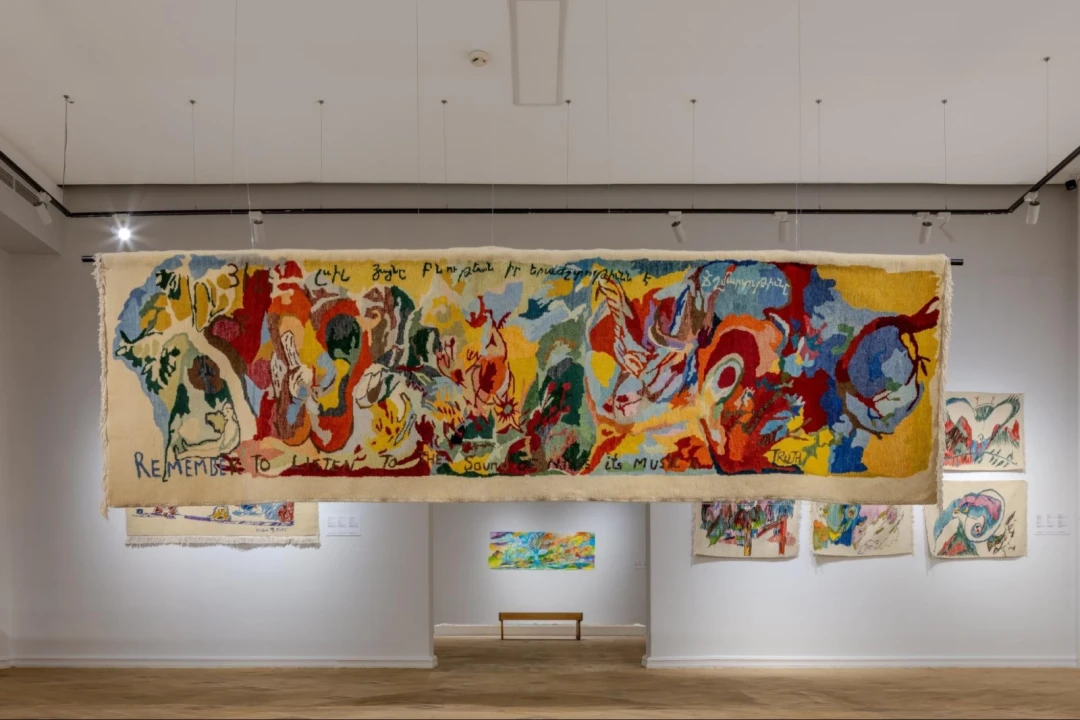
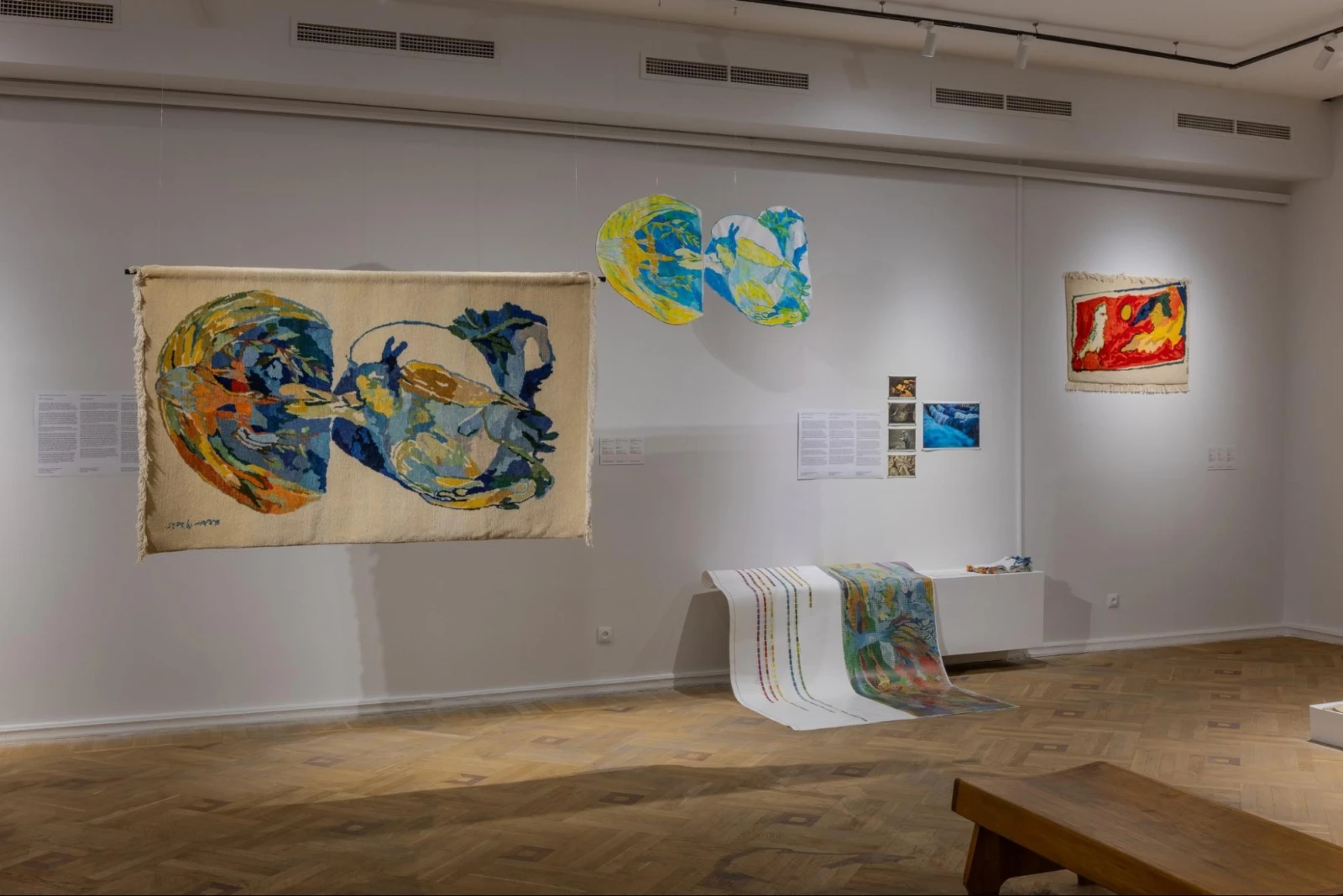
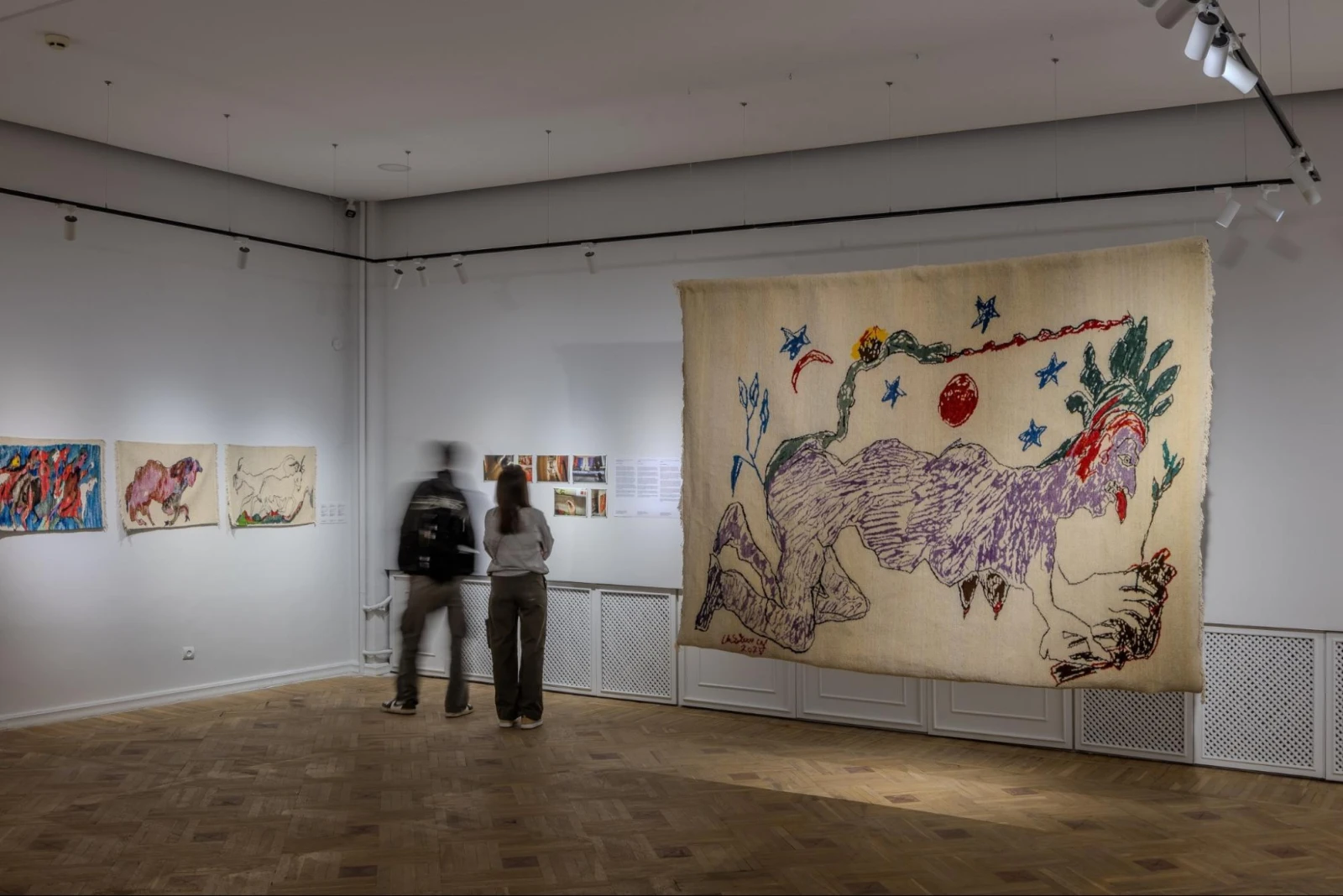
But walking through the four gallery halls of the National Gallery of Armenia today, the 37 handmade carpets and tapestries hanging on the walls look entirely unfamiliar to her. They are figurative, colorful, and distinctly contemporary. The display is the result of a one-year collaboration between weavers who have been displaced from their homes in Nagorno-Karabakh and the internationally renowned Armenian-Egyptian-Canadian artist Anna Boghiguian.
The exhibition “Anna Boghiguian: Weaving Culture,” which opened on May 15 at the National Gallery in Yerevan, marks Boghiguian’s first solo show in Armenia. Curated by Nairi Khatchadourian and conceived by the curatorial practice, AHA collective, the project began in 2025 during Boghiguian’s art residency with the organization. After turning her focus to the Armenian weaving tradition—visiting carpet workshops, meeting with displaced women weavers from Nagorno-Karabakh, and traveling through southern Armenia to the border city of Meghri—an ambitious paper-to-carpet translation process was initiated. The project is supported by the European Union Delegation in Armenia.
“These new carpets are a different world, the watercolor colors, the shades,” Hovsepyan says, reflecting on the process of translating Boghiguian’s art into carpets. “ As I weave, I am constantly trying to understand what comes next, because it is difficult to grasp exactly what the artist has painted.”
For this group of weavers—women who survived the 44-day war, the grueling 2022-2023 blockade, and the ethnic cleansing of Nagorno-Karabakh—translating Boghiguian’s vision into wool became a way to keep their community intact and their minds occupied.
For the women of Artsakh Carpet, the loom was always more than just a job. During the 2020 war, while their husbands and sons were at the front lines, many of them still went to the workshop in Stepanakert.
“When we were there together, we felt stronger, more certain that nothing would happen,” says Alyona Zakharian. During the months-long blockade that preceded the 2023 displacement, the weavers shared whatever scraps of yarn they had left, just so no one would be forced to sit idle at home.
When they were finally forced to flee, they left everything behind. The doors of the Shushi and Stepanakert workshops were locked; half-finished carpets were left sitting on the looms.
“There are moments when I say I am tired and should go work somewhere else. But something inside you does not let you leave. Carpet weaving is like an addiction, you enter it and cannot pull yourself out. By taking part in this project, I wanted to study Anna Boghiguian’s drawings, to understand their meaning.“ Zakharian says.
”At first I was very discouraged that, at this age, I am still weaving. But when I began working on this project, meeting Boghiguian changed me. I saw her strength and energy at that age, and I said to myself: "If she can do it, so can you.” Lena Arakelyan says.
Reassembling that community in Yerevan, and in workshops across nearby villages, was a matter of healing and emotional survival. Master Weaver Milena Ordiyants, who spent 25 years teaching and working in Artsakh, says the displacement initially drained her of any desire to create. But eventually, the physical rhythm of the project pulled her back. “Weaving became a way to heal from a difficult psychological state,” she says. “From Artsakh, I brought with me not just a technique, but an entire culture”
“Aida Hambardzumyan, who has been weaving for 45 years, felt that shift deeply. While weaving “Trees Have a Memory”, she was transported back to the garden she left behind in Artsakh. “We had a garden there, and Anna’s drawing was very similar to our garden.”
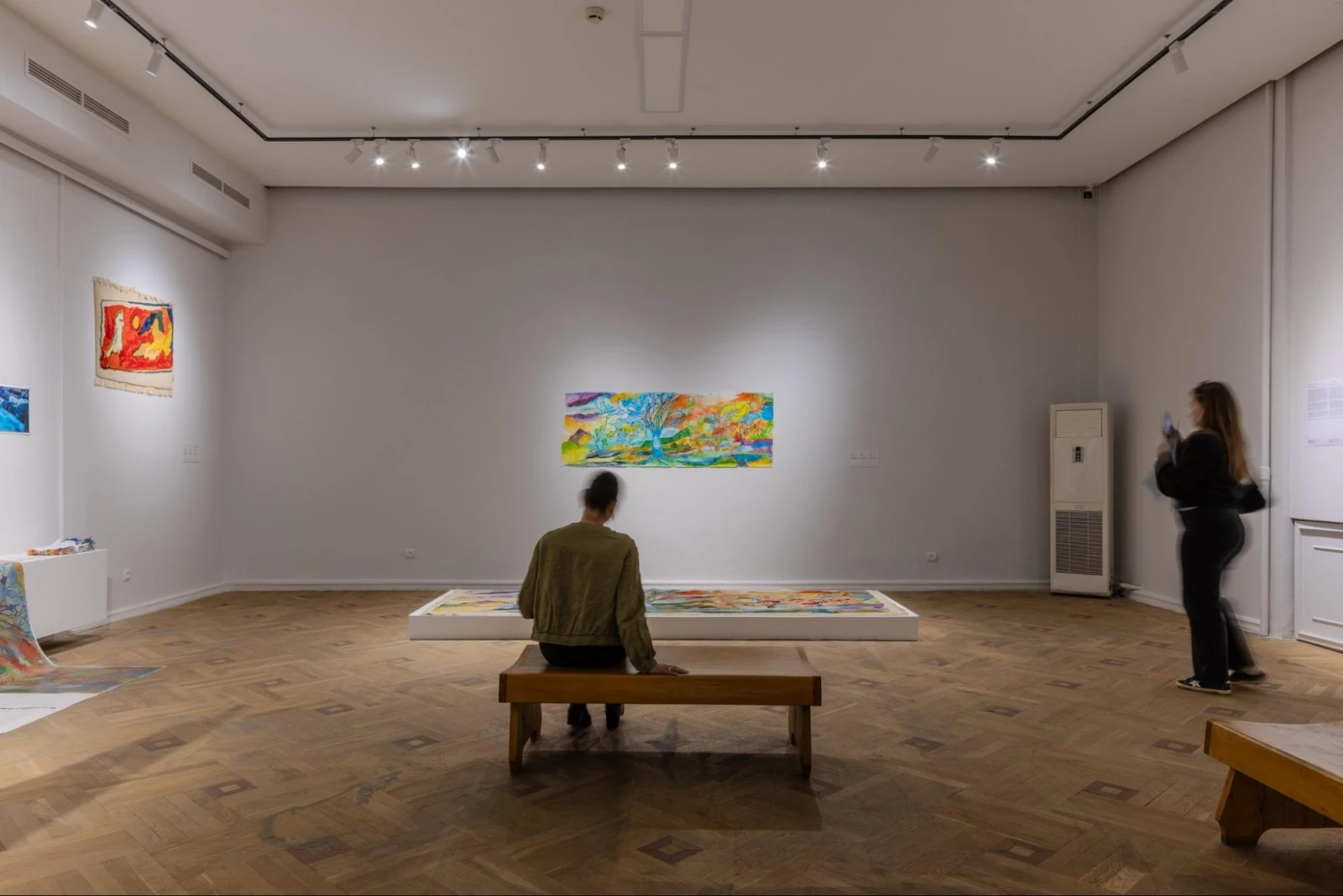
“The challenge was in the colors, which were very different from classical carpets. For me, it was a discovery. I had never before made a carpet from a contemporary drawing. I worked on it with real pleasure. Sometimes I counted every wall, every section. At the end of the work, I step back, look at it from afar, and admire it,” Anush Abrahamyan says.
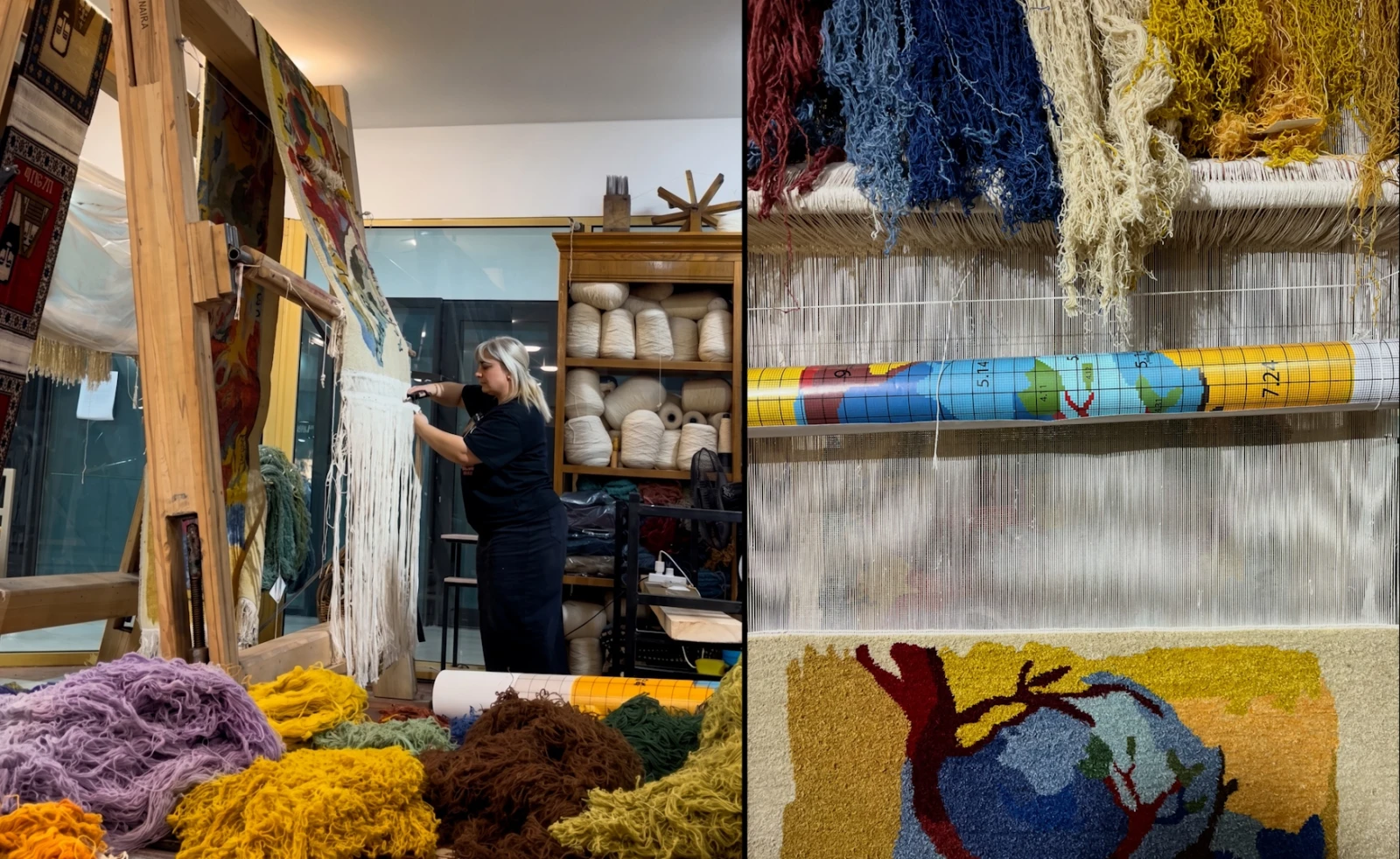
Before the weavers could even touch the looms, the project hit a technical wall. Traditional Armenian carpets usually max out at 10 to 12 colors. Boghiguian’s emotional landscapes demanded an entirely different palette. Over the course of the project, more than two hundred distinct dyes were used.
Solving this fell to two dyers from completely different backgrounds: Evgenya Shabazyan, a chemist who has been writing secret dye formulas in notebooks for 40 years, and Mariam Nalbandyan, who forages wild Armenian flora to create natural botanical dyes.
“This project has been a kind of madness from beginning to end,” says Mariam Nalbandyan
For Evgenya Shabazyan, the Boghiguian project pushed the limits of her abilities. “You have to close your eyes and imagine the shades,” she says. “What looks like plain white may in fact contain seven other tones within it.”
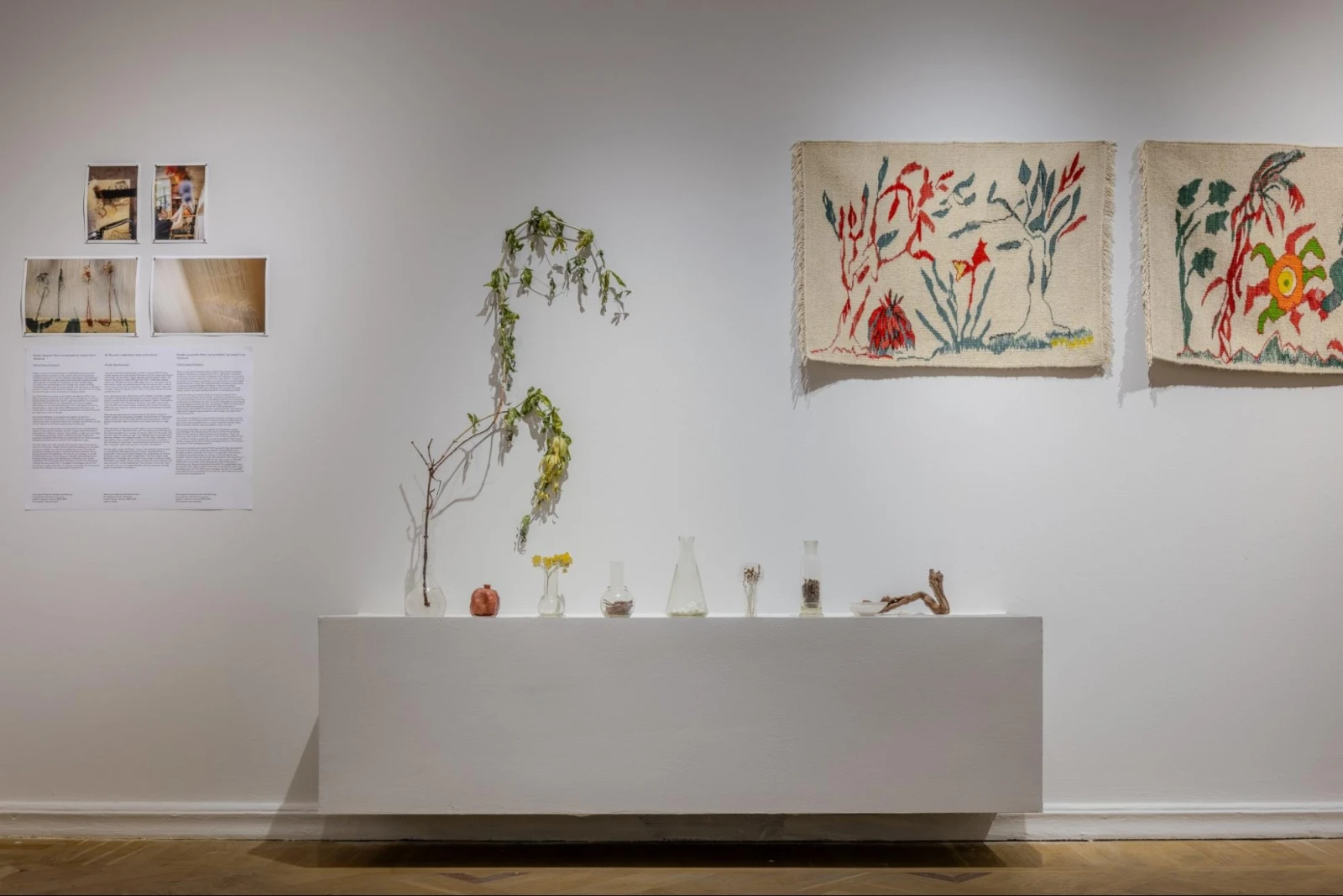
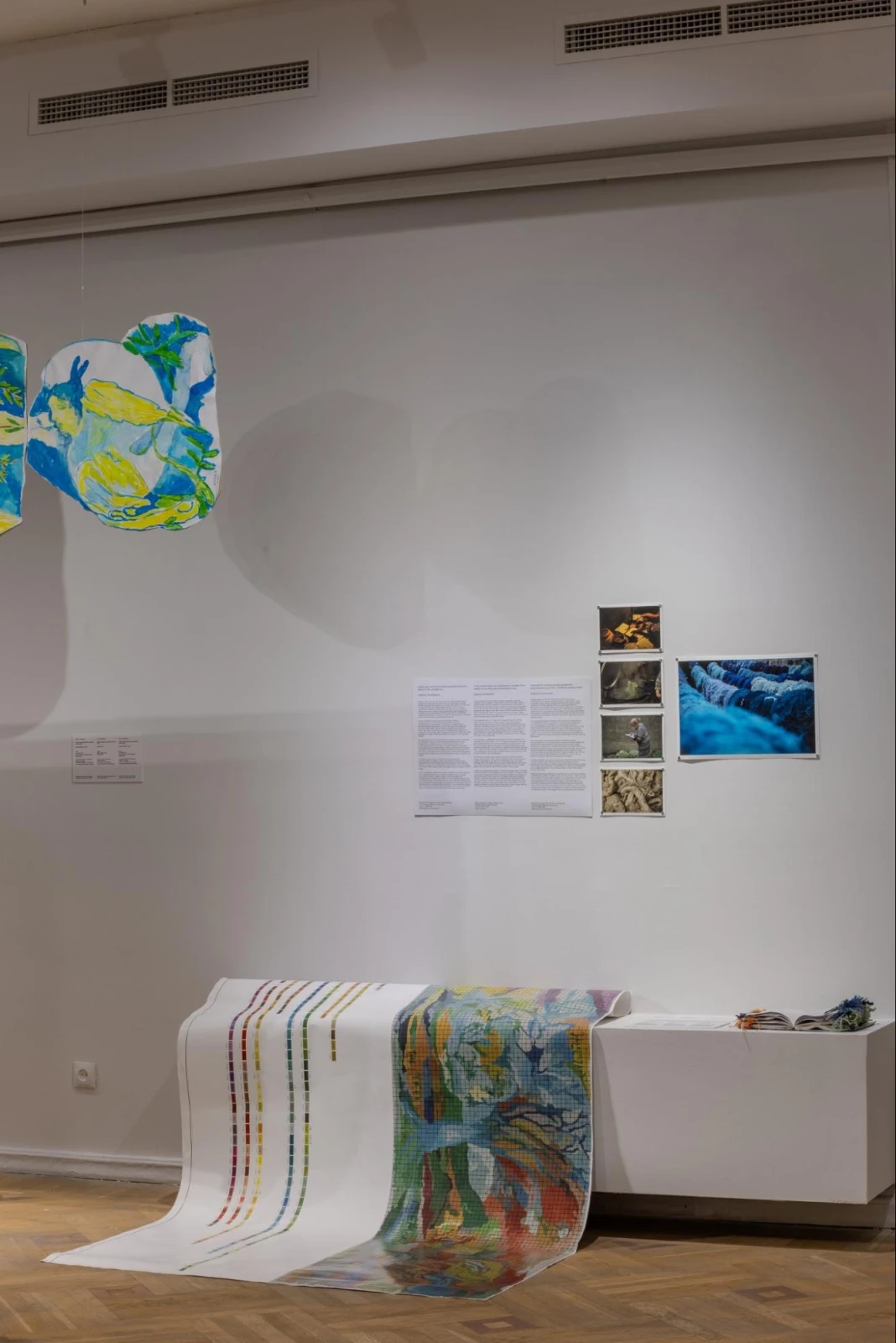
Curator Nairi Khatchadourian notes that, “"From this one-month journey emerged a series of works on paper nourished as much by the experience of the country’s landscape and history as by its unstable geopolitical context, the lived realities of forcibly displaced weavers, and the spiritual aspirations of this artist-bard in dialogue with everyone she encounters. From Boghiguian’s fluid and expressive drawing, a new genre is born in Armenia: watercolor carpets."
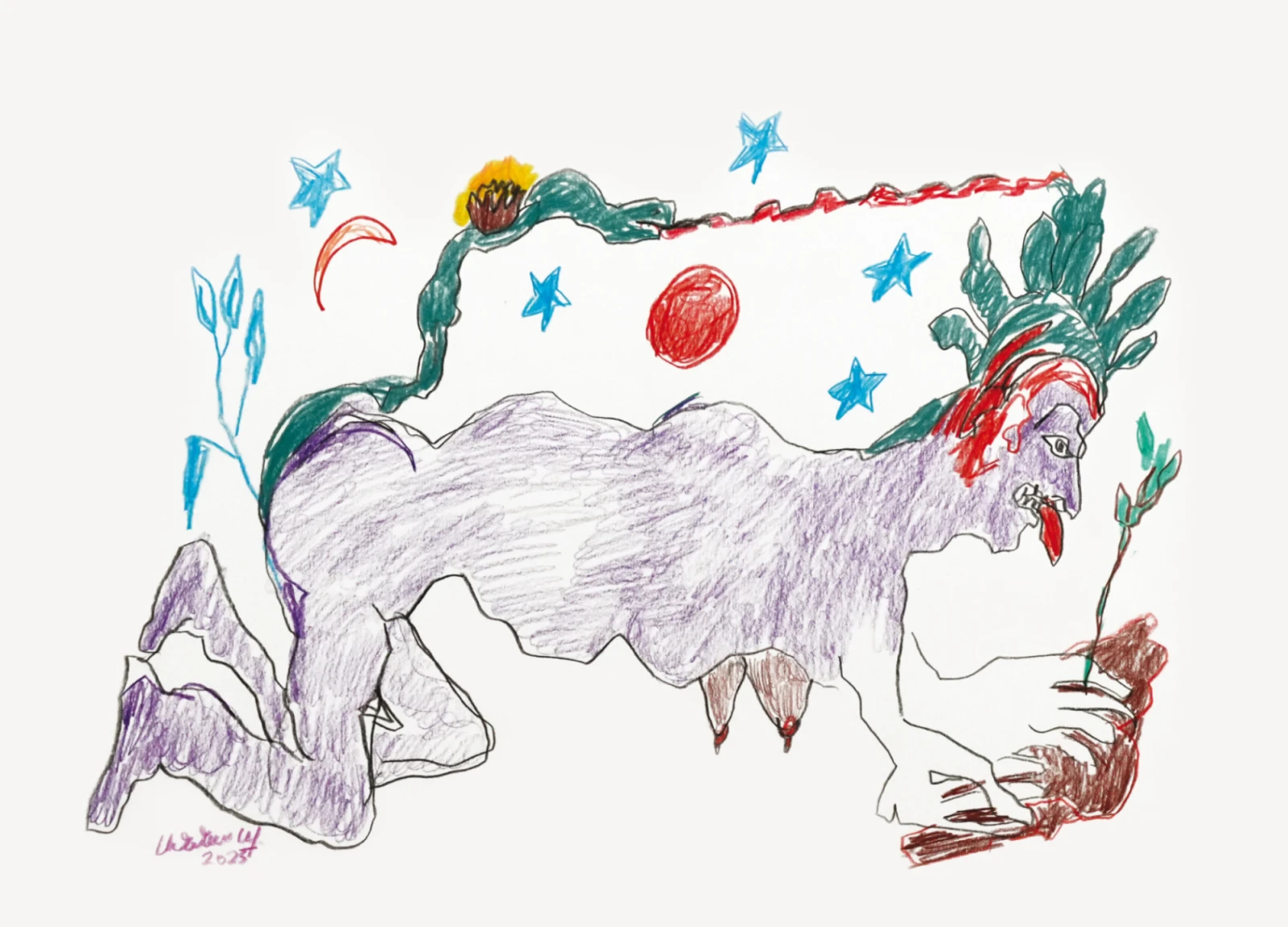
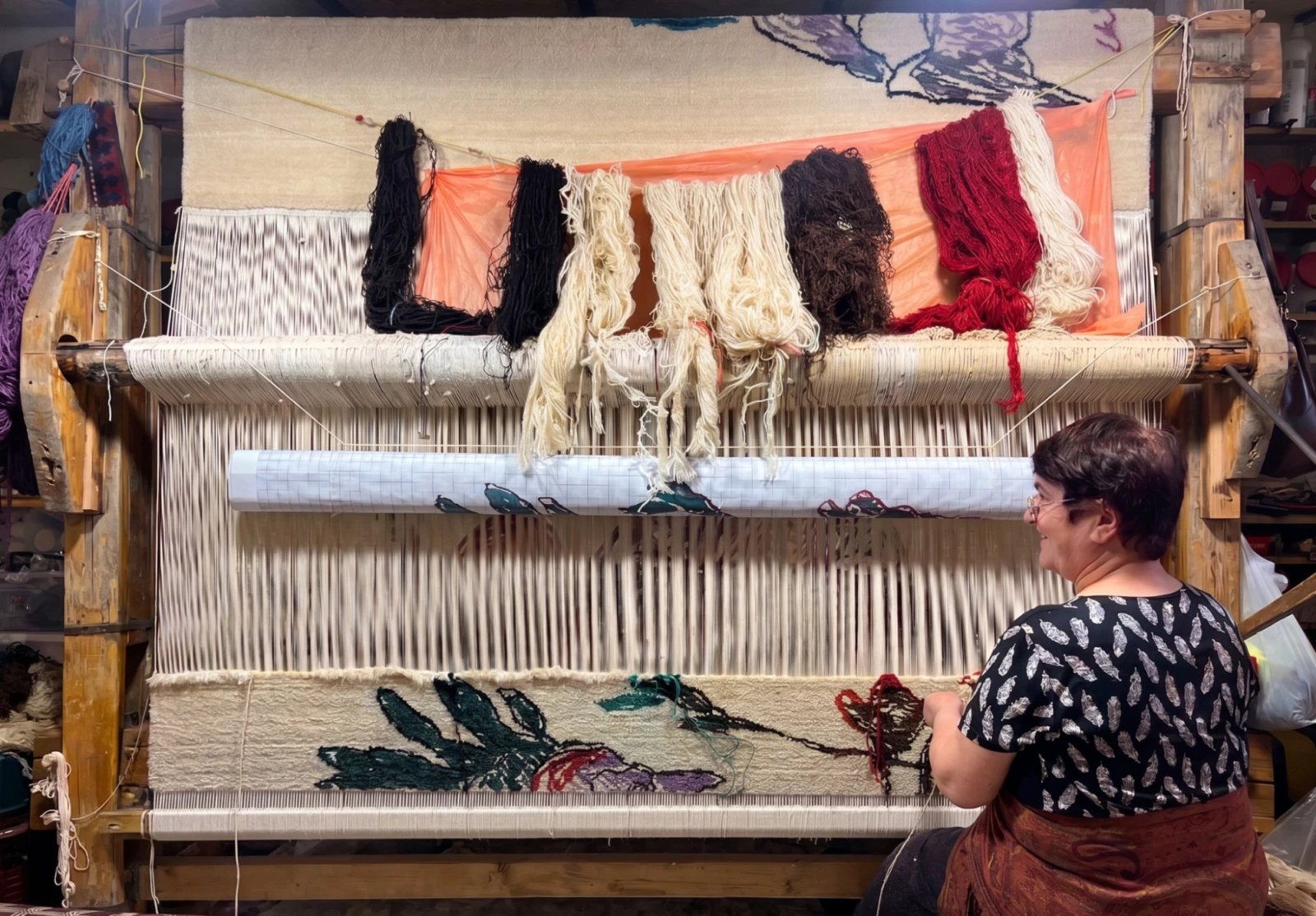
Boughigan says that, ”It is a great opportunity to read what the weavers share about their lives and their experiences, their reactions to my work, and their experiences while weaving, especially in terms of color. The weavers told me that, unfortunately, they had to leave behind their lives in terms of material and environment, their habits, friends, and all that was familiar. Although exile creates wounds, most have managed to construct a new life in Yerevan.”
Note: The personal accounts and quotes featured in this article are drawn from testimonials collected by AHA Collective for the "Anna Boghiguian: Weaving Culture” exhibition, currently on display at the National Gallery of Armenia.


 Stories