By Lia Avagyan
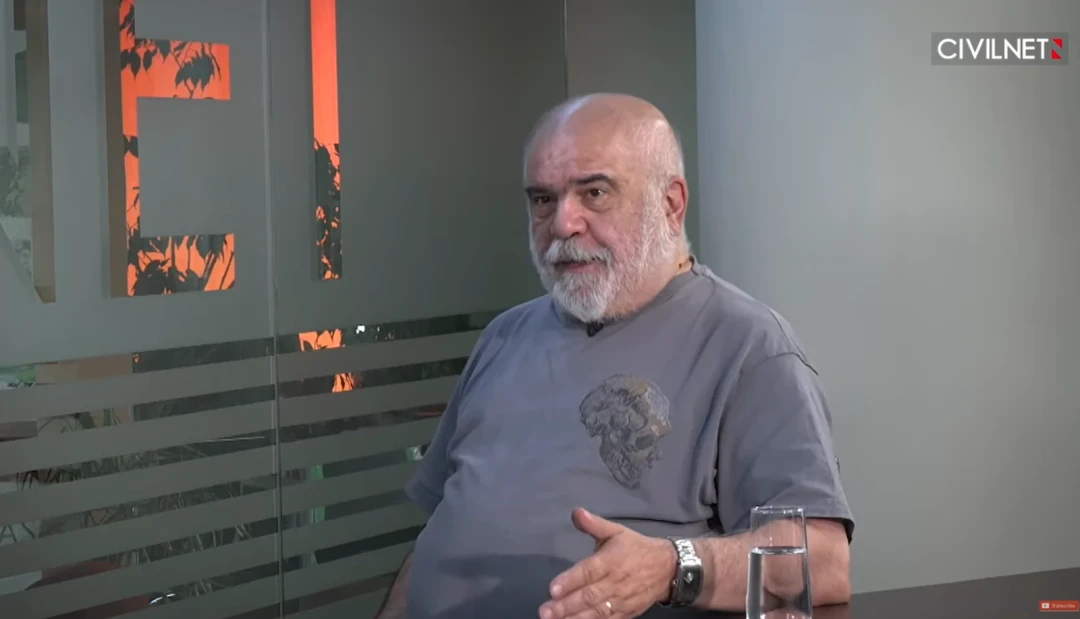
Russia's pressure campaign against Armenia ahead of Sunday's parliamentary elections is likely backfiring, consolidating support around Prime Minister Nikol Pashinyan rather than weakening him, political scientist Alexander Iskandaryan said in an interview with CivilNet published on Friday.
Despite the election being framed as a civilizational choice between Russia and the West, Iskandaryan is skeptical that the outcome will produce dramatic geopolitical shifts. Whoever wins, Armenia will not fundamentally reorient overnight — it simply lacks the resources and leverage to do so. The EU membership debate, he argues bluntly, is a pre-election narrative rather than a realistic near-term agenda: earlier last year Armenia has passed a symbolic law declaring its EU aspirations, but has not formally applied for membership, and the accession process typically involves years of preparatory work before a country even receives candidate status. Everyone in the room — Armenian politicians and Russian officials alike — knows this perfectly well.
Russia is playing tactics, not strategy
The more interesting question, Iskandaryan says, is why Russia chose to escalate now. In the weeks leading up to the vote, Moscow openly increased economic pressure on Armenia, restricting access for several Armenian products to the Russian market. Iskandaryan reads this not as a long-term strategic repositioning but as a clumsy pre-election tactic — an attempt either to push Pashinyan out or at least to strengthen pro-Russian forces in the new parliament.
Also read: Armenia faces sweeping Russian import restrictions across industries
The problem, he argues, is that it almost certainly isn't working as intended. Pressure of this kind — what he likens to the Soviet comedy trope of "you won't cooperate, we'll cut the gas" — tends to consolidate societies rather than fracture them. He points to Iran as the archetypal example: four decades of sanctions have produced nationalist consolidation rather than capitulation. Voters who were already inclined toward Pashinyan's pro-European course, he suggests, are now more motivated than ever.
After the election, Iskandaryan expects the real diplomacy to resume quietly. A Pashinyan-Putin meeting is reportedly being discussed for late June. The gas threats, the import bans, the inflammatory statements — these are pre-election noise, not the architecture of a new relationship.
The real battle: turnout
On the domestic picture, Iskandaryan sees Civil Contract as the likely winner of the most seats, though probably a simple rather than constitutional majority. His reasoning is structural. In the 2021 election, Pashinyan retained power with 54 percent support despite Armenia's defeat in the 2020 Nagorno-Karabakh war, with voter turnout at 49.4 percent. Civil Contract's base is disciplined and will show up. The question is what happens with the disengaged majority.
Iskandaryan describes that segment of the electorate not as supporters of any opposition party, but as the deeply apathetic — people who feel unable to change anything, who have tuned out politics entirely. If they come out in large numbers, they are more likely to vote against the incumbent than for it. Opposition forces and civic groups urging high turnout understand this arithmetic clearly.
He expects three to four parties to clear the threshold: Civil Contract, the Strong Armenia Alliance, the Armenia Alliance of former President Kocharyan, and possibly a fourth. He is uncertain about Kocharyan's bloc — around 8% in polls is not negligible, but he notes a growing number of respondents refusing to declare their preference at all, which makes any forecast unstable.
The bottom line, in Iskandaryan's reading: Civil Contract's real foundation is not enthusiasm but apathy — and managing that apathy, rather than winning hearts, is what Sunday's vote is really about.

 Stories