 Alexander Pracht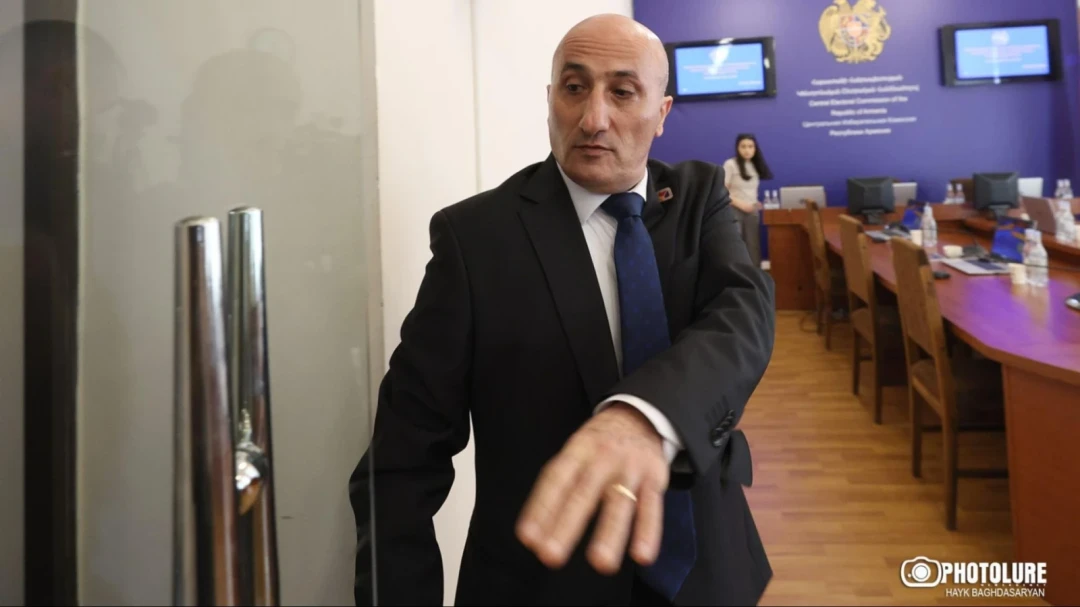
Armenia’s Central Electoral Commission on Sunday published the final results of the parliamentary election held on June 7, following a week of recounts and review of complaints. Some of these procedures have caused criticism over the alleged use of administrative resources by the ruling party in order to secure a larger share of seats in the new parliament.
The final tally remained largely unchanged with only minimal adjustments to vote counts compared to the preliminary results announced the day after the election.
The election saw a significantly higher turnout of almost 59%, compared to previous parliamentary elections in 2018 and 2021, when participation was slightly below 50%.
Also read: Armenia reports 59% turnout in parliamentary election, highest since 2017
The ruling Civil Contract party, led by Prime Minister Nikol Pashinyan, finished first with 49.3% of the vote, followed by Russian-Armenian billionaire Samvel Karapetyan’s Strong Armenia alliance with 23%. The Armenia alliance, headed by former president Robert Kocharyan, came third with 9.8%. All three forces secured representation in parliament after passing the required thresholds.
The Prosperous Armenia Party, led by tycoon Gagik Tsarukyan, however, fell short of the 4% threshold needed to enter parliament, receiving 3.95% and missing out by several hundred votes.
In the days following the vote, both Civil Contract and opposition parties requested recounts at hundreds of polling stations across the country, with Prosperous Armenia in particular hoping the process could deliver the additional ballots needed to clear the threshold. The recounts, however, also added to Civil Contract’s total, while results from three polling stations were ultimately invalidated over violations on voting day and removed from the overall tally.
One of those stations, located in the southern town of Agarak, drew particular scrutiny on election night after dozens of servicemen were reported to have cast ballots there after the 8 p.m. deadline. Opposition figures alleged the incident was evidence of the ruling party using administrative resources as a last-ditch effort to secure more votes.
In a statement on Monday, the electoral commission said a rerun would not be held at the three invalidated polling stations. It argued that, unlike on election day, voters in a repeat ballot would already be aware of the overall results, potentially influencing their choices, a phenomenon known as tactical voting.
“From the perspective of equal suffrage, […] a repeat vote may undermine the principle of voter equality, as one group of voters would be placed in substantially different circumstances from those under which the rest of the electorate cast their ballots,” the commission said.
The commission’s head Vahagn Hovhakimyan also added that the decision has not affected the overall election outcome.
On Sunday, six opposition parties released a joint statement contesting the election outcome and pledging not to recognize the results.
The statement decried what the authors claim amounts to use of administrative resources and pressure in favor of the ruling party, political arrests and persecutions, propaganda, and “arbitrary editing of voting results in many polling stations.” The pledge was signed by Strong Armenia, Armenia Alliance, Prosperous Armenia, Bright Armenia, Armenian National Congress, and National Democratic Alliance.
The statement alleges that “results recorded in such circumstances cannot be a basis for the formation of a legitimate and trustworthy government.”
“We will continue to act exclusively within the framework of the Constitution, laws and democratic principles, protecting the right of citizens to free expression and the fundamental values of the statehood and democracy of the Republic of Armenia,” the statement concluded.
It remains unclear whether Strong Armenia and Armenia Alliance intend to boycott the National Assembly or introduce any new legal challenge to the new parliament. Both parties previously pledged to challenge the results in court.
Following the announcement of the final results, Civil Contract will hold 64 seats in the National Assembly, followed by Strong Armenia with 29 seats and the Armenia Alliance with 12. In addition to the 101 seats allocated through the election, Civil Contract received three extra mandates representing ethnic minorities, while Strong Armenia was assigned one such seat.
Distribution of seats in Armenia’s National Assembly following the final election results
However, had Prosperous Armenia crossed the threshold and entered parliament, it would have received five seats, causing Civil Contract to lose three mandates and fall below the 60% mark.
“[The decision] deprives a political force that received sufficient electoral support of the opportunity to enter parliament, while artificially granting the ruling party three additional seats in clear violation of the law,” Tigran Grigoryan, director of the Yerevan-based think tank Regional Center for Democracy and Security, said in a comment for CivilNet.
Grigoryan also argued that this decision may be reflected in Armenia’s standing in international democracy rankings.
“It endangers one of the principal achievements of 2018, the institution of free and fair elections,and public trust in that institution,” he said.
Controlling more than 60% of seats is crucial as it allows the ruling party to make key appointments and dismissals of senior officials and judges. These include members of the Constitutional Court and the Court of Cassation, the Supreme Judicial Council, the Prosecutor General, members of the Electoral Commission, as well as the governor of the Central Bank.
This majority will also allow Civil Contract to pass and amend so-called constitutional laws, but not the constitution itself: the party has failed to secure the 2/3rds supermajority in parliament required to initiate a constitutional referendum. It announced such plans last year, with Prime Minister Nikol Pashinyan claiming that the country needs a new constitution, as the current version, last amended in 2015 under then-president Serzh Sargsyan, is unpopular and lacks legitimacy.
The likely reason, however, lies in foreign policy considerations. Civil Contract is eager to conclude a normalization deal with Azerbaijan, initialed last August in Washington, but Baku has said it would only sign if Armenia removes a provision from its constitution referring to the 1990 Declaration of Independence, which mentions Nagorno-Karabakh. The Azerbaijani leadership considers this a territorial claim. The provision is part of a constitutional article that, under the same constitution, cannot be amended under any circumstances, which may explain why Civil Contract is pushing to adopt a new constitution instead of amending the existing one.
Justice Minister Srbuhi Galyan said on Wednesday that the ruling party may still be able to bypass parliament, noting that there are mechanisms to initiate a constitutional referendum without holding a two-thirds majority of seats. She did not, however, elaborate on how this could be achieved.
In the week following the election, key figures behind the three opposition forces were subjected to travel bans as they attempted to leave the country. Prosperous Armenia leader Gagik Tsarukyan was barred from boarding a flight last Tuesday, which his party’s press representative described as “a family trip planned ahead.” Shortly after the incident, authorities announced that Tsarukyan had been charged with large-scale tax evasion.
A similar development occurred in relation to former president and Armenia Alliance leader Robert Kocharyan.
“My father was going to travel to Russia on personal business. He was supposed to leave for a few days, but they still staged their show and carried out their unlawful actions,” said Levon Kocharyan, Robert’s son and member of parliament on Sunday, referring to the authorities. Robert Kocharyan remains under investigation in the long-running investigation known as the March 1 case, which concerns the lethal crackdown on post-election protests in 2008 that left 10 people dead.
Strong Armenia’s campaign leader and Samvel Karapetyan’s nephew Narek Karapetyan also announced that he was stopped while attempting to cross into Georgia by land. Last month, authorities charged him with failing to disclose alleged Russian citizenship to the electoral commission, a declaration that would have disqualified him from running for parliament. He denies ever having held Russian citizenship.



 Stories