By Narek Melconian
On June 30, Health Minister Anahit Avanesyan presented the latest financial figures for Armenia’s universal health insurance system, launched on January 1, 2026 as a phased reform intended to bring most of the population under a single insurance model, so far costing the government $266 million (3% of Armenia’s entire state budget).
The system initially covered children, pensioners, social-support groups, and employees earning more than AMD 200,000 (roughly $550) a month. And from 2027, coverage is set to expand to all registered employees (regardless of salary), people working under civil-law contracts, taxi drivers, and certain self-employed groups, followed by most of the remaining population in 2028.
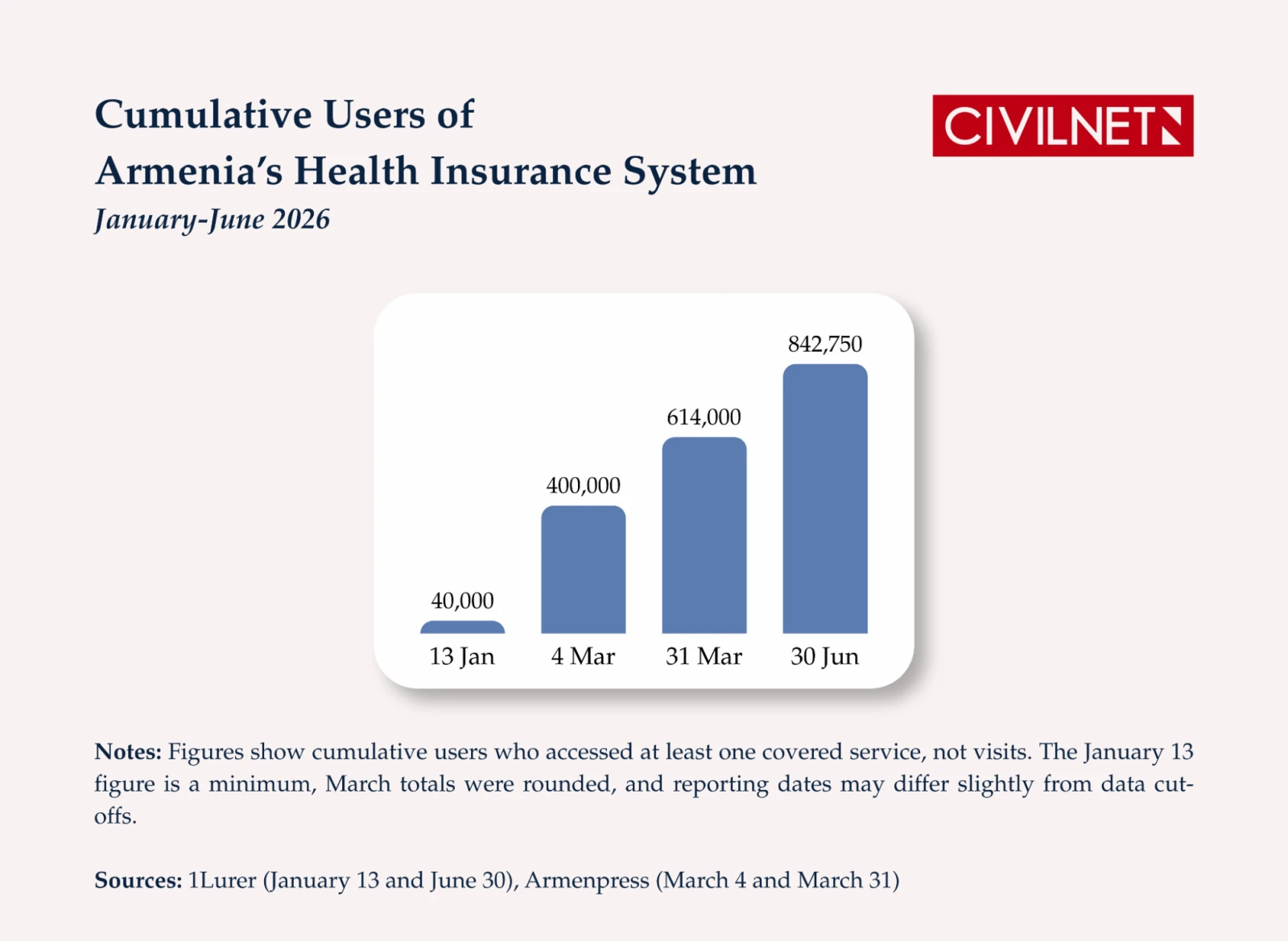
“Our goal is to bring 3 million people under the health insurance system," Avanesyan said on Tuesday, a target that would bring the reform close to covering Armenia’s entire resident population. Around 843,000 people have already used the system, showing that demand is rising rapidly even before the system expands to the additional groups.
The government’s main challenge will be financing and forecasting the additional healthcare demand created as millions more people enter the system, an uncertainty previously raised by the Ministry of Finance.
By the end of the second quarter of 2026, the cumulative number of people who had used insurance-covered healthcare had risen from 614,000 to 842,750, an increase of 37%, showing that utilisation is already growing rapidly before coverage expands to additional groups in 2027 and 2028.
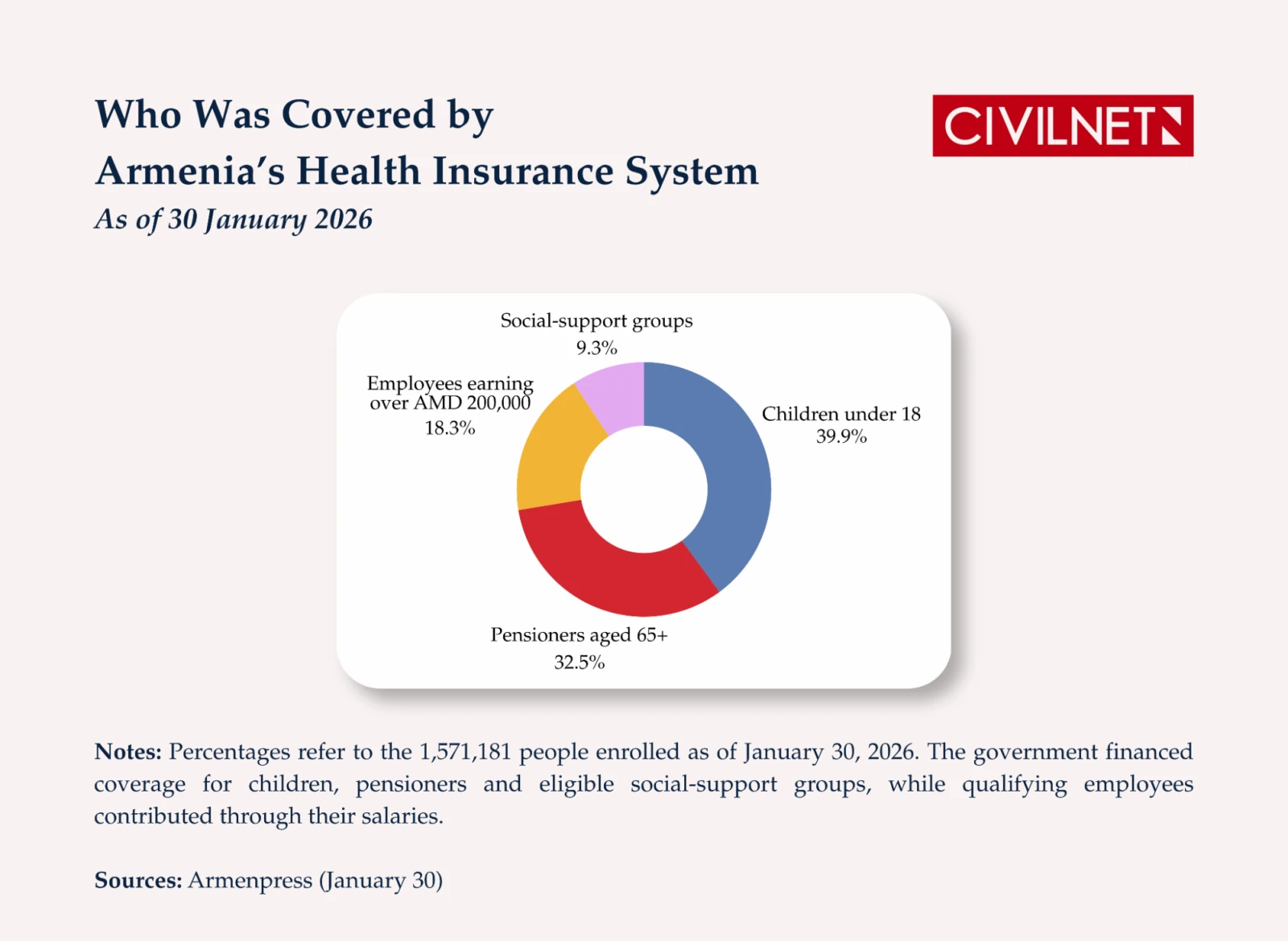
One month into the rollout, the state paid for the insurance coverage of 82% of those enrolled, including children, pensioners, and social-support groups, while the remaining 18% were employees who contributed through monthly salary deductions.
Taken together, the enrollment figures show that the government financed the opening stage on a substantial scale, but they do not yet demonstrate that the system will remain affordable in 2027, with government projections putting the system’s total cost at around $685 million in 2027, up from $580 million in 2026.
Although many people entering the system in 2027 will contribute through insurance payments, they will also require additional care, so if the cost of their care exceeds the revenue generated by their contributions, the government may need to provide further funding from the state budget.
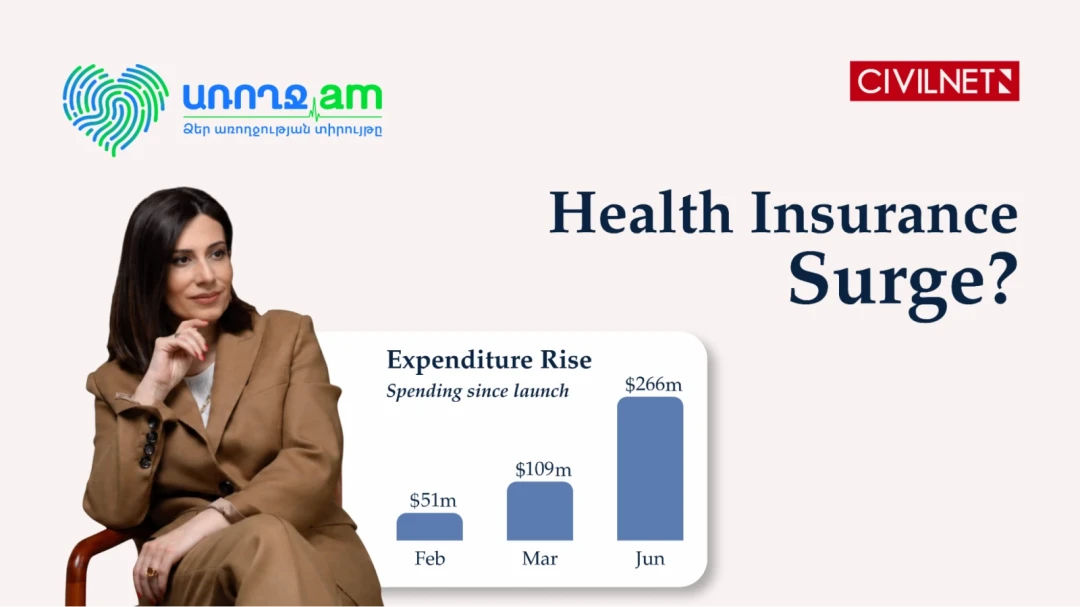
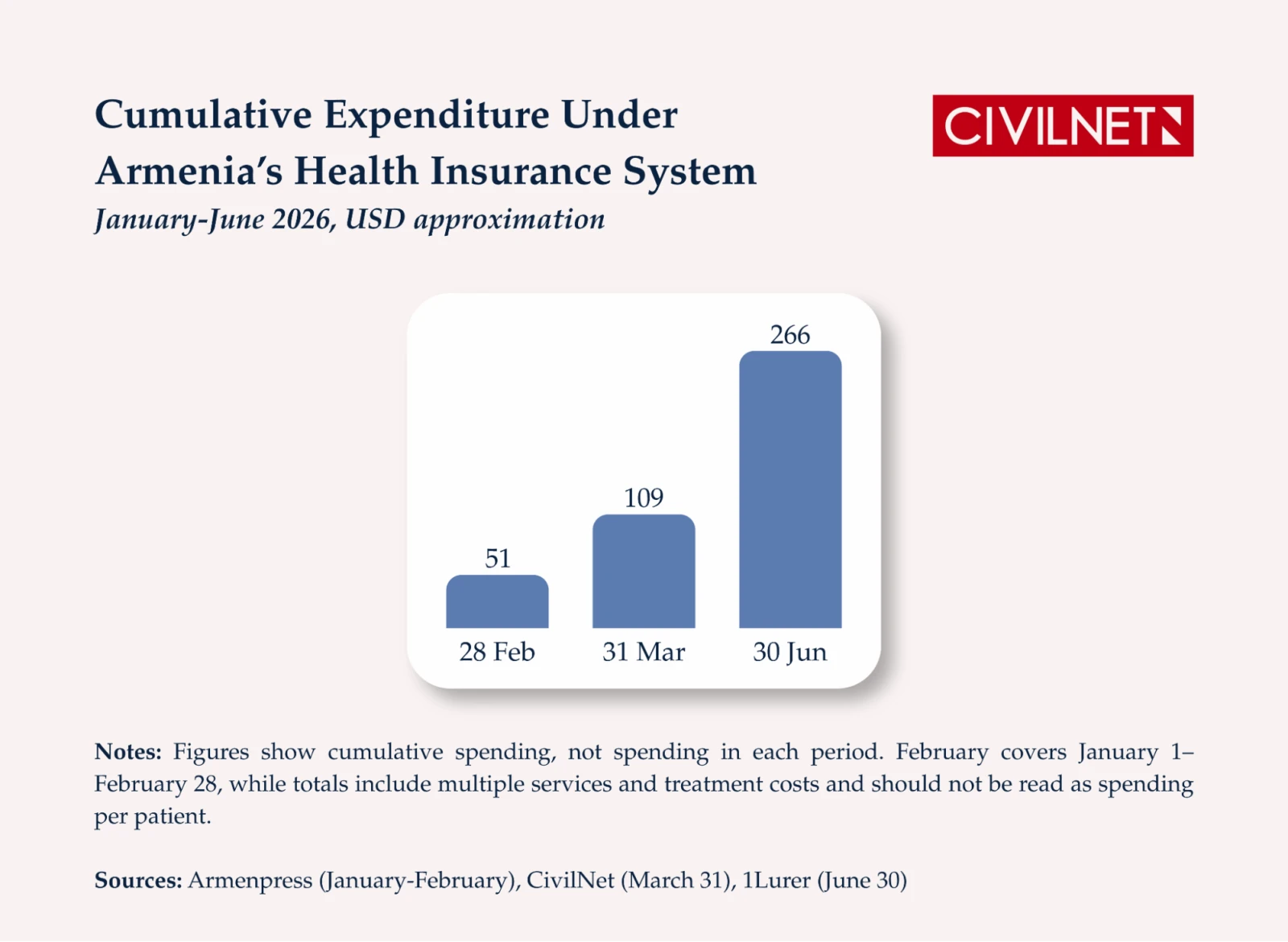
Alongside the continued rise in utilisation, Avanesyan also reported that the system had spent $266 million by midyear, equivalent to nearly 3% of Armenia’s entire 2026 state budget. More significantly, this expenditure represents 44% of the country’s annual health-sector allocation, showing that the insurance programme already constitutes a substantial public financial commitment.
In the second quarter of 2026, cumulative spending rose by 144%, from $109 million to $266 million, while the number of users increased by 37%. Although this gap between the two growth rates may partly reflect patients receiving multiple services or higher-cost treatments, the available figures do not yet provide tangible evidence of overspending.



 Stories