By Gevorg Tosunyan
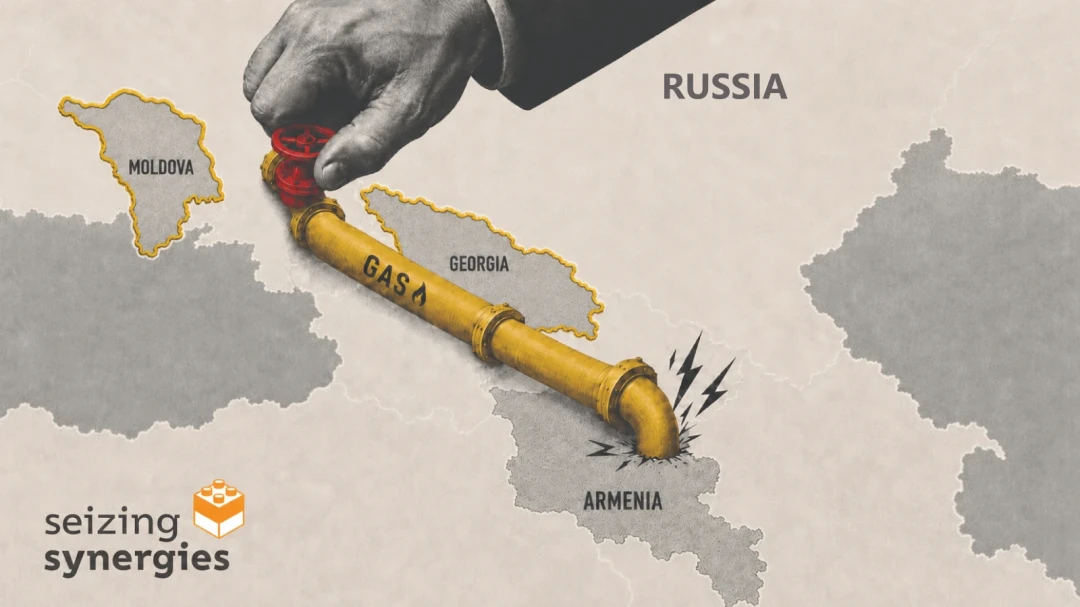
Russia has ramped up economic pressure on Armenia as Yerevan tilts toward the West and Moscow backed pro-Russian candidates in the country's June 7 parliamentary elections, leaving Armenia with few short-term options to reduce its near-total reliance on Russian natural gas - imported at $177.5 per 1,000 cubic meters, a fraction of the price European buyers pay. Georgia and Moldova, which spent years reducing their own dependence on Russian energy, offer Armenia a partial guide, according to energy officials and analysts interviewed by CivilNet.
Russia has restricted imports of Armenian mineral water, agricultural goods, flowers, alcohol, and seafood since the spring. Armenian officials had suggested the curbs would ease once voting concluded, but Moscow has instead added new restrictions and sharpened its rhetoric, with Russian Foreign Ministry spokesperson Maria Zakharova saying the vote was held under "unprecedented pressure" and state news agency TASS calling it Armenia's "dirtiest election in history."
President Vladimir Putin had earlier warned Armenia could face a GDP drop of "at least 14%," sharply higher energy prices and tighter Russian control over infrastructure if relations soured further.
The stakes are high: Russia accounted for 36.3% of Armenia's exports in the first quarter of 2026, versus 14.1% for the European Union, according to Armenia's Statistical Committee. Four Eurasian Economic Union member states said on May 29 that they would discuss Armenia's continued EAEU membership in December and urged Yerevan to hold a referendum on whether to remain in the bloc or pursue EU integration. Armenian Prime Minister Nikol Pashinyan has said only Armenia itself can decide to withdraw.
No quick substitute for Russian gas
Armenia imports the overwhelming majority of its natural gas from Russia through a Gazprom subsidiary, leaving the country exposed to changes in prices or supply terms.
"The current situation is highly unstable. We have two regional players, Russia and Iran, both of which are at war, so making clear predictions at this point is premature," said Murman Margvelashvili, an energy analyst and associate professor at Ilia State University in Georgia.
Margvelashvili said Iran is unlikely to cover a shortfall in Russian gas, and Azerbaijan has no spare export capacity. The most realistic near-term option, he said, would be reviving a swap arrangement to import Turkmen gas via Iran, a mechanism Armenia has used before.
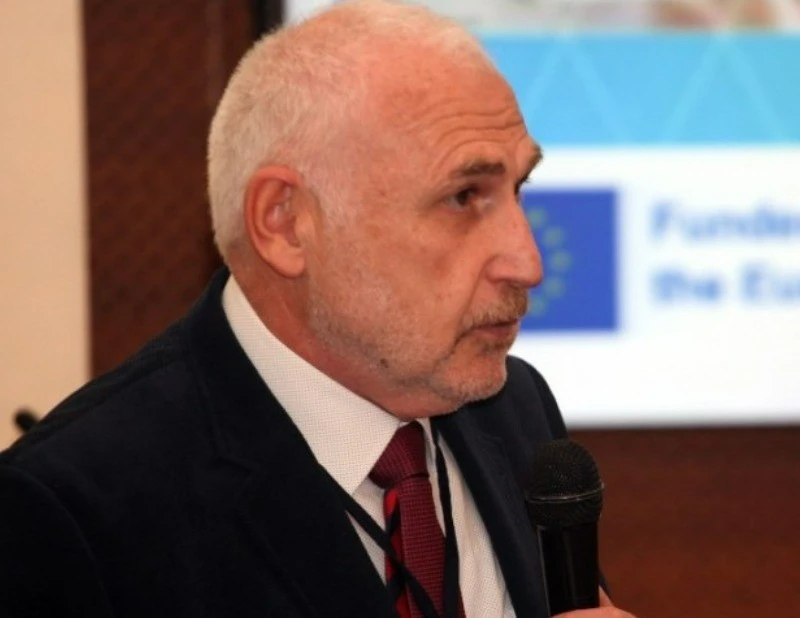
He cautioned that volume is not the only risk. Russia could choose to cut supply specifically during winter to maximize political leverage, he said, citing Georgia's experience in 2006.
Georgia and Moldova reduced their exposure, but did not eliminate it
Russia halted gas and electricity supplies to Georgia in 2006, but Margvelashvili said the crisis did not trigger Georgia's diversification effort - that process was already underway. Construction of the Southern Gas Corridor with Turkey had begun in 2002 and was nearing completion by 2006. During the crisis, Azerbaijan temporarily cut its own industrial gas use to help supply Georgia, and Iran later contributed as well. Margvelashvili's conclusion: energy security cannot be built during a crisis.
That diversification did not entirely sever Georgia's exposure to Russia. Georgia still imports Russian gas alongside Azerbaijani supply, and Margvelashvili's own comments elsewhere in this account - describing the current regional picture as "highly unstable" - suggest the model is best understood as reduced leverage rather than an immunity Armenia could simply copy.
Moldova drew a similar lesson from a 2021 crisis, when Russia repeatedly raised gas prices and threatened to halt supply altogether.
"We now buy gas competitively from the European market, and no single supplier can dictate political or economic conditions through energy," Moldovan Energy Minister Dorin Junghietu said in an interview with CivilNet.
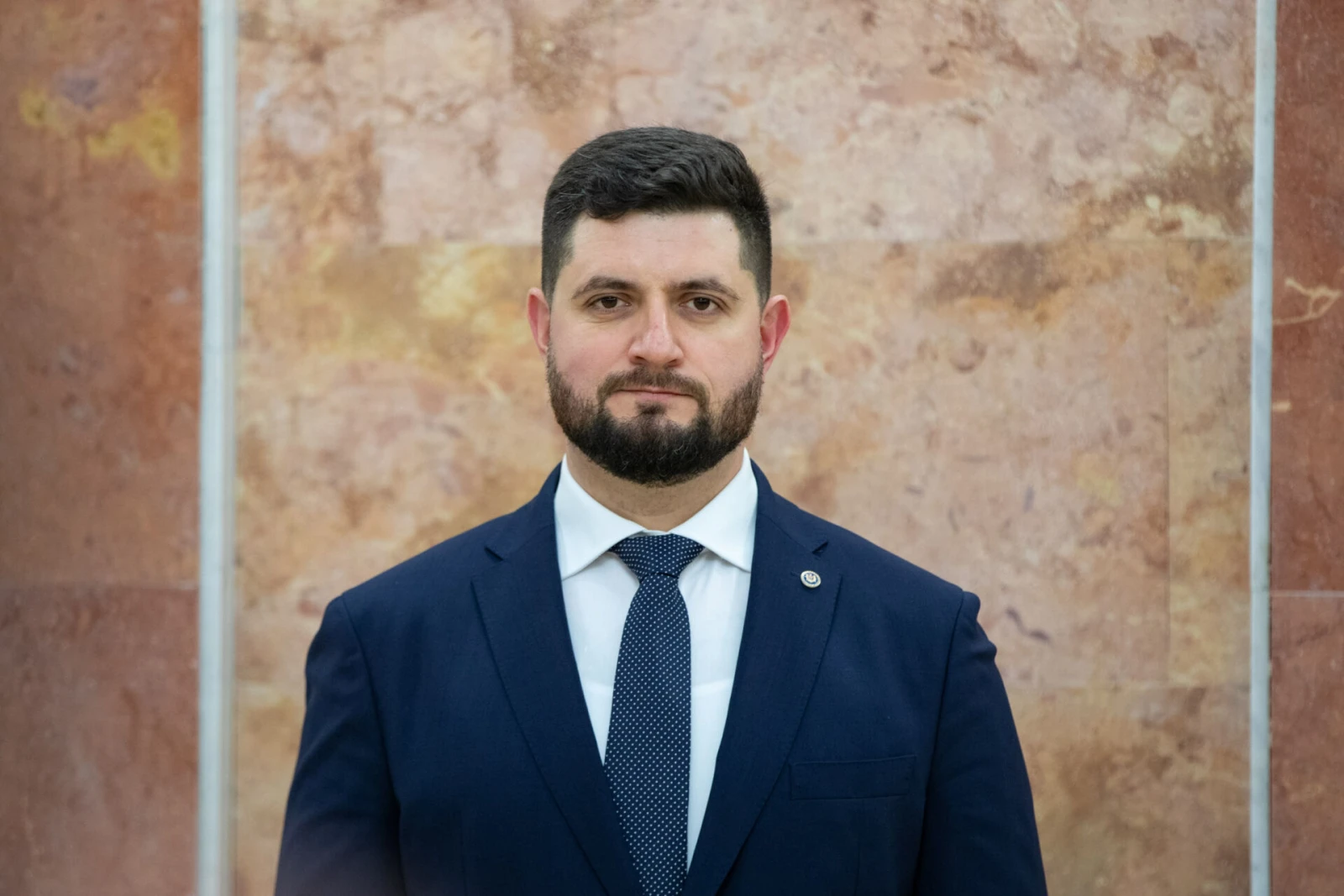
Junghietu said the hardest part of the transition was not technical but psychological - shifting a public and business mindset built on decades of assuming Moldova had no alternative supplier. Moldova has since expanded its list of pre-qualified gas suppliers from 15 to 21 companies and overhauled its procurement model.
He described the shift as resting on three pillars: aligning Moldovan legislation with EU energy rules under the Energy Community framework, including unbundling transport, distribution, and supply functions; building new infrastructure, notably a gas interconnector with Romania; and, in his words, "perhaps most importantly," political will to actually use the alternatives once they existed.
"This experience taught us an important lesson: energy dependence is not only a commercial issue - it is a matter of national security," Junghietu said. "Diversification does not necessarily mean replacing one supplier with another; it means creating a system where no supplier can use energy as a political weapon."
Since April 2026, large non-household consumers in Moldova have bought gas on the open market at negotiated prices. Eleven suppliers now operate in the country's competitive sector, three of them with at least a 5% market share.
"For the first time, suppliers compete for customers rather than customers depending on a single supplier," Junghietu said.
Junghietu's account describes a market structure that no longer depends on a single supplier, not the complete removal of Russian gas from Moldova's energy mix; the reform he described is about breaking Gazprom's pricing and political leverage over the market, which is a narrower claim than ending dependence outright. Moldova's transition, by his own telling, took years and rested on sustained political commitment rather than a single fix - a process still underway rather than one that has run its course.
What Armenia would need to do
Margvelashvili said Armenia should pursue three parallel tracks: adopting a European-style unbundled and competitive energy market, which he said would dilute the influence of Russian-linked capital that owns a significant share of Armenian energy assets; stepping up energy diplomacy with Central Asian states, Turkey, Iran, and Georgia; and building longer-term state capacity for energy policy, planning, and diplomacy.
Both Moldova's and Georgia's experiences point to the same conclusion: dependence on a single energy supplier eventually becomes political leverage, and reducing it requires building alternatives before a crisis forces the issue, not during one. Neither country's experience amounts to a solved problem - both describe an ongoing process of limiting Russia's leverage rather than a completed exit from it, a distinction the sources say Armenia would need to plan around rather than treat as a one-time fix.
Russian influence extends beyond energy
Gas is only one strand of Armenia's dependence on Russia. Armenia remains a member of the Russian-led Collective Security Treaty Organization, and Russia's 102nd military base is stationed in Gyumri. Russia has long been Armenia's dominant arms supplier, though the share of Russian weapons in Armenia's new arms purchases has fallen sharply in recent years, from 96% to 10%, as Yerevan diversifies its suppliers.
Russian border guards have for decades helped secure Armenia's borders with Turkey and Iran, though their role is diminishing. In April, Pashinyan said he did not rule out withdrawing Russian guards from parts of the border.
Armenia's rail network operates under a concession managed by South Caucasus Railway, backed by Russian state capital. Russia's Rosatom supplies nuclear fuel to Armenia's nuclear power plant and is involved in extending the plant's operating life. Gazprom Armenia owns the country's gas distribution system outright, and Russian capital remains present in the electricity sector.
Russia is also the leading destination for Armenian labor migration, and remittances from Armenians working there are a significant source of household income, meaning economic or migration-policy shifts in Russia can quickly affect Armenia's domestic economy.
Analysts say the underlying challenge for Armenia extends beyond gas: diversifying the economy and strategic infrastructure broadly enough to reduce the risks of dependence on any single state.




 Stories