By Siranush Adamyan
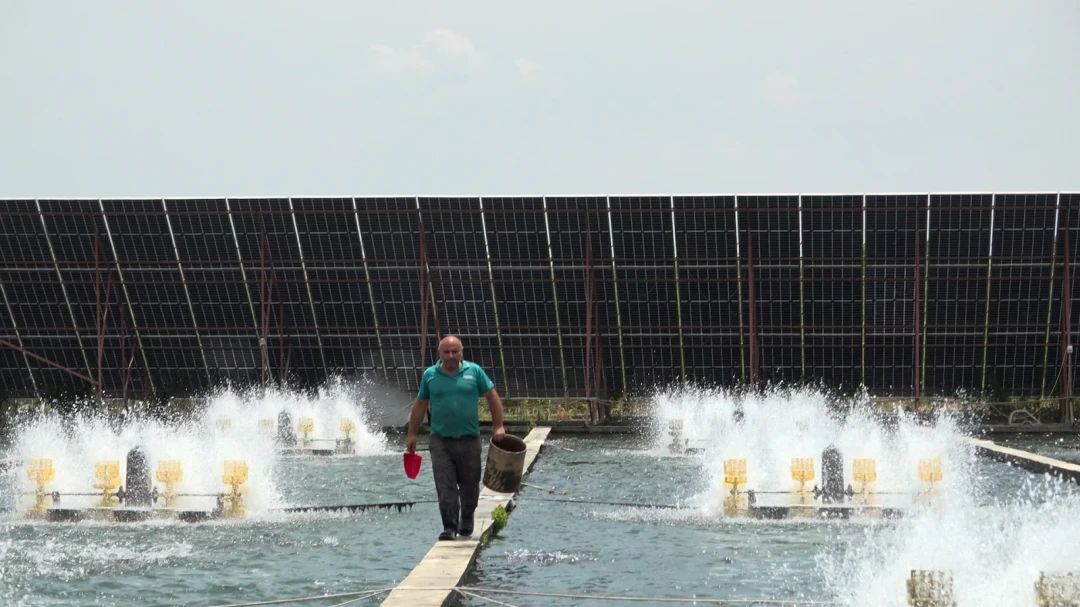
Armenia's fish farmers say they have effectively lost access to their main export market after Russia suspended imports of Armenian fish products in June, leaving many producers struggling to sell their output despite government efforts to open new markets.
Several fish farmers told CivilNet they have been forced to scale back production, are struggling to pay feed suppliers and electricity bills, and remain unconvinced that Europe can offer a viable alternative in the short term.
The Armenian government, meanwhile, is accelerating legal and regulatory reforms to allow more producers to export to the European Union, while also introducing temporary support measures for the sector. These include subsidizing transportation costs to new export destinations, providing assistance to enter foreign markets, and granting temporary loan repayment deferrals.
Russia banned imports of Armenian fish and fish products on June 2.
For years Russia had been the dominant destination for Armenia's aquaculture exports. In 2025, Armenia exported about $80 mn worth of fish and fish products, with roughly 98 percent shipped to Russia. Export volumes totaled around 10,000 tons.
Although Armenia received authorization in 2025 to export fish and fish products to the European Union, that approval does not automatically allow every producer to access the bloc's market.
New rules for exporting to Europe
To export to EU member states, fish farms and processing companies must be registered in the European Commission's TRACES (Trade Control and Expert System) database.
Before registration, Armenia's Food Safety Inspectorate must verify that companies comply with EU food safety and technical standards.
On July 3, parliament approved amendments to Armenia's food safety legislation that establish the legal framework required for companies seeking TRACES registration. The package is awaiting the president's signature before implementing regulations are adopted.
Five companies have already applied to begin the registration process.
Mariam Khachatryan, acting head of the Food Safety Department at the Ministry of Economy, said Armenia bears responsibility alongside exporters because EU authorities rely on the assessments of the Armenian regulator.
"If a company exports products that fail to meet quality standards, the state will also bear responsibility because the EU trusts the assessment of Armenia's competent authority," she told CivilNet.
She said that once the legislation enters into force, no legal barriers will remain. The timing of the first exports will depend on how quickly individual companies meet the requirements.
Companies exporting to the EU will face inspections every six months and must maintain comprehensive traceability systems capable of identifying suppliers and customers upon request.
Although many food safety standards are similar under EU and Eurasian Economic Union regulations, the EU system generally requires stricter inspections, more extensive documentation and tighter oversight.
An EU-funded assessment of Armenia's aquaculture sector also identified broader structural weaknesses, including limited use of international certification, incomplete food traceability systems, and weak export marketing capacity.
International trade expert Karen Azaryan said many Armenian small and medium-sized enterprises lack the resources needed for international branding and market promotion.
Producers say Europe is not a quick solution
Despite the government's efforts, producers say finding new markets has proven far more difficult than complying with technical standards.
Many companies declined to comment publicly. Those who spoke privately described the sector as being in its deepest crisis in years.
Earlier, Ararat Province fish farmer Arsen Torosyan told CivilNet that producers had not anticipated such a rapid loss of the Russian market and were unprepared to redirect exports elsewhere.
Another fish farmer, who requested anonymity, said farms have drastically reduced feeding in order to keep fish alive while minimizing costs.
"The situation is extremely bad and very stressful. We haven't slept for a month. Feed suppliers keep calling because we owe them money. We can't pay them. We can't even pay our electricity bills," he said.
Government officials have promoted Europe as one possible alternative, but the producer argued that Armenian fish is currently unable to compete there because of transportation costs and pricing.
He said the company had contacted potential buyers in Spain, Belgium, Germany and the Netherlands without securing any contracts.
"It's not enough to simply say Europeans are trying to buy our fish. That's not how it works. They aren't buying from us."
He said the challenge extends beyond regulatory compliance. Imported European fish feed becomes several times more expensive by the time it reaches Armenia, driving up production costs and making Armenian fish uncompetitive in European markets.
Markets in the Middle East and neighboring countries also offer only limited opportunities because many already have domestic production or access to cheaper suppliers.
Europe alone cannot replace Russia
According to Hovsep Patvakanian, head of the Investment Council of Armenia, export diversification had been discussed for years, but Russia remained the preferred market because it offered higher profit margins through lower transportation costs and weaker competition.
"As a result, many companies were technically ready to export to other markets, but simply chose not to because the profit margins were lower," Patvakanian told CivilNet.
He said replacing the Russian market will likely take three to four years and will require Armenian exporters to diversify simultaneously into the European Union, Gulf countries, Central Asia and other destinations.
Patvakanian warned against viewing export diversification as a simple choice between Russia and Europe.
"Usually people imply that if we don't export to Russia, then we export to the EU. But the low-hanging fruits are countries where Armenian products are already known, like Central Asia, the Gulf countries, the Baltics, Ukraine and Moldova," he said.
He added that long-term success will require more than market access. Armenia also needs reliable cargo routes, overseas warehouse facilities, and stronger partnerships with international retail chains so exporters can guarantee uninterrupted deliveries.



 Stories