By Siranush Adamyan
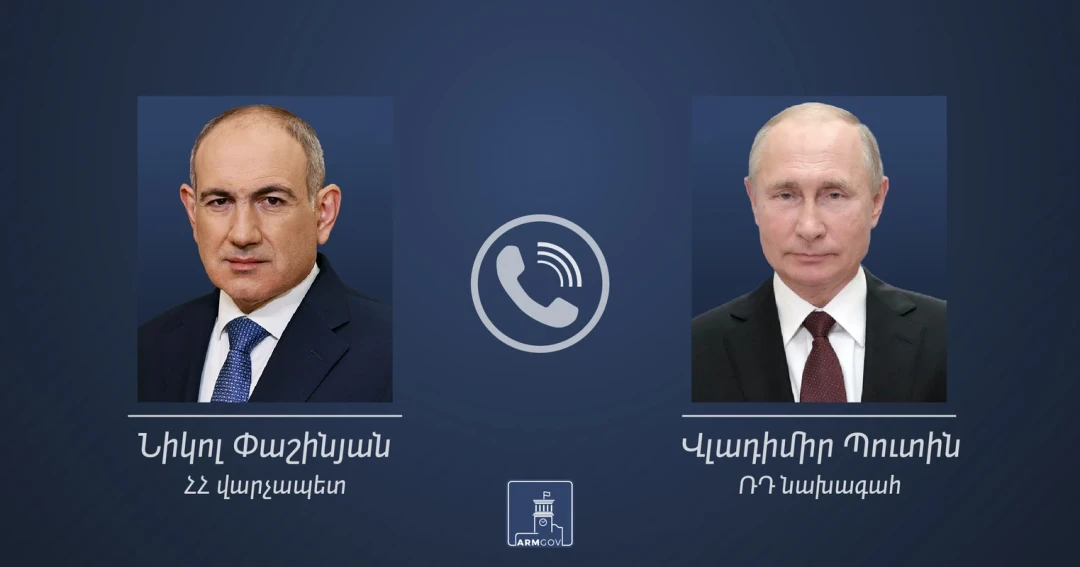
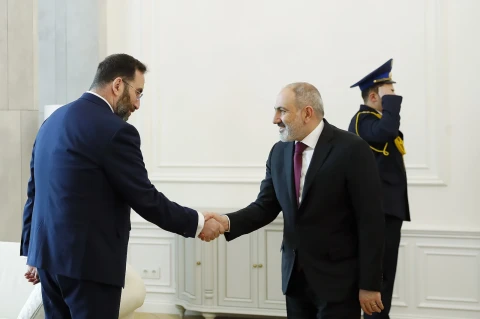
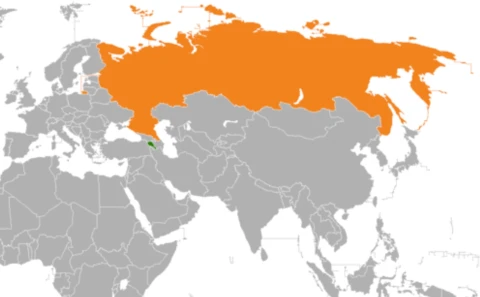
Armenian Prime Minister Nikol Pashinyan and Russian President Vladimir Putin held their first official conversation since Armenia's June 7 parliamentary elections, with Pashinyan urging Moscow to lift restrictions on Armenian exports and seeking to ease growing tensions in bilateral relations.
According to the Armenian government, the two leaders discussed the agenda of Armenia-Russia relations, focusing in particular on problems that have emerged in bilateral economic ties.
Pashinyan said restrictions on Armenian goods entering the Russian market contradict bilateral agreements and the rules of the Eurasian Economic Union (EAEU). He asked Putin to take steps to resolve the issue.
The restrictions follow a series of Russian measures targeting Armenian agricultural and food exports in recent months. Russian authorities have tightened inspections and imposed bans on imports from several Armenian producers, citing sanitary concerns. Armenian officials and exporters have argued that the measures are politically motivated and inconsistent with EAEU rules, disrupting trade with Armenia's largest export market.
The two leaders also discussed Armenia's European Union aspirations, another issue that has strained ties between Yerevan and Moscow. According to the Armenian government, Pashinyan addressed a joint statement adopted on May 29 by the leaders of Belarus, Kazakhstan, Kyrgyzstan and Russia, which called for Armenia to hold a nationwide referendum on whether to join the European Union or remain in the Eurasian Economic Union.
Pashinyan said such a referendum on EU membership could only take place after Armenia formally submits an application to join the bloc, making the issue a concrete political question. He added that his government was ready to address the matter through "open, partner-like and friendly dialogue."
The Kremlin's readout, however, focused much more heavily on the EU issue. It also said the conversation took place "at the initiative of the Armenian side," a detail omitted from the Armenian government's account.
Putin reaffirmed Russia's commitment to the May 29 joint statement and, according to the Kremlin, stressed the need for Armenia to hold, "as soon as possible," a nationwide referendum on either joining the European Union or remaining in the Eurasian Economic Union. The Armenian readout did not mention Putin's call for such a referendum.
The Armenian government's readout did not mention Putin's call for such a referendum.
Neither side reported any Russian response to Pashinyan's request to remove restrictions on Armenian exports.
The conversation was the first official contact between the two leaders since Armenia's June 7 parliamentary election, in which Pashinyan's Civil Contract party retained power. Unlike many foreign leaders, Putin did not publicly congratulate Pashinyan on his election victory.
The call followed an April meeting between the two leaders in Moscow, where Putin publicly said pro-Russian political forces should be able to participate fully in Armenia's election. The parties widely regarded as pro-Russian included the Strong Armenia alliance led by Russian-Armenian businessman Samvel Karapetyan, former President Robert Kocharyan's Armenia Alliance and Gagik Tsarukyan's Prosperous Armenia party.
While Strong Armenia and the Armenia Alliance entered parliament, Prosperous Armenia narrowly missed the 4% threshold in the preliminary results and requested a recount. After the Central Election Commission invalidated the results from three polling stations, the party lost its chance to enter parliament.

 Stories