By Siranush Adamyan
Armenian Prime Minister Nikol Pashinyan said on Tuesday that if Russia fails to resolve trade restrictions imposed on Armenian exports, it could mark "the beginning of the end" for the Eurasian Economic Union (EAEU), in his strongest warning yet over tensions within the Moscow-led bloc.
The remarks came two days after Pashinyan's July 27 phone conversation with Russian President Vladimir Putin, their first official contact since Armenia's June 7 parliamentary election. During the call, Pashinyan urged Putin to lift restrictions on Armenian goods entering the Russian market, arguing they violate both bilateral agreements and EAEU rules, but neither side reported any concrete progress.
Also read: Pashinyan raises trade restrictions with Putin in first post-election call
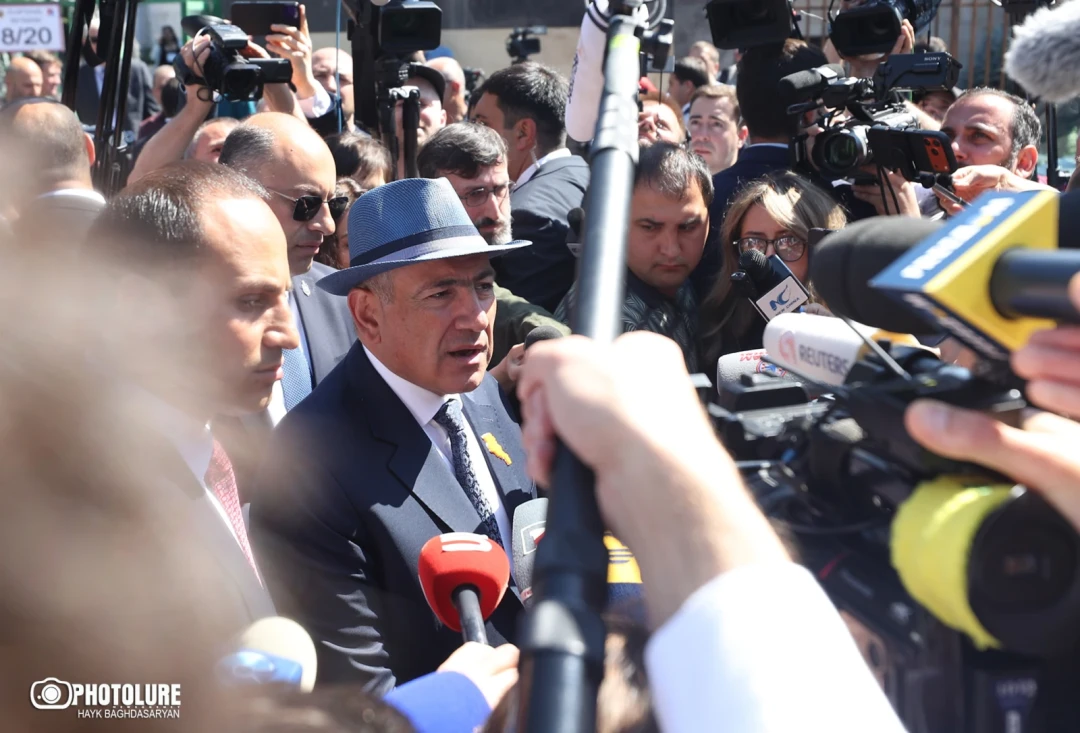
Speaking to reporters outside his party headquarters on Wednesday, Pashinyan said Armenia's concerns were no longer limited to bilateral relations with Russia but had become a broader question about the credibility of the Eurasian Economic Union.
"If these issues remain unresolved, then this may become the beginning of the end of the Eurasian Economic Union," he said.
Pashinyan argued that Armenia had the legitimate right to seek alternatives if its economic interests within the bloc were not protected.
"If someone says you cannot be in the EAEU, you cannot have another route, another alternative, then our answer is very clear: the era when Armenia had no alternatives is over," he said.
He added that Yerevan was not seeking confrontation but expected the union's rules to be applied equally to all members.
Russia has tightened inspections and imposed restrictions on imports from several Armenian agricultural and food producers in recent months, citing sanitary concerns. Armenian officials and exporters have rejected the justification, saying the measures are politically motivated and contradict the EAEU's principle of free movement of goods.
Despite his criticism, Pashinyan ruled out plans for Armenia to leave the Moscow-led bloc, saying his government remained committed to dialogue and expected the existing problems to be resolved.




 Stories