By Zhanna Avagyan
Armenia and Iran have agreed to expand their long-running gas-for-electricity swap program after identifying mutual demand for higher energy exchanges, Armenia's Minister of Territorial Administration and Infrastructure Davit Khudatyan said on Wednesday.
Speaking to reporters outside the headquarters of the ruling Civil Contract party following a weekend visit to Iran, Khudatyan said discussions with Iranian officials confirmed that "Iran needs more electricity, while Armenia needs more gas."
"Our existing infrastructure allows us to expand the program," he said. "I mean the pipeline has additional capacity, and once the 400-kilovolt transmission line is completed, we will also be able to significantly increase electricity exports."
Armenia and Iran have operated the gas-for-electricity arrangement since 2009. Under the agreement, Armenia receives natural gas from Iran and supplies three kilowatt-hours of electricity generated at Armenian thermal power plants for every cubic meter of gas imported.
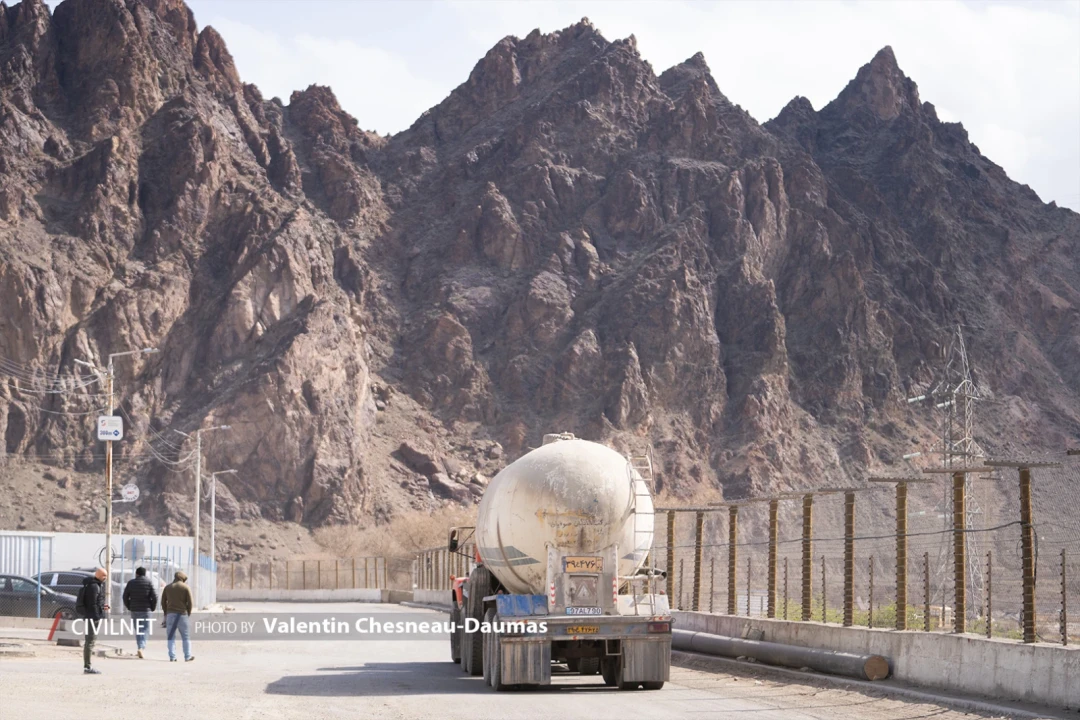
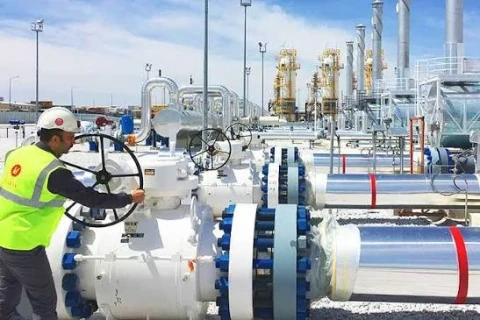
Iranian gas reaches Armenia through the Iran-Armenia pipeline, which stretches from the country's south to its central regions. The pipeline is owned by Gazprom Armenia, the subsidiary of Russia's Gazprom that also owns Armenia's gas distribution network and holds the monopoly on Russian gas imports.
Khudatyan said the two sides agreed to establish a joint working group to determine the technical details and timeline for expanding the program.
The minister rejected suggestions that the move was driven by concerns over a possible increase in the price of Russian gas.
"There are no concerns. This is simply part of the normal working process," he said.
Armenia currently imports Russian gas at a contractual price of $165 per 1,000 cubic meters, which varies depending on calorific value. The effective price is about $177 per 1,000 cubic meters, still less than half prevailing European market prices.
The future of Russian gas pricing has become a growing political issue in Armenia.
In June, Khudatyan said households had no reason to worry about higher gas prices for now, noting that Armenia's current supply agreement with Russia remains in force until after the coming winter.
The issue gained additional attention in late May, when Kremlin spokesman Dmitry Peskov said Russia would sell gas to Armenia at market prices rather than preferential rates if Yerevan decided to leave the Eurasian Economic Union (EAEU). He warned that Armenia's energy and trade conditions would change if it chose to integrate with another economic bloc, such as the European Union.
Also read: Pashinyan says Russia trade restrictions could mark 'the beginning of the end' for Eurasian bloc
The planned expansion of the Iranian swap scheme comes as Armenia is seeking to diversify parts of its economy while remaining heavily dependent on Russian energy. Although Yerevan has intensified political ties with the European Union, Russia remains Armenia's dominant gas supplier, while Iran serves as its only alternative source of pipeline gas.


 Stories