By Lia Avagyan
Armenia’s government has set an average annual economic growth target of 6% for 2026-2031, alongside 125,000 new jobs, a doubling of exports of Armenian-origin goods and a sharp expansion of high-tech infrastructure.
Two economists interviewed by CivilNet broadly described the headline targets as achievable, but questioned whether the economy’s current structure can sustain them and whether the government program sets out enough measurable targets on investment and productivity.
The government program identifies average annual growth of 6% and 125,000 new jobs among its main benchmark results. It also targets at least a doubling of Armenian-origin goods exports, a 50% increase in industrial output and AI computing capacity equivalent to at least 100,000 advanced GPUs.
Haykaz Fanyan, director of the ACSES Analytical Center, described the economic section of the program as “quite cautious,” particularly given the investment and infrastructure projects the government itself expects.
“Over the previous five years, the country recorded economic growth of around 7.9%, and now we are targeting 6%,” Fanyan told CivilNet. He acknowledged that unusually favorable external factors, particularly the effects of Russia’s war in Ukraine, contributed to the earlier growth.
But Fanyan said the government simultaneously expects potentially favorable new factors, including the opening of the Armenia-Turkey border, implementation of the TRIPP project and large investments in artificial intelligence infrastructure.
“Are these less favorable circumstances for our economy? Why, then, is the growth target more moderate?” he said. “I think they have shown caution.” Fanyan said a model similar to the previous government program could have been used, with a baseline target and a higher target under more favorable conditions.
Taking into account major planned projects including AI infrastructure and the launch of the Amulsar mine, “6% is, in my view, quite cautious,” he said.
Former Finance Minister Vardan Aramyan was less comfortable describing the 6% target as conservative. For him, the central question is not only the rate of growth but its source. “To say whether 6% is realistic or not, we have to look at the economy’s potential and its current structure,” Aramyan said.
He said Armenia’s recent growth continued to be led by non-tradable sectors, particularly trade and construction. That makes the economy vulnerable to changes in the external financial flows that have helped support domestic demand.
“If your economic growth is driven by the non-tradable sector, this is what the classical literature calls a demand-pull growth model,” Aramyan said. A more sustainable model, he argued, would require stronger growth in tradable sectors, including industry and exportable services.
Construction boom raises questions
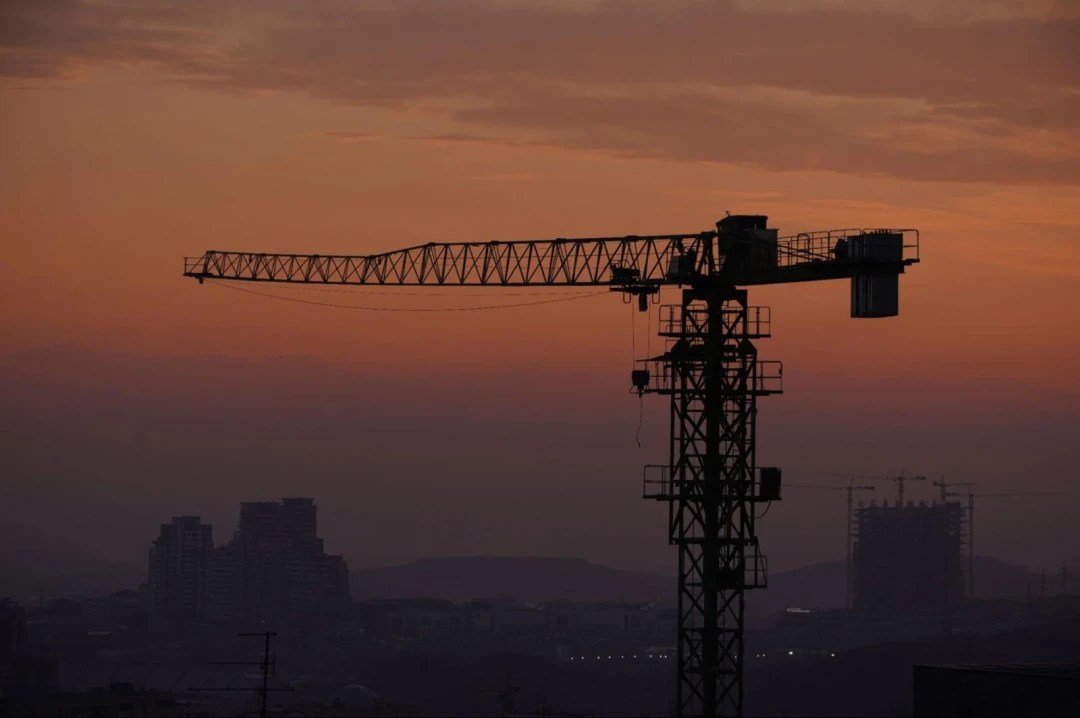
Both economists focused on construction, one of Armenia’s fastest-growing sectors in recent years.
Aramyan rejected the argument that residential construction should automatically be treated as productive investment.
“Residential construction is nothing more than long-term consumption, rather than investment,” he said, unless the resulting property subsequently generates export income, for example through tourism services provided to non-residents.
He compared the current situation with the years leading up to the 2008 global financial crisis, when strong financial inflows also helped drive construction and non-tradable sectors.
“We were unable to diversify our economy, and in 2008 we had what we had,” Aramyan said.
He argued that without an economic transformation toward more productive and export-oriented sectors, growth remains dependent on external demand and financial inflows.
Fanyan also questioned how durable the current residential construction boom would prove.
“The main concern I have is whether we are creating” a stock of apartments heavily dependent on future rental demand, he said.
He pointed to geopolitical factors behind some of the demand, including migration from Russia and financial flows linked to instability in the Middle East.
“If those large flows come, perhaps even the number of apartments currently being built will be insufficient,” he said. But he added that normalization of Russia’s relations with other countries after the war in Ukraine could also encourage some people now living in Armenia to leave.
Fanyan said more analysis was needed to assess the economic return from the government’s income-tax refund program for mortgage borrowers, which has subsidized a substantial share of residential construction.
“We have spent billions of drams, and will continue spending them, but we do not have a comprehensive quantitative assessment of what effect the economy has received,” he said.
Jobs target seen as achievable
Fanyan described the government’s target of 125,000 additional jobs over five years as realistic and relatively restrained.
He noted that registered employment had recently been increasing by around 30,000 year-on-year and that hundreds of thousands of jobs had been added or brought out of the shadow economy over the previous eight years.
But he also noted that some of the sectors expected to attract major investments are not labor intensive.
He cited Firebird’s AI infrastructure project as an example. Investments can be very large while the direct number of jobs created remains comparatively small.
“The sectors we are talking about — mining, artificial intelligence and, naturally, the energy sector linked to artificial intelligence — are not labor intensive,” Fanyan said.
Aramyan also said the 125,000 figure could be achieved if the economic growth assumptions hold.
“If we theoretically assume that this model continues, then yes, 125,000 is realistic,” he said, noting that Armenia recorded around 173,000 additional registered jobs in 2021-2025.
He cautioned, however, that part of that increase reflected improved tax administration and the formalization of previously undeclared employment rather than only the creation of entirely new economic activity.
AI could lift GDP without broad spillovers
The government has placed artificial intelligence infrastructure at the center of its economic agenda, targeting computing capacity equivalent to at least 100,000 advanced GPUs.
Fanyan said such investment would increase capital formation and could generate substantial service exports. But he warned that very large headline figures for output or exports would not necessarily translate into equally large effects throughout the domestic economy.
“We may have very large export volumes that will positively affect our economic indicators,” he said. But the domestic value chain could remain short, he said, with electricity production among the main direct links to the rest of the Armenian economy.
“The effect on the economy will apparently be limited, because the value chain is quite short,” Fanyan said.
He stressed that this was not necessarily a negative development. AI data centers could be particularly useful for Armenia’s electricity system because they are highly energy intensive. But he said their broader effects on employment, tax revenue and other sectors still required deeper study.
Aramyan also called the government’s 100,000-GPU target highly ambitious.
“That is a quite ambitious and high indicator,” he said, noting that infrastructure of such scale is associated with major global technology centers.
He said Armenia would need adequate electricity infrastructure and skilled engineers and network specialists. He also emphasized the political dimension of access to advanced U.S. technology, arguing that projects of this scale depend in part on stable relations with the United States.
“Large investments, these kinds of mega-investments, are usually always backed by political arrangements,” he said.
Missing investment targets
Fanyan said one weakness of the new program was the uneven level of detail among its indicators.
The government gives precise targets for infrastructure, including 2,500 km of roads and 40 bridges, but does not set comparable headline targets for gross capital formation or foreign direct investment, he said.
“If we are talking at that level, but there is no indicator for gross capital formation, then our picture becomes somewhat unclear,” Fanyan said.
He noted that the previous government program had explicit targets for investment and foreign direct investment as a share of GDP.
“There are key indicators whose absence, at least for me, raises certain questions,” he said.
Aramyan made a similar point. He said the previous program targeted investment at 25% of GDP and foreign direct investment at 6% of GDP, while actual foreign direct investment remained far below that level.
He said net foreign direct investment in the real economy was around 93 bn drams in 2025, or less than 1% of GDP.
For Aramyan, strengthening productive investment is essential if Armenia is to move away from growth based mainly on consumption, construction and temporary external inflows.
Fiscal choices could become harder
Aramyan also raised questions over how the government will finance its spending commitments while meeting its fiscal targets.
He said the government’s objectives for public debt and interest payments imply fiscal consolidation in the coming years. At the same time, the authorities have made significant current-spending commitments, including the expansion of universal health insurance.
That leaves limited choices, he said.
“Either the government has to cut expenditures or it has to raise taxes,” Aramyan said.
He said tax increases could become unavoidable in the medium term if current spending patterns continue and the government does not reduce expenditure.
Aramyan also cautioned against continually increasing revenue targets for the tax authorities through administrative pressure alone.
If unrealistic collection targets are imposed, he said, “the behavior [of the tax authority] changes” and can become more aggressive toward businesses.
Investment climate depends on implementation
The government program says it will seek to create a protected, predictable and reliable institutional environment for investors, with reforms benchmarked against the World Bank’s Business Ready methodology.
Both economists said implementation would matter more than declarations.
Aramyan said investors are particularly sensitive to state actions affecting private property and business management. “You can put as many such provisions as you want” into government programs and agreements, he said, but investors will also look at what happens in practice.
He argued that government interventions in businesses can send “a very bad signal” from an economic perspective even when authorities believe there are legal grounds for their actions.
Fanyan was more cautious, saying the legal circumstances of individual cases should be assessed separately and that he was not in a position to judge their merits.
But he said the overall environment could affect some investors’ decisions. “I do not rule out that there will be investors who will delay making an investment, taking into account the developments that we see,” he said.
The existence of major projects such as Firebird does not eliminate that concern, Fanyan added. “The fact that one investor takes a risk does not mean another investor must accept that risk as well.”



 Stories