By Siranush Adamyan
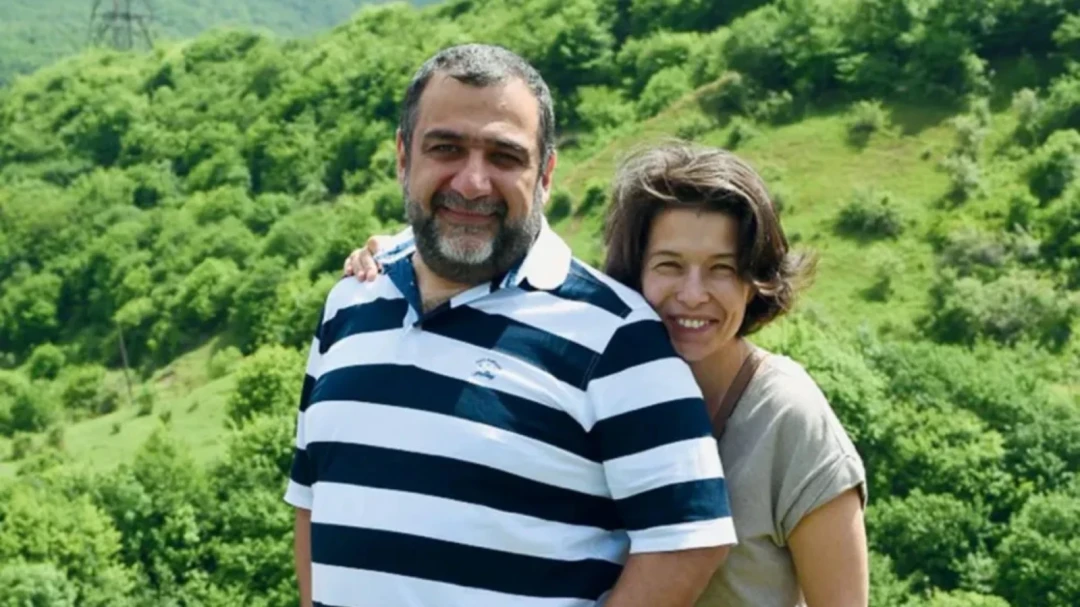
Veronika Zonabend, the wife of jailed Armenian businessman and philanthropist Ruben Vardanyan, has pointed to what she described as the absurdity of the charges brought against her husband in Azerbaijan, saying his indictment included events dating back to 1988, when he was still a student at Moscow State University.
In an interview with the Russian edition of Forbes, Zonabend said prosecutors had applied what she called “collective responsibility” in the case against Vardanyan and other former officials of Nagorno-Karabakh.
“For example, his indictment and verdict include participation in events that took place in 1988, when he was a student at Moscow State University,” she said.
According to Zonabend, Vardanyan faced 41 charges under 19 articles of Azerbaijan’s criminal code. She said prosecution witnesses reported on by Azerbaijani media had testified that they did not know Vardanyan, had never seen him and had only heard about him in the press, while at the same time demanding the harshest possible punishment.
“Ruben is accused of absurd crimes,” Zonabend told Forbes.
Vardanyan, who served as state minister of Nagorno-Karabakh, was detained by Azerbaijani authorities at a checkpoint in the Lachin corridor on Sept. 27, 2023, as the region’s Armenian population was leaving following Azerbaijan’s military offensive.
His trial lasted more than a year and included nearly 60 hearings, Zonabend said. A Baku military court sentenced him on Feb. 17, 2026, to 20 years in prison on charges including financing terrorism, creating illegal armed formations and planning and conducting an aggressive war.
Zonabend also alleged extensive procedural violations during the proceedings. She said international defense lawyers and international observers were not admitted to the trial. Vardanyan’s lawyer could not visit or speak with him, she said, while only a local Azerbaijani lawyer was allowed access.
The proceedings were conducted in Azerbaijani with interpretation into Russian, but Zonabend said it was unclear how accurate that interpretation was. She also said court records were initially withheld and that when the lawyer eventually saw them, they contained factual errors.
Zonabend rejected Azerbaijani President Ilham Aliyev’s comparison of the trials of former Nagorno-Karabakh leaders with the Nuremberg trials. She said the Nuremberg proceedings involved defense lawyers chosen by defendants, an international tribunal, international prosecutors and observers, while none of those safeguards were present in Baku.
Vardanyan refused to appeal the verdict because he did not recognize the legitimacy of the proceedings, Zonabend said. His legal team instead filed an application with the European Court of Human Rights over alleged procedural violations.
The ECHR proceedings are also examining broader concerns over the trials of Armenians held in Baku. Azerbaijan was required to provide the court by Aug. 31 with copies or summaries of the verdicts against Armenian detainees as well as medical documents concerning their health, lawyer Siranush Sahakyan, who represents the detainees before the ECHR, told CivilNet. She said failure to provide the documents could strengthen claims of serious violations of the right to a fair trial.
Sahakyan said the judgment in Vardanyan’s case had been obtained, while 15 other Armenian detainees had only been allowed to read electronic documents presented as verdicts without being given copies they could provide to their lawyers. She said the Armenian side was challenging both the legality of the trials and the lawfulness of the resulting imprisonment.
Azerbaijan currently acknowledges holding 19 Armenians, including former political and military leaders of Nagorno-Karabakh. Most were detained following Azerbaijan’s September 2023 military offensive and the subsequent exodus of the region’s Armenian population.
Humanitarian access to detainees
Zonabend also said in the interview she was seeking to organize an international women’s humanitarian delegation to Baku to visit Armenian detainees and deliver letters, photographs and permitted personal items from their families.
The issue of access has become more urgent amid broader concerns over the detainees’ legal rights. Azerbaijan was required to provide the European Court of Human Rights by Aug. 31 with copies or summaries of verdicts against Armenian detainees, as well as medical documents concerning their health.
Sahakyan said one possible way to restore independent contact with the detainees would be visits by diplomats from a third country acting on Armenia’s behalf, but the mechanism has not produced results because it requires Azerbaijan’s consent. Another option would be the restoration of humanitarian access by the International Committee of the Red Cross.


 Stories