By Lia Avagyan
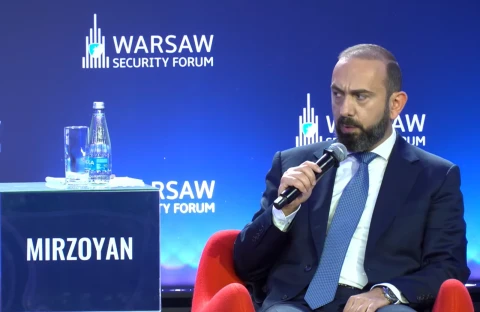
Armenian companies are expected to begin selling goods to Azerbaijan in the coming days, Foreign Minister Ararat Mirzoyan said, pointing to the development as another sign of expanding economic ties between the two countries.
“In the coming days, you will learn that Azerbaijani companies are buying goods from Armenian companies,” Mirzoyan said in an interview broadcast on Armenia’s Public Television on Monday evening. “Armenia will sell goods to Azerbaijan.”
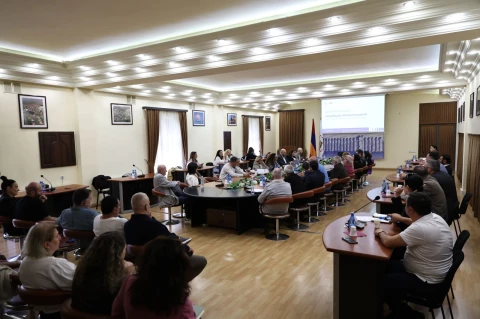
The interview was recorded in Gyumri, where senior Foreign Ministry officials and the heads of Armenia’s diplomatic missions abroad are holding their annual gathering.
Also read: Mirzoyan says Russia remains ‘more than a strategic partner,’ calls for healthier ties
Mirzoyan said Armenia was already buying goods, including fuel, directly from Azerbaijani companies. He distinguished that trade from transit shipments passing through Azerbaijan from third countries.
Until now, he said, the trade had effectively moved in one direction, with Armenian companies buying Azerbaijani goods. Sales by Armenian companies to Azerbaijani buyers would make the commercial relationship reciprocal.
Mirzoyan cited the trade links, along with the absence of shootings and casualties on the Armenia-Azerbaijan border and the opening of Azerbaijani territory to cargo bound for Armenia, as evidence that what he called a “real, functioning peace” had emerged between the two countries.
He acknowledged, however, that the peace process still needed to be institutionalized, primarily through the signing of the peace agreement that Armenia and Azerbaijan have already initialed.
Armenia has said it is ready to sign the agreement, while Azerbaijan has raised concerns over provisions in Armenia’s Constitution. Yerevan says those concerns are addressed in the agreed text.
Border delimitation and enclaves
Mirzoyan also addressed the delimitation of the Armenia-Azerbaijan border, saying the most difficult political stage of the process had largely been completed and that further work could increasingly become technical.
He said the two countries had already agreed on much of the documentation and procedures governing the process, including the use of the 1991 Alma-Ata Declaration as its basis.
Once the maps, procedures and instructions are agreed, Mirzoyan said, specialists rather than senior political officials would increasingly carry out the work on the ground.
“There will come a stage when delimitation between Armenia and Azerbaijan becomes a technical process,” he said.
On enclaves, Mirzoyan said there were currently no substantive negotiations on specific territorial arrangements. He said, however, that Armenia could not selectively apply the agreed delimitation principle to some sections of the border while rejecting it elsewhere.
The border must first be established according to the agreed principles, he said. Only afterward could Armenia and Azerbaijan potentially discuss adjustments if both sides considered them useful.
Mirzoyan said such arrangements could theoretically include territorial exchanges or other forms of optimization while preserving an agreed balance in territory.
“But before those solutions, we have to draw what exists,” he said. “We have to understand what we are dealing with before we can do that arithmetic.”
He stressed that no such specific negotiations were currently underway.
Armenia-Turkey ties
Mirzoyan also linked the broader regional process to Armenia’s normalization talks with Turkey, saying the two countries were ready for the full opening of their land border.
“It is demanded by the situation and is an imperative of the time to fully open the Armenia-Turkey border in all its functionality,” he said.
Mirzoyan said Armenian diplomats had visited the Margara border crossing, where Armenia has already built infrastructure for border and customs services in preparation for a possible reopening.
The crossing remains closed for regular traffic, although it has been used on several exceptional occasions, including for humanitarian shipments and travel connected to relief efforts after the 2023 earthquakes in Turkey and Syria.
Mirzoyan also pointed to a recent Armenian-Turkish business forum in Kars, which was attended by an Armenian business delegation.
He said another business gathering was being planned in Armenia for early October following what he described as a successful meeting in Kars.
The minister also said reopening direct railway connections with Turkey, including the Gyumri-Kars line through Akhurik, would be an important part of Armenia’s broader effort to restore regional connectivity.
Mirzoyan argued that developments in Armenia’s relations with both Azerbaijan and Turkey should be viewed as interconnected elements of a wider process of reopening borders, transport routes and economic links after decades of conflict and isolation.

 Stories