Georgi Mirzabekyan
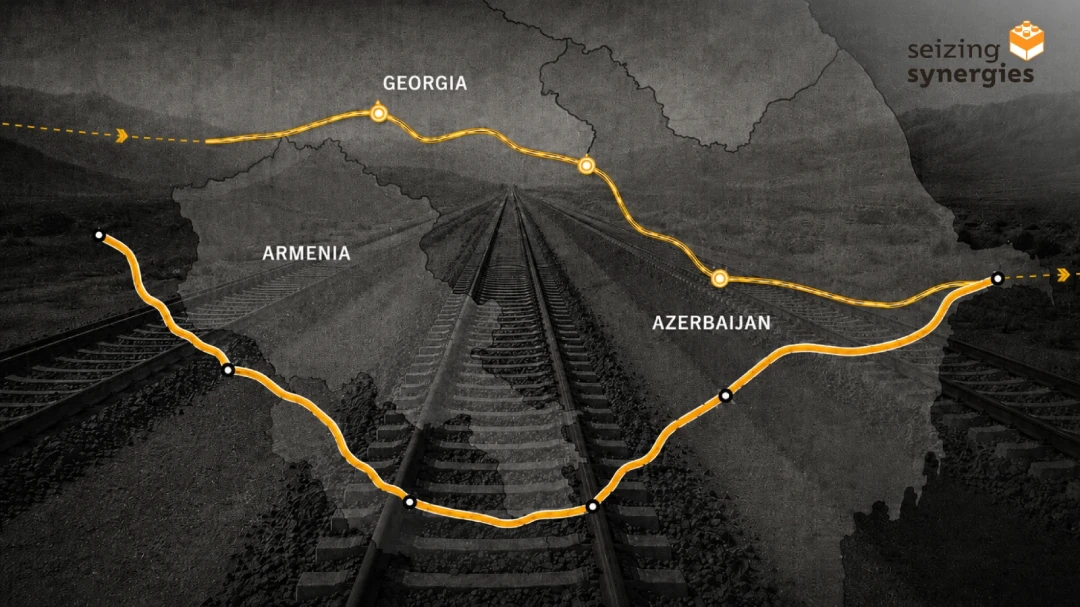
In August 2025, Armenia, Azerbaijan and the United States signed a document on the Trump Route (TRIPP), which is meant to create a link between mainland Azerbaijan and Nakhichevan across southern Armenia. Earlier, in 2023, Yerevan had put forward its Crossroads of Peace initiative, which seeks to turn the opening of the region’s closed transport links into a broader transit opportunity and to bring Armenia into both the East–West and North–South corridors.
These developments raise a new question for the South Caucasus transit system, in which Georgia has held a central position for decades, building a functioning rail network, developing its Black Sea ports and establishing international freight routes. Will the opening of new routes through Armenia create competition between the two countries and erode Georgia’s exclusive transit role, or will it instead increase overall cargo flows through the region and the scope for Armenian and Georgian transit capacity to complement each other?
Beyond a railway and a highway, the U.S.-proposed TRIPP project also allows for other infrastructure — oil and gas pipelines and cables. Construction of TRIPP’s infrastructure has not yet begun, but the United States and Armenia are already working on railway engineering studies, investment mechanisms and ways to draw in the private sector.
The Trump Route
The Trump Route for International Peace and Prosperity (TRIPP) was agreed in Washington on August 8, 2025, by the leaders of Armenia, Azerbaijan and the United States. Running roughly 42 kilometers through southern Armenia, the route will connect mainland Azerbaijan with its exclave of Nakhichevan, which in turn will be linked to Turkey. Construction has already begun in Turkey on the Kars–Dilucu railway, which will bypass Armenia and connect to Nakhichevan.
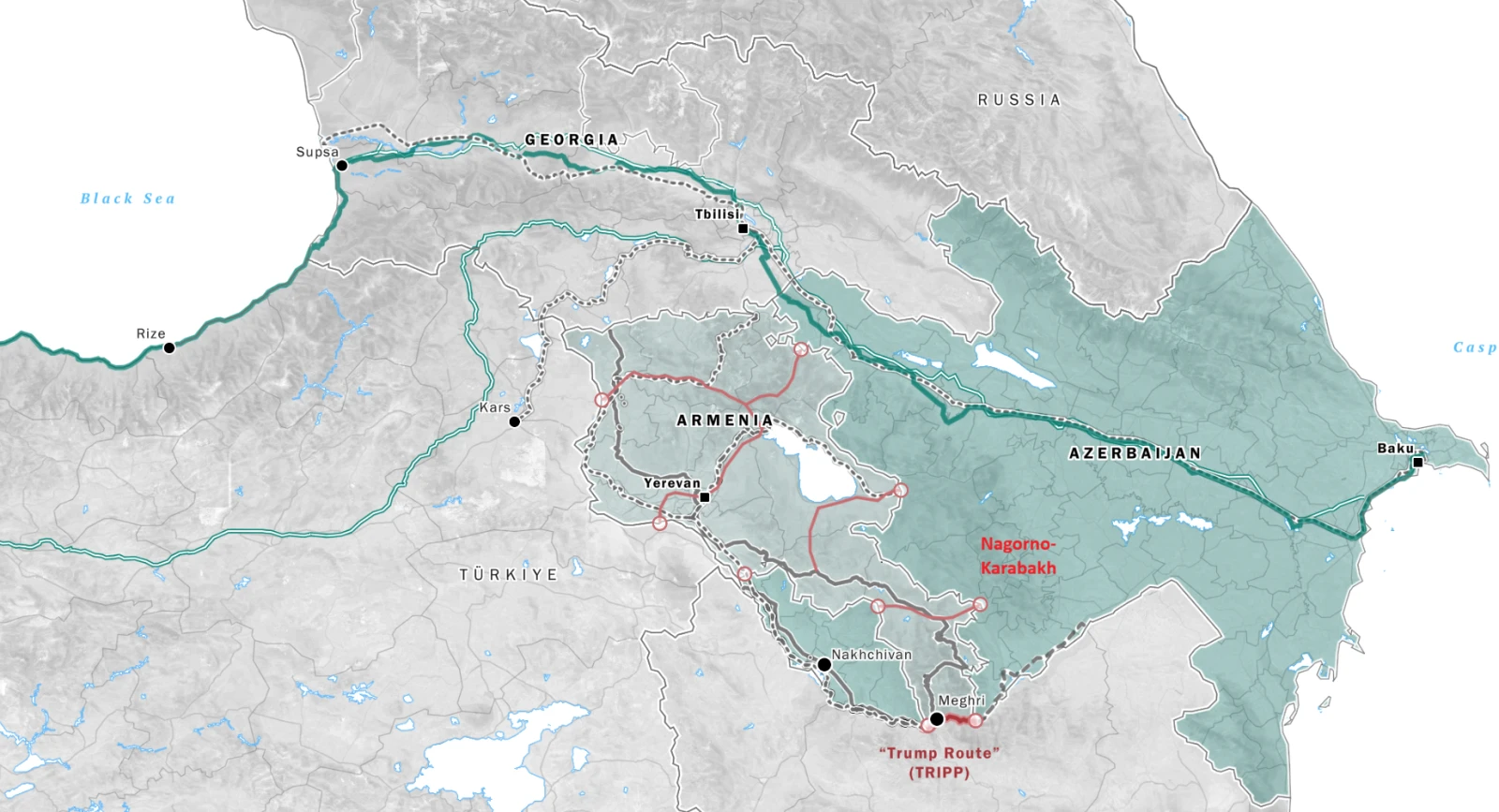
TRIPP should also be seen in a wider context, that of the Trans-Caspian International Transport Route (TITR), or Middle Corridor, which links Central Asia to Europe via the Caspian Sea, the South Caucasus and Turkey. TRIPP’s possible integration into this transport system is of interest to the United States and the European Union, among others, which view the Middle Corridor as an alternative in their trade links with the East.
The Middle Corridor
The Trans-Caspian International Transport Route (TITR), or Middle Corridor, is a multimodal trade and freight network connecting China to Europe, running mainly through Kazakhstan, the Caspian Sea, Azerbaijan, Georgia and Turkey.
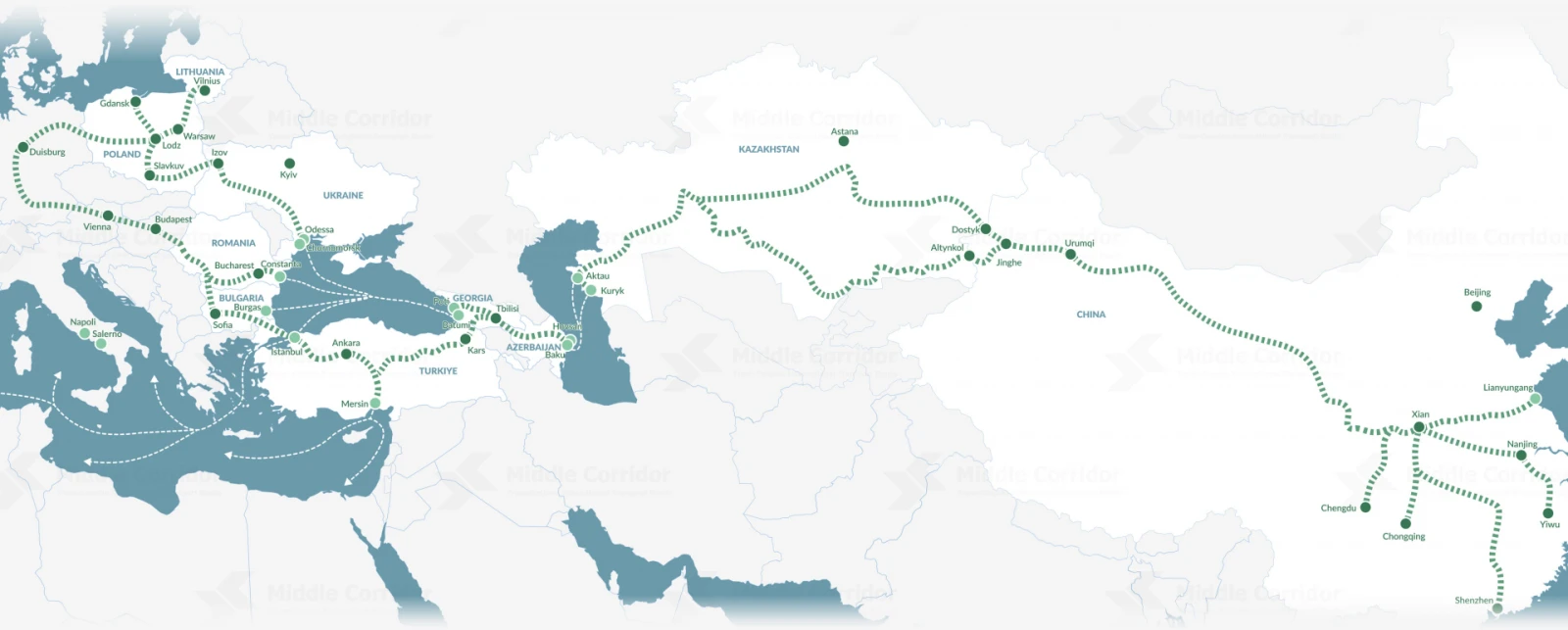
Unlike Armenia, whose transit role is still taking shape, Georgia has long held a central position in the South Caucasus transit system. One of the key sections of the Middle Corridor runs through its territory, connecting to Europe both through the Georgian Black Sea ports and via the Baku–Tbilisi–Kars railway.
The pipelines carrying Azerbaijani oil and gas, mostly to European markets, also run through Georgia. In Armenia’s case, by contrast, new transport links are taking shape in a post-war setting in which the balance of power has shifted and Azerbaijan is able to dictate terms.
The Baku–Tbilisi–Kars railway
One of the most important Middle Corridor routes in the South Caucasus is the 826-kilometer Baku–Tbilisi–Kars railway. Construction started in 2007 and the line entered service in 2017.
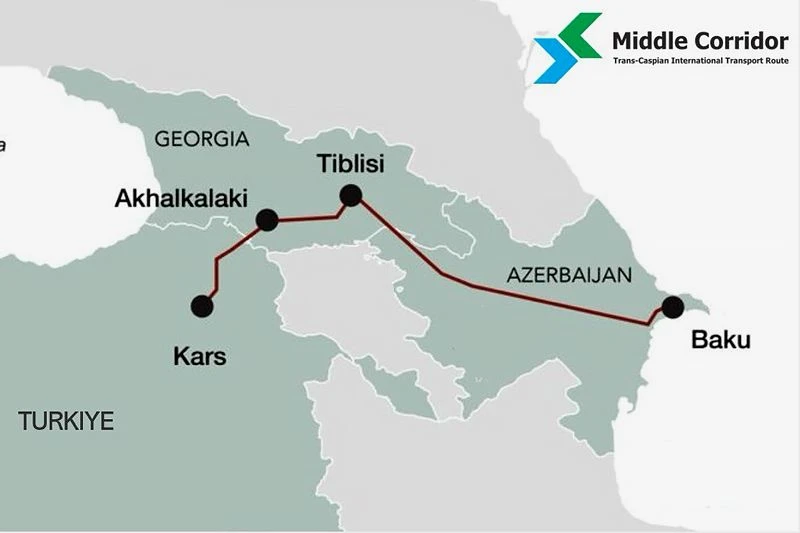
Georgia’s role is critical for Armenia: more than 70 percent of Armenia’s trade turnover passes through the country.
Georgian railways also carry the Azerbaijani diesel fuel that Armenia began importing in late 2025, along with a range of Kazakh and Russian goods shipped across Azerbaijani territory. In May, Armenia and Turkey announced that the Kars–Akhalkalaki railway would be made available to the Armenian side.
Georgia, meanwhile, continues to work on strengthening its own transit capacity. The Tbilisi–Batumi rail corridor has been modernized, work continues on the East–West highway running from the Azerbaijani border through Batumi to the Turkish border, and on the Black Sea coast construction of the Anaklia deep-sea port is under way.
The economic outlook for regional corridors
The debate over transport links and the projects on the table have sharply raised the strategic importance of the South Caucasus, which sits at the intersection of two corridors of international significance: East–West and the North–South Transport Corridor (INSTC).
In the view of Paata Tsagareishvili, director of the Tbilisi-based Transport Corridor Research Center, the creation of new transport links across Armenia will generate competition in the South Caucasus. Those routes, he argues, will compete on efficiency with the section of the Middle Corridor that runs through Georgia. The Georgian expert has in mind both the TRIPP project and the possible unblocking of Armenia’s transport links, including the reopening of the Kars–Gyumri railway.
Armenian economist Suren Parsyan likewise believes that the opening of transport links, TRIPP included, will create competition over routes in the region, most visibly in comparison with the corridor connecting Azerbaijan to Turkey, the Baku–Tbilisi–Kars railway. He believes TRIPP could serve as an alternative route but will not seriously affect Georgia’s transit role.
“The Middle Corridor is already a functioning logistics system, with ports, railways, operators, customs procedures and an established client base,” he said. Even so, Parsyan acknowledges that depending on transit times, customs duties and a number of other factors, routes bypassing Georgia could have their own appeal. The reliability of those routes could in turn increase cargo flows through the region and bring prices down.
Freight traffic along the Middle Corridor has picked up in recent years, but the volumes remain modest by comparison: 4.5 million tonnes moved along the corridor in 2024, whereas before the Russia-Ukraine war more than 170 million tonnes a year passed through Russian territory. The main route linking China to Europe currently runs through the Indian Ocean and the Suez Canal.
By Tsagareishvili’s estimate, most of that 4.5 million tonnes relates to the Kazakh section, and only a small share of it reached Georgian ports.
Johnny Melikyan, a senior expert at the Orbeli Center, says freight traffic along the Middle Corridor is trending upward. He does not rule out a degree of competition between Armenian and Georgian infrastructure, but adds that if transit volumes grow, the two countries could create synergies.
Beyond the routes running along the Middle Corridor, Armenian experts stress the role of the North–South international corridor, whose importance could rise sharply if the Armenia-Turkey and Armenia-Azerbaijan borders open. Foremost among these is the Persian Gulf–Black Sea transport route, which could link up with the Georgian rail network through Armenia and continue on to Europe.
According to Suren Parsyan, that would allow the Armenian side not simply to compete for cargo moving through the Georgian section of the Middle Corridor, but to become a logistics hub offering warehousing, customs sorting and other services alongside transport.
An analysis published in April 2026 by the APRI Armenia research center notes that full unblocking would strengthen the region’s macroeconomic resilience and investment appeal. According to the report, under full unblocking Armenia would gain from stronger exports and tourism flows to Turkey and Azerbaijan, direct rail access to Iran via Nakhichevan, and lower sovereign financial risk; Azerbaijan would gain by turning Nakhichevan into a key North–South transit hub, obtaining a cheaper and faster rail alternative to Turkey, and using transit revenues to reduce its exposure to oil and gas prices; while Georgia would gain by keeping its central role in the Middle Corridor and, once the Persian Gulf–Black Sea route is running, by increasing direct rail freight from Iran to its Black Sea ports along with transit revenues.
In theory, opening these routes lowers security risks in the region and makes the transit corridors more attractive. Alexander Iskandaryan, director of the Caucasus Institute, says the logic of the South Caucasus works the other way around.
“The political questions have to be settled first, and only then do you move on to transport links,” he said. “Broadly speaking, everything depends on political will.” He points to the Abkhaz railway, which is favorable both geographically and financially yet remains hostage to politics.
Georgian political analyst Tornike Sharashenidze likewise notes that geopolitics outweighs economic expediency. He is skeptical about TRIPP, pointing out that Iran and Russia oppose it.

He does not believe that launching the Trump Route would significantly affect Georgia’s transit role. Georgia, in his view, will keep its transit importance thanks to its established infrastructure and the role of its Black Sea ports.
Iskandaryan sees the near-term prospects for TRIPP as murky, but notes that if it does go ahead, Georgia’s exclusive role will change to some degree.
The launch of new transport links in the South Caucasus, whether TRIPP or broader unblocking initiatives, thus threatens less to unseat Georgia’s transit role than to advance a new agenda of regional infrastructure realignment and possible complementarity. The opening of new routes will inevitably generate some economic competition and weaken Georgia’s exclusive, monopoly position, but it could at the same time significantly increase overall cargo flows through the region, particularly along the North–South and Persian Gulf–Black Sea axes. Whether that economic potential is realized still depends on wider geopolitical developments.




 Stories