By Siranush Adamyan
Armenia should develop electricity storage facilities and green hydrogen production as the next stage of its rapid expansion of solar power, Prime Minister Nikol Pashinyan said.
Pashinyan made the remarks in an interview with BOON TV published on Saturday evening.
He said Armenia had created more than 1,200 megawatts of solar generation capacity since 2018, compared with the roughly 400-megawatt capacity of the Metsamor nuclear power plant.
“Armenia can be an energy self-sufficient country because Armenia has enormous solar resources,” Pashinyan said. “What should we do at the next stage? We should work on storage facilities and green hydrogen production, and we should move in that direction,” he added.
Electricity storage has become increasingly important as solar generation expands faster than Armenia’s power system can accommodate it. Solar facilities produce most of their electricity during daylight hours, while consumption often rises after sunset.
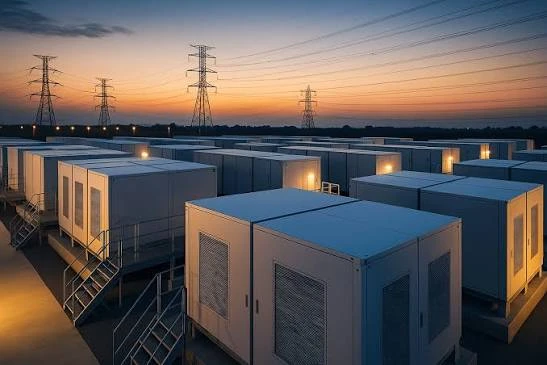
Battery facilities can store surplus electricity generated during the day and return it to the grid when solar production declines or demand increases. They could allow Armenia to integrate more solar capacity while reducing imbalances between production and consumption.
Former Deputy Energy Minister Hakob Vardanyan told CivilNet that Armenia needs at least five gigawatt-hours of storage capacity, with an output of 600–800 megawatts.
Also read: Armenia’s solar growth is outpacing its power system, former energy official says
At an output of 800 megawatts, a five-gigawatt-hour storage system could operate for slightly more than six hours. Armenia’s final domestic electricity consumption in 2024 was equivalent to an average continuous load of about 800 megawatts.
Vardanyan estimated Armenia’s installed solar capacity at about 1,280 megawatts in September. Official energy balance data recorded about 706 megawatts of licensed and autonomous solar capacity at the end of 2024. The difference may reflect subsequent installations, different categories of producers or differences in methodology.
Solar plants generated about 10% of Armenia’s electricity in 2024. Solar, hydropower and wind together accounted for 32%, while gas-fired thermal plants produced 38% and Metsamor generated 30%.
Armenia nevertheless remains heavily dependent on imported energy. Russia supplied about 84% of its imported natural gas in 2024, while Iran supplied the remaining 16%. Thermal power plants primarily use imported gas and play an important role in balancing the electricity system.
Large-scale storage could allow Armenia to make greater use of domestically generated solar electricity. It could not immediately replace natural gas used for household heating, however, because the country’s distribution network, building connections and household wiring would require extensive upgrades.
Pashinyan said energy diversification should prevent Armenia from becoming disproportionately dependent on any country.
“In any case, we should not have disproportionate dependence on any country,” he said.
Green hydrogen could provide another way to store renewable energy. Surplus solar electricity can be used to produce hydrogen, which can later serve as fuel, be used by industry or be converted back into electricity. The government has not announced the scale, cost or timetable of a commercial green hydrogen project.
Pashinyan said Armenia’s diversification policy did not exclude further nuclear cooperation with Russia. He said the government would choose a partner to build the country’s new nuclear power plant by comparing the price, quality and completion time offered by potential suppliers.


 Stories