By Lia Avagyan
Armenia should accelerate the construction of utility-scale electricity storage facilities to strengthen its energy security and prepare for possible disruptions in natural gas supplies, a former senior energy official said.
Hakob Vardanyan, a former deputy minister of territorial administration and infrastructure who oversaw the ministry’s energy portfolio, told CivilNet on Friday, September 11, that Armenia needs at least 5 gigawatt-hours of storage capacity.
The facilities should be capable of supplying 600–800 megawatts to the grid, he said. At a discharge rate of 800 megawatts, a 5-gigawatt-hour storage system could operate for slightly more than six hours.
For comparison, Armenia’s final domestic electricity consumption of about 7 billion kilowatt-hours in 2024 was equivalent to an average continuous load of roughly 800 megawatts.
Vardanyan proposed developing storage facilities through public-private partnerships. The government should introduce capacity payments that would allow investors to recover their costs under market conditions, he said.
At least initially, the government should subsidize the payments so the cost is not passed on to the wider economy. Vardanyan also called for simplified procedures for obtaining technical connection terms and an open market in which multiple private investors could develop projects of different sizes.
The government should not spend years negotiating with one large company to build a single 1,000-megawatt system, he said. Instead, it should set rules that allow investors to build storage projects ranging from a few megawatts to 100 megawatts or more.
Storage systems could be installed next to solar plants and substations operated by High Voltage Electric Networks. Households could also install smaller units, Vardanyan said.
With favorable regulations, Armenia could build most, if not all, of the required capacity within 12 to 18 months, he added.
The European Union has expressed readiness to support electricity storage projects in Armenia. In a July interview with CivilNet, EU Ambassador to Armenia Vassilis Maragos said the two sides had signed a connectivity partnership and letters of intent following the first Armenia–EU summit.
Maragos listed energy storage and energy connectivity among the areas of planned cooperation, alongside digital connectivity and private-sector development. He did not specify the size, cost or timeline of any storage project.
Vardanyan’s 5-gigawatt-hour figure is his own estimate and has not been presented as part of a project already agreed with the EU.
Solar expansion strains the power system
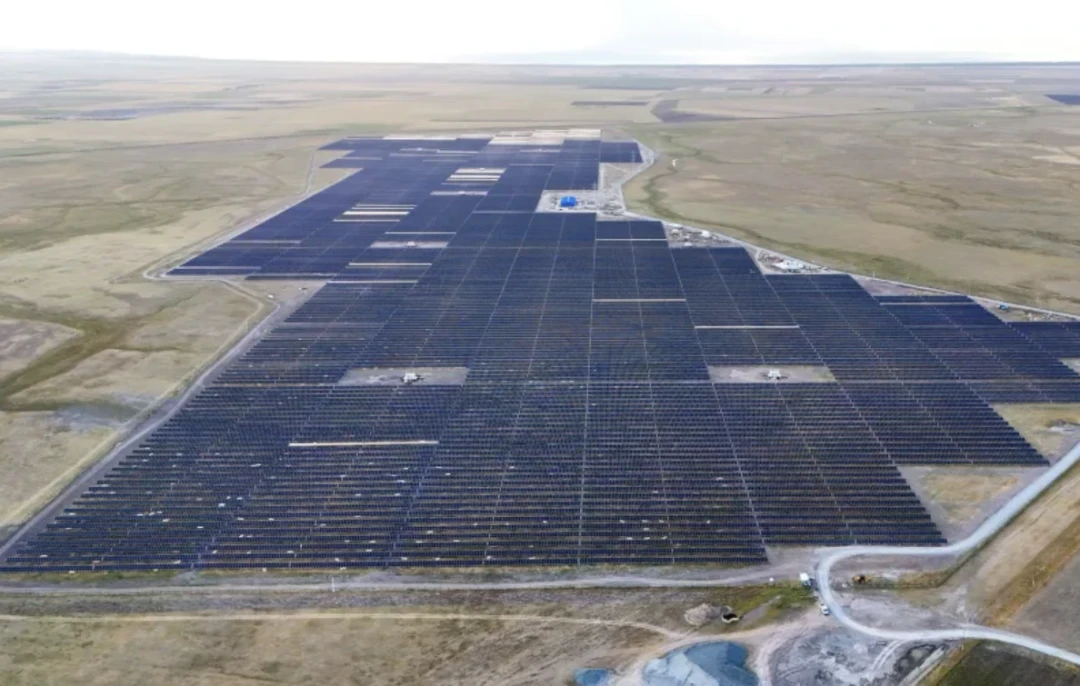
Armenia now has about 1,280 megawatts of installed solar capacity, according to Vardanyan. He attributed the rapid expansion to the relatively open conditions created for private investment.
But solar capacity eventually began growing faster than Armenia’s electricity system could accommodate, he said. The need for additional regulation had already become apparent while he was in office.
Vardanyan said similarly open investment conditions should now be created for storage facilities.
Battery systems can store electricity generated during sunny daytime hours and release it when demand rises. That would allow Armenia to integrate more solar capacity and reduce the imbalance between daytime production and evening consumption.
According to Armenia’s 2024 national energy balance, licensed solar plants had a combined capacity of 285.3 megawatts at the end of that year. Autonomous producers accounted for another 420.5 megawatts, bringing the total to about 706 megawatts.
The official figure covers the end of 2024, while Vardanyan’s estimate refers to September 2026. The difference cannot necessarily be attributed to new installations alone, as the figures may cover different categories of solar producers or use different methodologies.
Armenia’s first major utility-scale solar facility, the 55-megawatt Masrik-1 plant, came online in May 2025.
Solar plants generated about 979 million kilowatt-hours in 2024, or around 10% of Armenia’s total electricity output. Solar, hydropower and wind together accounted for 32% of generation.
Armenia generated 9.39 billion kilowatt-hours of electricity in 2024, up 7% from the previous year. Final domestic consumption was about 7 billion kilowatt-hours.
The gap reflects electricity exports, power plants’ own use, and transmission and distribution losses. Network losses amounted to about 622 million kilowatt-hours.
The Metsamor nuclear power plant accounted for 30% of electricity generation. Thermal power plants produced about 38%, while renewable sources generated 32%.
Armenia had about 3.8 gigawatts of available generation capacity in 2024, while peak demand stood at around 1.3 gigawatts in 2023, according to a German Economic Team study.
The figures suggest that Armenia’s challenge is not only total production capacity. The system must also balance supply and demand at different times of the day and year. The expansion of solar power increases the need for storage, flexible generation and cross-border electricity trade.
Dependence on Russian gas
Despite its expanding solar sector, Armenia remains heavily dependent on imported energy. Thermal plants, which generate nearly two-fifths of the country’s electricity in 2024, primarily use imported natural gas.
Russia supplied 2.29 billion cubic meters of Armenia’s 2.73 billion cubic meters of gas imports in 2024, accounting for 84% of the total. Iran supplied 446 million cubic meters, or 16%.
CivilNet has previously examined Armenia’s limited short-term options for reducing its dependence on Russian gas and the possibility of expanding supplies from Iran.
Vardanyan said Armenian-Russian gas relations were governed by two main agreements signed in December 2013. One agreement covers the gas price, asset ownership and investment recovery. The second provides exemptions from Russian export duties within annually agreed quotas.
Under the pricing formula in the main 2013 agreement, Russian gas would now cost Armenia about $275 per 1,000 cubic meters, according to Vardanyan’s calculations.
That formula has not been applied. Beginning in 2014, the two sides signed supplementary agreements establishing a lower price, initially $150 and later $165 per 1,000 cubic meters.
Vardanyan said a 10-year supplementary agreement signed in 2022 fixed the $165 price through 2031. Adjustments for the higher calorific value of the delivered gas bring the effective price to around $177.50 per 1,000 cubic meters, he said.
CivilNet has also reported that Armenia purchases Russian gas at a contractual price of $165, with the final cost varying according to calorific value. The government has modeled the economic effects of a possible increase.
According to Vardanyan, either side can withdraw unilaterally from the supplementary agreement. If that happens, the original formula could again apply, potentially raising the border price to about $275.
He estimated that such an increase could raise the price Armenian consumers pay by around 25%.
A complete cutoff of Russian supplies was the least likely scenario, Vardanyan said. But Armenia should still develop alternatives.
He proposed restoring Iranian gas imports to at least 600 million cubic meters a year. Armenia and Iran exchange gas for electricity, with Armenia supplying three kilowatt-hours for every cubic meter of Iranian gas it receives.
The two governments have recently discussed expanding the arrangement.
Creating alternative supply options would not necessarily mean abandoning Russian gas, Vardanyan said. But alternatives would reduce Armenia’s vulnerability to changes in Russian prices or supply conditions.
Electricity cannot immediately replace gas heating
A disruption in gas supplies would create a particular problem for household heating, Vardanyan said.
Even if Armenia could generate enough electricity, its power system was not designed for a nationwide shift to electric heating.
The bottleneck would not be limited to generation or the high-voltage transmission network. The low-voltage distribution system, building connections and internal household wiring might not withstand the additional load.
A typical apartment connection designed for around 10 kilowatts would not support full electric heating, according to Vardanyan.
Even if Electric Networks of Armenia quickly upgraded its infrastructure, the internal electrical systems of many houses and apartment buildings would remain inadequate, he said.
Large storage facilities could help Armenia balance electricity production and consumption and use more domestically generated solar power. But storage alone would not allow the country to replace gas heating with electricity.
Such a transition would also require extensive upgrades to distribution networks, building connections and household electrical systems.





 Stories