Iran repeats it won’t tolerate any border changes in southern Armenia
 Alexander Pracht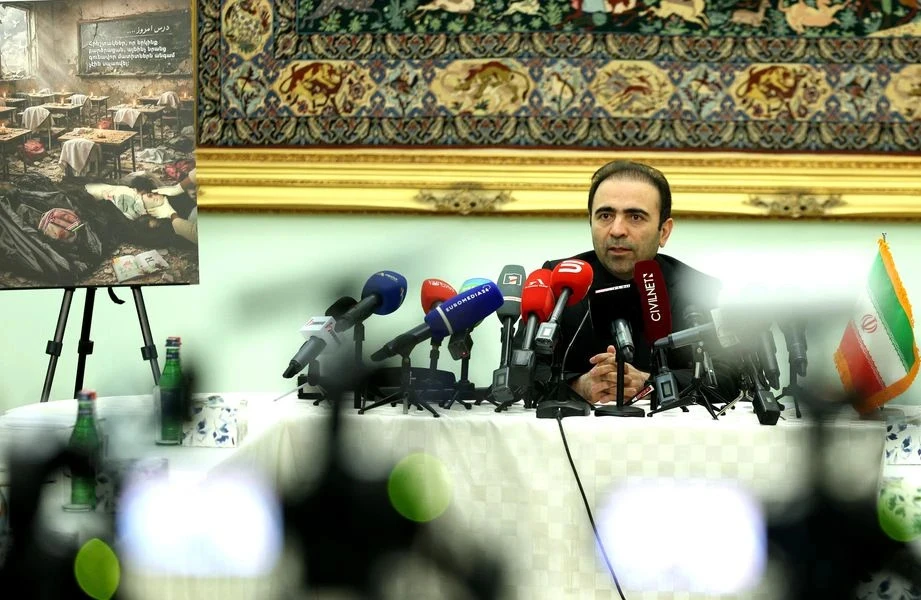
Armenia’s territorial integrity is non-negotiable for Iran in the context of regional developments in the South Caucasus, Tehran’s ambassador to Armenia said on Wednesday.
“The leaders of Azerbaijan are still talking about the ‘Zangezur Corridor,’ very explicitly and very openly. And [Iran] is also explicit [in saying] that no geopolitical changes and no damage to the territorial integrity and sovereignty of the Republic of Armenia [will be] tolerated,” Khalil Shirgholami said at an event organized by the Applied Policy Research Institute of Armenia think tank․
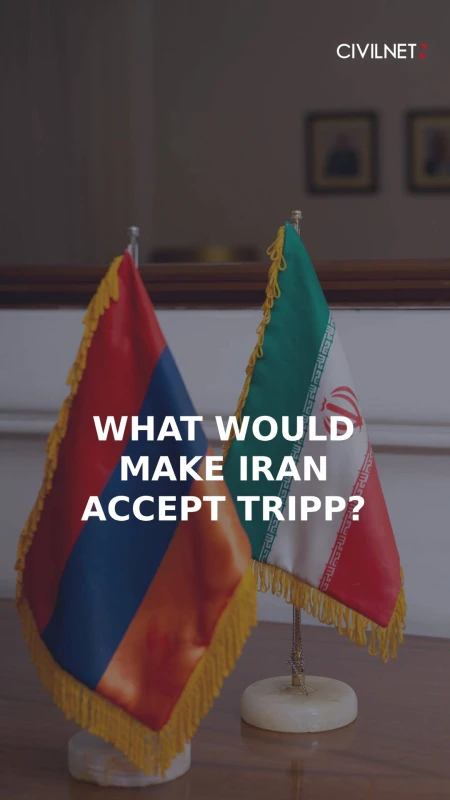
The ambassador also reiterated his remarks from last week regarding Iran’s position on the Trump Route project. Shirgholami said Tehran would accept the project if Armenia’s territorial integrity remains intact and if no US troops are deployed in Armenia.
“No military presence of the United States in the surrounding region [will be] tolerated, [because] the hostility of the United States against the Iranian nation [has been] proven several times, [including] recently,” the diplomat said.
He added that if these two conditions are met, Iran would have no reason to oppose the Trump Route project.
Azerbaijan has sought a land connection through Armenia’s Syunik province to its Nakhichevan exclave for decades, referring to it as the “Zangezur Corridor.” Armenian officials have consistently rejected the term. The route was agreed upon with U.S. mediation and given the name Trump Route for International Peace and Prosperity in August 2025.
Under the agreement, Armenia will retain control over its borders and territory. Border and customs checks will have two layers: American employees will communicate directly with Azerbaijanis entering and exiting Armenia in what is described as the “front office,” while Armenian border officials will carry out the necessary document and security checks in the “back office.”
Also read: EXPLAINER: New details behind the ‘Trump Route’ deal
Iran initially expressed mixed views on the project. The Islamic Revolutionary Guard Corps has described the proposed route as a threat to Iran’s security, while Iranian President Masoud Pezeshkian has said Tehran’s concerns were addressed during discussions over the project.



 Stories