By Lia Avagyan
Russia currently has the most developed proposal for Armenia’s new nuclear power plant, Ara Marjanyan, a United Nations national energy expert in Armenia, said, arguing that the country needs a proven reactor ready to operate by 2036–2037.
Speaking to CivilNet on October 2, Marjanyan said Russia was effectively the only prospective partner offering a comprehensive proposal developed in engineering terms and supported by an economic justification.
“Wanting to build and being able to build are very different things,” he said.
He said the Russian proposal identifies the reactor technology and its capacity, while the U.S. modular option remains less certain. He acknowledged the United States’ substantial technological capabilities but distinguished those capabilities from a developed proposal based on a reactor already in operation.
His comments follow Rosatom Director General Alexey Likhachev’s visit to Yerevan on September 29. According to the prime minister’s office, Likhachev presented proposals and possible arrangements for building a new nuclear plant, including small- and medium-capacity units. Prime Minister Nikol Pashinyan said the decision would depend on price, quality, safety, timelines and guarantees.
Also read: Pashinyan hints Armenia may turn to Russia for larger nuclear plant
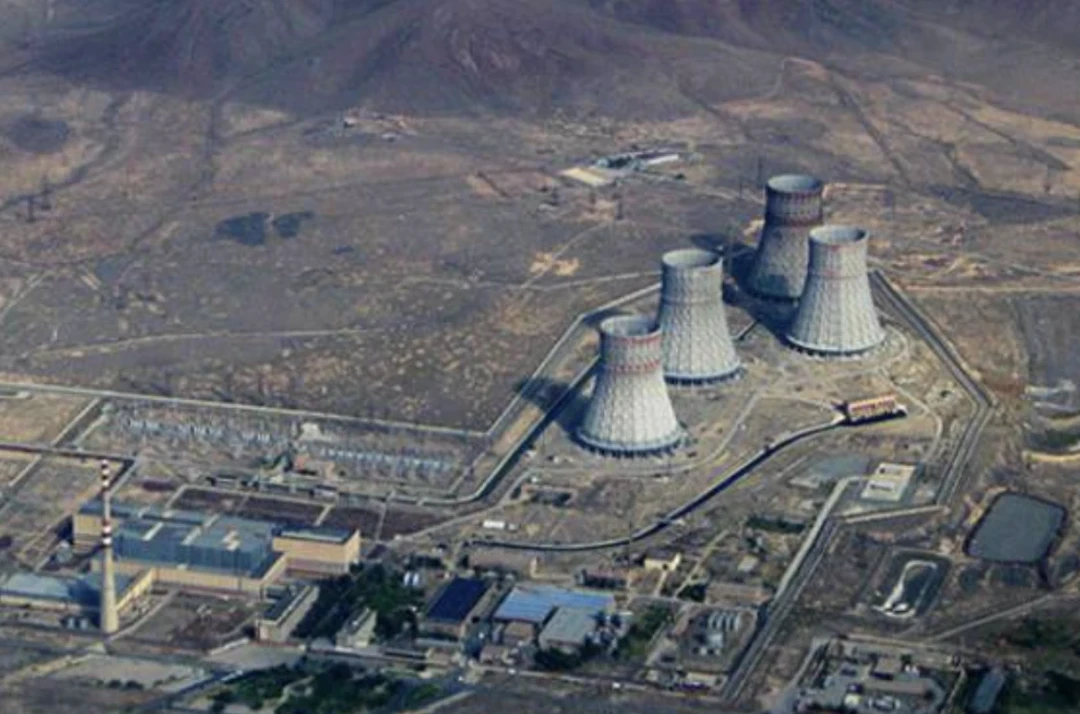
Russia already supplies fuel and provides modernization and maintenance services for Metsamor, Armenia’s existing nuclear power plant. Its operating reactor is scheduled to remain in service until 2036. The government has set the end of 2027 as the deadline for selecting the replacement technology and has considered potential cooperation with the United States, France, China and South Korea, alongside Russia.
“Armenia needs a functioning and reliable new nuclear unit by 2036–2037,” Marjanyan said.
The debate over the replacement’s capacity shifted after Pashinyan said on October 1 that a 1,000-megawatt plant could be the most logical solution. He cited growing electricity demand, including from new artificial intelligence facilities, as a reason to reconsider his earlier preference for a smaller plant.
Marjanyan welcomed the shift, saying the government was moving toward a more realistic, professional assessment of Armenia’s energy needs.
He said an energy policy roundtable held in August 2023 had identified a need for about 1,200 MW of new nuclear capacity by 2036–2037. In his assessment, Armenia needs dependable generation that solar and wind plants cannot provide on their own.
Neither can be treated as “guaranteed baseload capacity,” he said.
Marjanyan argued that energy storage could help balance fluctuations in generation and consumption but would not eliminate the need for dependable generating capacity. Storage facilities do not themselves produce electricity, he noted.
He also said the earlier preference for small modular reactors had been influenced more by political and geopolitical considerations than by engineering requirements. His concern centered on whether technologies still under development would be ready and sufficiently proven within Armenia’s timeframe.
Small modular reactors generally have capacities of up to 300 MW per unit and are designed to allow factory-built components to be assembled at their destination. Their commercial deployment remains limited, although Russia already operates a floating nuclear plant powered by two small modular reactors.
Marjanyan questioned assurances about modular reactors’ safety, arguing that experience with reactors aboard military vessels cannot be directly transferred to civilian power plants because operating conditions and requirements differ.
The International Atomic Energy Agency says many proposed modular designs incorporate passive safety systems that can reduce the risk of radioactive releases during an accident. The agency also notes that their economic competitiveness still needs to be demonstrated through deployment.
Asked whether renewed interest in a large Russian-built plant could reflect a broader political bargain with Moscow, Marjanyan said the possibility could not be excluded. But he considered long-term engineering and economic factors a more likely explanation.





 Stories