By Lia Avagyan
Armenian Prime Minister Nikol Pashinyan’s pursuit of peace with Azerbaijan has unfolded alongside democratic backsliding and growing hostility toward displaced Nagorno-Karabakh Armenians, journalist Francesca Ebel writes in Foreign Policy.
Published on October 2, 2026, her article, “Pashinyan Confronts the Karabakh Cause,” examines arrests of government critics, the scapegoating of Karabakh refugees and pressure on the remaining institutions of their former, internationally unrecognized republic.
Ebel, The Washington Post’s Ukraine correspondent, argues that Armenia’s defeat in the 2020 Karabakh war catalyzed democratic backsliding. Following his party’s victory in the 2021 elections, she writes, “Pashinyan began to prioritize loyalty and his political survival above all else.”
The report describes refugees as targets of online hate speech and government harassment after Azerbaijan’s September 2023 military offensive forced them to flee their homeland. Narratives portraying Karabakh Armenians as ungrateful or as deserters have been systematically amplified by figures loyal to the government, according to researchers cited in the article.
“It has gotten very ugly. The government’s hate speech against Karabakh refugees intensified exponentially during the elections—it was much worse than we expected,” Tigran Grigoryan, director of the Yerevan-based Regional Center of Democracy and Security, told Ebel.
“This government is sowing division to mobilize support for their policies, specifically the peace accord with Baku.”
Grigoryan said the scapegoating had become systematic, with recurring narratives deployed during political crises.
The article recounts Pashinyan’s confrontations with Karabakh Armenians during the election campaign, including an argument with activist Artur Osipyan, who criticized his handling of the war and subsequent political decisions. Osipyan was later arrested and spent almost a month in pretrial detention, Ebel reports.
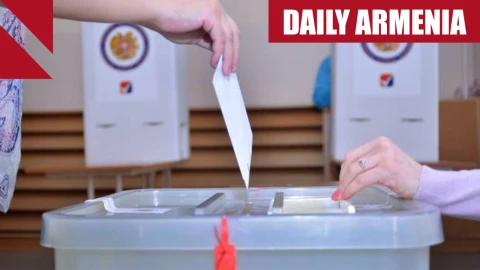
She places these incidents within a broader pattern of prosecutions involving government opponents ahead of the June parliamentary elections.
“The concentration of arrests and criminal prosecutions against opposition figures contributed to perceptions of selective justice,” the article quotes Farah Karimi, special coordinator and leader of the short-term OSCE observer mission, as saying.
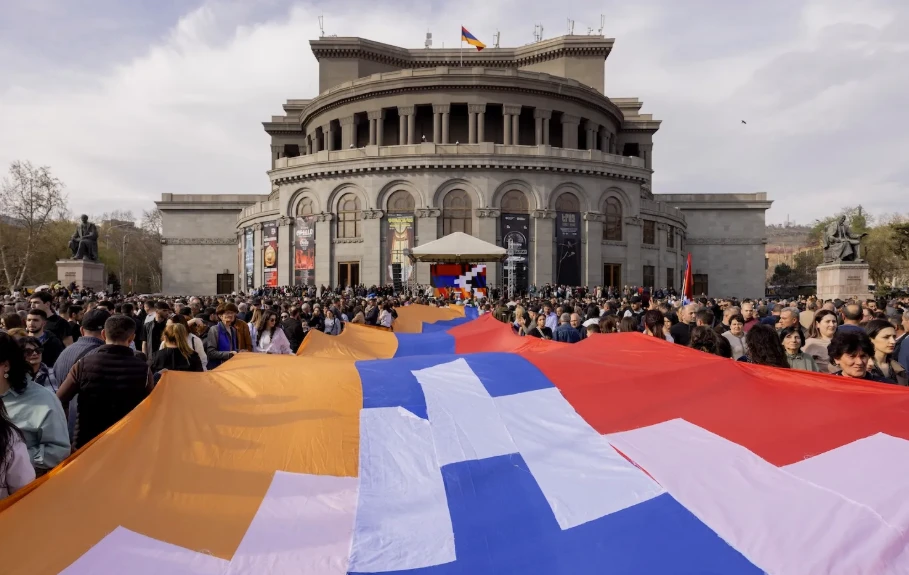
The report also describes the weakening of Karabakh’s remaining institutions. Its mission in Yerevan showed signs of a government raid, including a smashed safe. A court ruling over the summer cleared the way for the Armenian government to reclaim the premises.
Artak Beglaryan, the former republic’s state minister, said funding for the former Karabakh government had dried up and that it lacked the means to influence the peace process.
“We have no levers with which to influence this peace process. The Armenian government has become the number one obstruction of our right to return,” he told Foreign Policy.
Ebel also presents the government’s position that accepting the loss of Karabakh is necessary to secure Armenia’s future. Pashinyan’s Real Armenia doctrine prioritizes development within the country’s internationally recognized borders.
Yerevan Mayor Tigran Avinyan defended the government’s approach, saying the decisions were made “for the good of our people and for the best of our country, for the future.”
But the article questions whether Pashinyan’s election victory represented an endorsement of his Karabakh policy. Based on her conversations with voters and political scientists, Ebel writes that many Armenians saw little political alternative to Pashinyan and were more motivated by opposition to pro-Russian parties than by the question of Nagorno-Karabakh.
Interviews with displaced families illustrate financial hardship, exclusion from voting for many refugees and grief over homes and relatives’ graves left behind.
“His grave, our memories, and our land was the most precious to us. Nothing compares to our homeland,” displaced Karabakh Armenian Gevorg Sargsyan told Ebel.

 Stories