By Siranush Adamyan
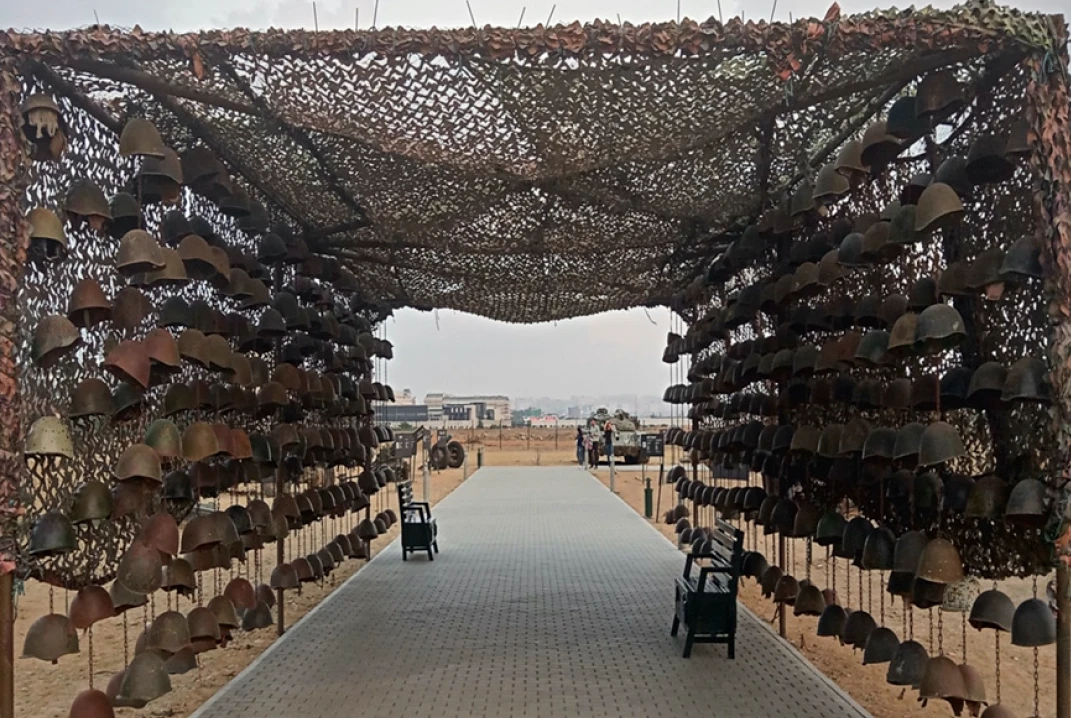
A child spat on a wax figure of an Armenian soldier at Baku’s Military Trophy Park, then ran back to embrace his father. Nearby, families posed for photographs and chatted among captured weapons and other displays from the 2020 war.
The scene, witnessed by researcher Ramil Zamanov during fieldwork in 2021, opens a study of how wartime ideas about manhood, patriotism and violence appeared online and in public space. In “The War Within: Militarised Masculinities and Azerbaijani Nationalism in the Second Nagorno-Karabakh War”, Zamanov argues that social media discourse helped present military strength and sacrifice as ideals of Azerbaijani masculinity, while portraying Armenian men as weak, disloyal or dangerous.
The paper was published online on Sept. 29, 2026, in the journal Men and Masculinities. Zamanov is affiliated with the Institute of Social and Cultural Anthropology at the Free University of Berlin.
‘Real men’ and ‘traitors’
Zamanov examined more than 100 posts and comments on Facebook, X/Twitter, Instagram and LinkedIn, with closer analysis of eight pseudonymous accounts. The material, in Azerbaijani, covered the period from Sept. 26 to Nov. 10, 2020. The study also draws on Zamanov’s field observations in Baku in May and June 2021, including the visit to the Trophy Park. Zamanov used feminist critical discourse analysis to examine how gender, power and nationalist ideas appeared in wartime posts.
One Facebook commenter, identified by the pseudonym Zeynal, described Azerbaijani soldiers as “real men” who would liberate the country’s lands from “treacherous Armenian men.” The post appeared on the BBC News Azerbaijan Facebook page on Oct. 2, the paper says. Zamanov argues that this language tied masculinity to loyalty and military service while casting Armenians as morally inferior.
Another example came from a young man commenting on an Instagram post by Kim Kardashian. He wrote that Armenian men “only know how to produce a porn star” and warned: “Do not mess up with our men! Our army will liberate Karabakh!” Zamanov says the comment used Kardashian’s Armenian background to question Armenian men’s masculinity and their ability to defend their land.
The researcher also points to statements by President Ilham Aliyev that, in Zamanov’s analysis, reinforced the same contrast. The paper quotes Aliyev as saying, “We chased Armenians from Karabakh like chasing a dog,” and predicting that Armenian Prime Minister Nikol Pashinyan would “cowardly sign this document in a basement far from the cameras.” Zamanov argues that such rhetoric helped present strength and military victory as signs of masculine authority.
Violence framed as protection
Some posts went beyond insults, presenting violence as necessary to protect the nation. One user, identified as Alim, wrote on X: “We should kill all of their men to protect our future! Otherwise, this dirty blood will attack us again!” Another, Rashad, argued on LinkedIn that Armenians should be killed before they could kill Azerbaijanis, describing this as “logical.”
Zamanov interprets these posts as examples of wartime rhetoric that cast Armenians as an existential threat and framed killing as self-defense or revenge. The paper argues that such language helped normalize support for violence. It examines the posts as discourse, however, rather than evidence that particular users committed or directly encouraged specific crimes.
The hashtag #KarabakhIsAzerbaijan also appeared widely in the material. Zamanov writes that in some posts it went beyond a claim about territory, becoming a vehicle for justifying violence and presenting military action as patriotic duty.
Also read: Gendered face of the Nagorno-Karabakh conflict
Martyrdom and grief
The final theme is the celebration of soldiers killed in the war as şəhid, or martyrs. Zamanov notes that Azerbaijan announced in December 2020 that 2,783 soldiers had become martyrs. The paper describes families displaying reliefs dedicated to their sons on their doors, while some online commenters rebuked families who publicly grieved or criticized the war.
One man, identified as Najaf, told grieving parents: “You should be happy your sons became holy.” He added that they had not lost their son but had given him to the country. Zamanov argues that this framing turned death into patriotic sacrifice and left little room for dissent or mourning. The paper also points to the contrast between public celebrations of martyrdom and the trauma and other difficulties experienced by veterans and bereaved families.
The study offers a close reading of a limited set of accounts, not a measure of how common these views were across Azerbaijani society. Zamanov says interviews were not feasible: internet access was restricted during the war, and direct outreach posed safety concerns. The findings show how the selected posts expressed and circulated militarized ideals; they do not establish that social media alone shaped public opinion or wartime conduct.
Zamanov’s broader argument is that wartime masculinity was produced through connected settings: online language, official rhetoric and public displays such as the Trophy Park. The paper concludes that these ideals elevated soldiers as protectors while making grief, trauma and criticism harder to voice.


 Stories