By Lia Avagyan
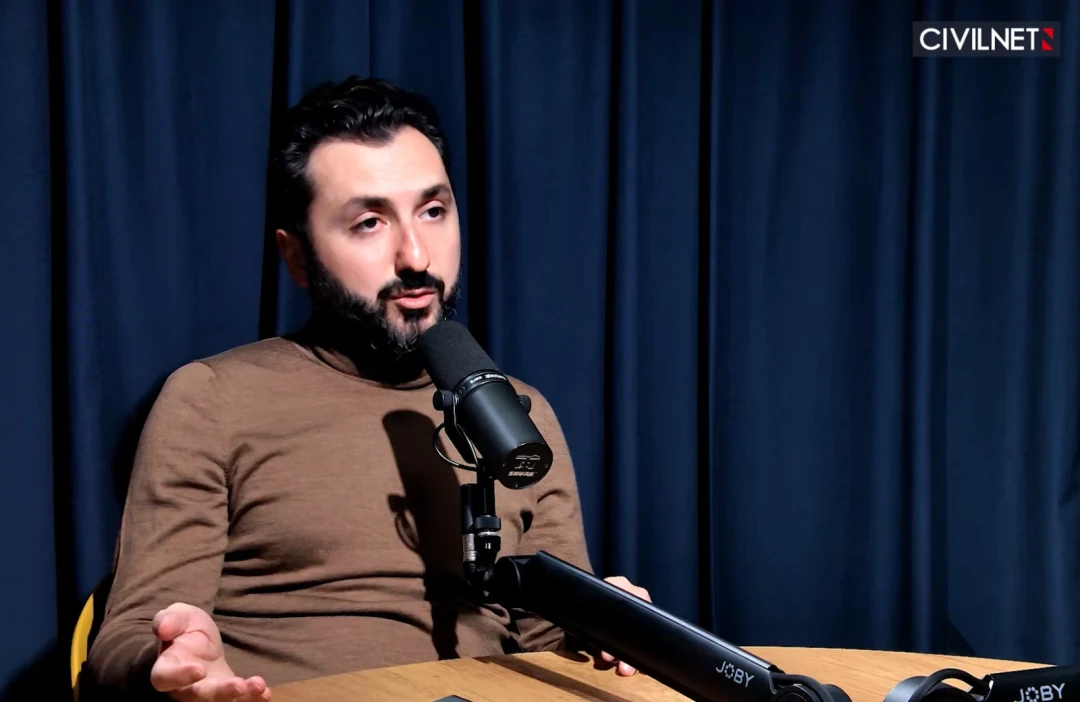
Armenia’s draft budget for 2027 does not fund the science strategy the government adopted earlier this year, according to Tigran Shahverdyan, a member of the Gituzh (Power of Science) advocacy initiative.
Shahverdyan, co-founder of Robomart, told CivilNet in an interview published Monday that the strategy’s action plan implies an increase of 12.5 bn to 21.5 bn drams ($35 mn to $60 mn) in science funding next year. The draft budget foresees an increase of about 1.5 bn drams ($4.2 mn). He gave a range because the plan does not clearly separate ongoing programs from new ones.
“Are we a state, or are we just playing pretend?” Shahverdyan said. “We adopt a government decision and a program, we say what spending we plan and what targets we set, and then next year’s budget doesn’t plan for it.”
The government adopted the science sector development strategy for 2026–2030 in January. Gituzh welcomed it despite some gaps, describing it as the first strategic plan for the field. The strategy aims to raise public research and development funding to 0.75 percent of GDP by 2030 and to grow the number of researchers from about 3,000 to 6,000.
Finance ministry’s argument
Shahverdyan said Finance Minister Vahe Hovhannisyan has argued that science funds are not being fully spent, so there is no reason to increase them. Shahverdyan rejected that reasoning.
He said the same logic would have blocked the sharp funding increases of recent years, which the government now cites as an achievement. The question, he said, is why the money went unspent.
“Either implement the program, or adopt a government decision canceling it,” he said.
Gituzh, formed in 2021 to push for higher science funding, has long argued that research and development are key to Armenia’s security and economic competitiveness.
Shahverdyan said Armenia still has no systemic mechanism for the state to commission research. The Ministry of Education, Science, Culture and Sport has been collecting research needs from other ministries, but they are not obliged to respond. A high-tech sector strategy drafted by the Ministry of High-Tech Industry, which included funding for research, has not been adopted.
He said Gituzh had raised the issue with Prime Minister Nikol Pashinyan, and both sides agreed on a policy study to fill the institutional gap. The terms of reference and evaluation guidelines are ready, he said, but the work has stalled since the end of May.
Open letter and resignation
The dispute has spilled into public view. More than 300 scientists have now signed an open letter on science funding, Shahverdyan said, up from 240 when it was published on Oct. 13. Sisak Gabrielyan, who chairs parliament’s committee on education and science, has responded publicly.
Sargis Hayotsyan, who had led the government body overseeing science since 2020, stepped down as chair of the Higher Education and Science Committee on Sept. 29. In his resignation statement, Hayotsyan said the tools available to him did not allow him to ensure the pace and consistency needed to carry out reforms. His deputy, Artur Movsisyan, later resigned as well.
Shahverdyan linked Hayotsyan’s departure to the budget. Hayotsyan had pushed the strategy forward, he said, but resigned after seeing how little funding the sector would receive.
He warned that the budget gap is already damaging trust among researchers. Large five-year grants for Armenia’s leading research groups, introduced in 2021, ended this year, and new competitions have not been announced. Some teams had promised master’s students paid positions they can no longer offer.
“The loss of trust has very bad consequences,” Shahverdyan said, adding that disruptions of a few months can turn into gaps lasting years.
Gituzh is calling on the government to release funds this year for grant competitions whose results are on hold for lack of money. Shahverdyan pointed to a provision in the 2026 budget that allows about 7 bn drams ($19 mn) in additional spending on science. The group also wants the 2027 budget to fund the programs for the full year and cover the measures in the strategy.
After the interview was recorded, the government reallocated about 2.36 bn drams ($6.5 mn) to science on Oct. 15, mostly for scientific equipment, with the rest going to grant-based research. The money came from funds earmarked for the Academic City project. Gituzh welcomed Pashinyan’s pledge that day to meet the government’s research funding targets, but said the strategy’s measures must still be reflected in the 2027 budget.
Without that, Shahverdyan said, Armenia risks losing the gains of recent years. It also leaves Gituzh with a difficult question, he said: how to work with a partner that does not implement its own documented commitments.


 Stories