 Civilnet
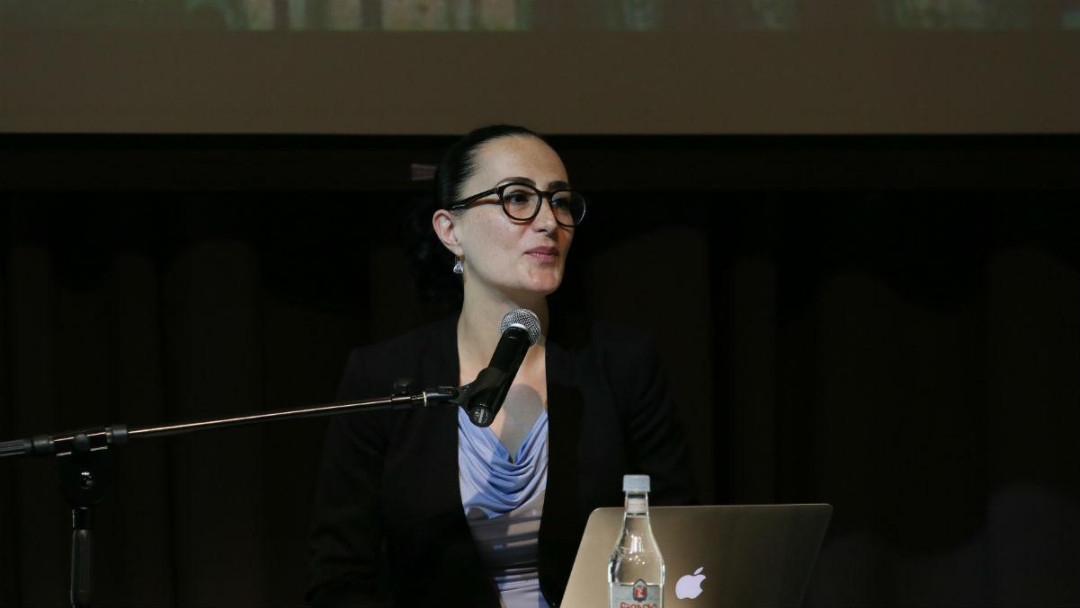
By Irina Ghaplanyan
Recent protests in Karabakh and the reactions of official Stepanakert and Yerevan have been a subject of much debate in the past few days. There are many important dimensions to these series of events from the protesters’ demands to the government’s responses and possible developments. But in this short op-ed I would like to draw attention to the phenomenon of these protests and reflect on their larger significance.
According to various reports there was a clash between Artsakh’s National Security Service (NSS) officer and civilians, which later led to an assault of NSS officers on two civilians, who were later hospitalized. These events led to a series of protests that erupted on June 1st and lasted for four days.
If for Yerevan mass protests over the past two decades have become almost an inalienable part of civic life and, for the lack of alternatives, a natural platform for expressing pent up political, social and economic grievances, for Stepanakert protests were a rarity. This stems from the fact that political leadership both in Yerevan and more so in Stepanakert constructed and articulated a false narrative, that mass protests, or strong political or civic opposition create domestic instability making Armenia or Artsakh vulnerable in light of their complex geopolitics. This narrative has been flawed at its core not only for the reasons of false assumptions that official Baku plans its military offensives based solely on the internal political situation in Yerevan or Stepanakert, but more so for the reasons of interpreting social protests as an act in and of itself of domestic instability. This type of interpretation communicates from the onset the lack of preparedness to negotiate causes of protests and the fear of power permeability if such will is expressed.
I would venture to say that the phenomenon itself of the protests in Artsakh, Bako Sahakyan’s preparedness to meet with the delegation from these protesters, to listen to their concerns and to commit on taking relevant actions are all signs of not just a step but a leap forward in improving the government-people relationship in Stepanakert.
In this respect it is important to note that Velvet Revolution was or rather is not an event but a phenomenon that spread like a contagion in the cognitive perception and realization of the Armenians on their collective power in fighting injustices. Here it is also important to note that Armenia, Artsakh and the Diaspora are natural and organic extensions of each other, and so is the renewed overall uniting motive of the collective battle against the injustices irrespective of their time, space and content.
In this context the demands of the protesters in Stepanakert should not be viewed in isolation, but rather as extensions of that very cognitive perception and realization of the people’s collective power. Some would argue that there was no critical mass to ensure a stronger pressure on the government in Stepanakert, which is a fair assessment, but it is also worth noting that Sahakyan was quick to respond and was receptive of the demands. The subsequent steps of Sahakyan’s administration will be telling of how well they have conceived of what transpired in Yerevan last month and how reality has shifted.
This is an important momentum in the history of the Armenian people for a number of reasons, but most importantly for the reasons of successful mandates for representativeness and legitimacy of their governments’. Democracies are built and consolidated through social contract between the people and its government, hence ensuring their representativeness and legitimacy. In this respect, the most important guarantee and internal point of reference for the people of Artsakh in their battle for sovereignty is their democratic relationship with their government. Conceptually speaking, domestic legitimacy is the most organic and logical path towards acquiring international legitimacy. Obviously, this is not to say that Baku’s bellicose rhetoric and military offensives should be ignored, but this certainly strengthens Armenia’s and Artsakh’s negotiating power.
For Armenians worldwide domestic legitimacy will open many doors and will strengthen our positions not only on Artsakh but at many other negotiating tables. Let us not miss this momentum.


 Stories