 Civilnet
While Nikol Pashinyan did not receive the votes necessary to be confirmed as prime minister on Tuesday, May 1, the subsequent acts of civil disobedience that took place throughout the country on May 2 showed the strength of the movement and the continuing support that Pashinyan enjoys.
With that as the backdrop, May 2 saw two announcements: 1) The Tsarukyan Alliance agreed to support Pashinyan’s candidacy for prime minister in the second round of voting on May 8, as well as provide the necessary signatures to nominate him. (A candidate needs the signatures of one-third of the deputies in parliament to become a candidate, in the second round. The first round had no such requirement.) 2) The Republican Party announced it would not nominate a candidate for the second round of voting and that it would back the candidate who would be presented with the support of one-third of the members of parliament.
When making the announcement, Vahram Baghdasaryan of the Republican Party did not name Nikol Pashinyan as the candidate they would support, and refused to refer to him by name, even when responding to specific questions by reporters. The Republican Party has used the majority it holds in parliament as a tactic to continue to exert its dominance, even in the face of the hundreds of thousands of demonstrators across the country advocating for the removal of the Republican Party from power.
What does this mean for May 8?
Until the votes are cast on May 8, everything we hear are non-binding announcements and the parties involved are not bound to those positions. The Republican Party can continue to exercise its power within the framework of the Constitution and take steps that would preclude Pashinyan, the “People’s Candidate” from legitimizing his street power and becoming prime minister.
1. The Republican Party and its membership can choose not to vote for Nikol Pashinyan (again) in the May 8 vote in the National Assembly, thus keeping Pashinyan from receiving the necessary 53 votes to achieve a majority.
Per Chapter 6, Article 149, Section 3 of the Constitution, if the above happens, the National Assembly will dissolve, triggering new elections for parliament, which would then be held under the current electoral law.
2. The Republican Party can choose to vote for Nikol Pashinyan and confirm him as prime minister. If Pashinyan becomes prime minister, he would then be working with a parliament that is majority Republican. The Republican Party could act in opposition to the prime minister, making it difficult to enact and pass legislation, including and especially regarding the modifications to the electoral code that Pashinyan has been advocating throughout the movement.
3. The Republican Party is not mandated to vote as a bloc. As we saw with Republican Party member Feliks Tsolakyan and ARF-Dashnaksutyun member Aghvan Vardanyan who voted against the wishes of their party on May 1 -- Tsolakyan voted for Pashinyan, despite his party’s position against, and Vardanyan voted against Pashinyan, despite his party’s position in favor -- individual deputies can vote as they wish. What happens if each individual who is part of the Republican Party chooses to vote against Pashinyan’s candidacy? For example: Republican Party member Eduard Sharmazanov has already indicated that he will not be voting for Nikol Pashinyan as prime minister next week.
4. While the Republican Party, as a political party, may choose to not nominate an individual as a candidate for PM, any individual can nominate a person as a candidate as long as they are eligible per the rules of Constitution. If another candidate is nominated, and receives the support of one-third of the candidates, the Republican Party can support that candidate.
Until the votes are cast on May 8, questions will remain and assumptions should not be made regarding Nikol Pashinyan’s confirmation as prime minister. Last week, Eduard Sharmazanov of the Republican Party stated it would not obstruct the nomination of Nikol Pashinyan for candidate of Prime Minister, but that ultimately did not mean they supported him when the time came to vote.
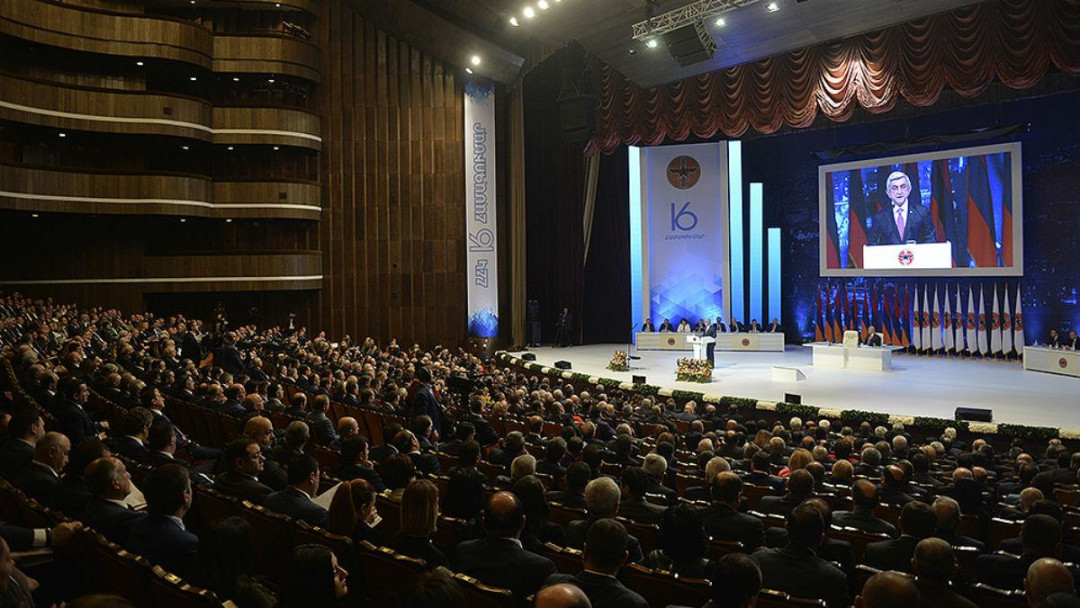
The tension in this situation is partly due to the fact that unlike traditional politics, Armenia’s politics are different. When Serzh Sargsyan, the head of the Republican Party resigned on April 23, political scientists could have assumed that the rest of his party would resign with him, in an expression of acknowledgement of the people’s dissatisfaction. That did not happen. The Armenian Street thinks that they have succeeded in ousting those in power. Those in power think (or act) as if they are not part of the same ruling structure that Sargsyan led and can make independent decisions.
The questions remain.

 Stories