 Civilnet
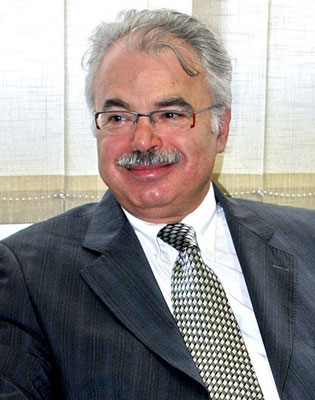
 “If there were less corruption, the Hayastan All-Armenian Fund would be able to raise twice as much money,” said Bedros Terzian, a member of the Board of Trustees of the All-Armenian Fund and President of the Fund’s French affiliate.
Chapters throughout Europe conducted their annual phone-a-thon and raised nearly $2 million in the run-up to the annual Telethon. The funds raised will continue to support rural development in Armenia’s Tavush region, as well as the needs of Syrian Armenians who have remained in Syria.
You can read the full interview below.
CivilNet: Hello Mr Terzian. Thursday, November 28, the annual telethon will be held. The proceeds will be go towards construction of the Vardenis-Martakert highway. Before that, from 21-24 November you organized the phone-a-thon that raised $2 million, or 1.46 million Euros. How did you manage to raise this amount of money, which is 4% more than you raised last year?
Bedros Terzian: It was a pleasant surprise for us as well. In my opinion, there are two reasons, the first is the huge amount of work by our volunteers, hundreds of young people and volunteers really worked hard during those four days. Second, the dedication of our donors, most of our donors donated the money they had promised, they are mainly families and individuals who helped us to raise more. However, compared with this group, the corporate donors were fewer in number this year, and this is the second year their number has declined. And as you may know, there is an economic crisis in Europe too. However, the increase in number of family donors compensates for this and we succeeded in raising more money. Although this increase is not large, only 4% but in these conditions it is considerable.
CivilNet: 50 000 families participated in the phone-a-thon?
Bedros Terzian: We made telephone contact with 50 000 families, but unfortunately not all of them donated money. This year, we had 14 000 families that participated, mostly from France, approximately 12 000, the rest were from Germany, Switzerland, Belgium, and Greece. I have to mention the case of Greece, as you know the economic situation is very difficult there, however our branch there organized the phone-a-thon and we also had an increase there, compared to the previous year.
CivilNet: Okay, Mr. Terzian, the discussions about the corruption, the alarm [people express about it]. Did corruption have an influence on the phone-a-thon, or judging from the money raised, did it not have much of an influence?
Bedros Terzian: You know, during these four days thousands of discussions took place between our volunteers and the people and the problem of corruption has a central place in those discussions. This is one of our main concerns, and we can understand why. People who are not aware of the activities of our fund think that the fund does not work independently and only gives the money to others; it is hard for those to reach us. However, those who know how we have been working during these 20-21 years, and how extensive is the supervision (control) over our activities, financial and functional, trust us, and it is due to these people that we move forward. And I think if serious action was undertaken against corruption, and if corruption in Armenia did not exist, I am sure that we would have twice as many as donors as we have. However, what we tell them is the following, and I think it is the most important point: corruption is a disaster and a crime against the economy and the country, and it is a dreadful thing. However, who suffers from corruption? It is the people. And we told them that people are already suffering, but we want to hold out our helping hand towards the people and improve their living conditions, more specifically in the villages. If you participate in our activities, you would help raise the standard of living of these people, they will live better, they will have water, medical centers, schools. Nevertheless, when you do not participate, you will punish these people twice over, as on one hand they are suffering from corruption, and on the other hand you do not offer them your help. We tell them, if you want corruption to diminish and democracy to flourish, it is necessary for people to live well. Because hungry people will not move forward, their main problem is to find food. Therefore, helping people will also be a way to reduce corruption. This is our message. And I am happy to say that a lot of people understand this message and participate in our activity.
CivilNet: Ok Mr. Terzian. I am thanking you for this patriotic activity and I would like to ask you one last question. As I already mentioned, the proceeds of tomorrow’s telethon will go to the construction of Vardenis/ Martakert highway. According to your website, the money raised will be divided into four parts, the first is for improving life in Armenia’s villages, the second is for construction of social centers in Karabakh villages, the third for helping schools in Syria, and only with the fourth part you will help the construction of the highway. Why didn’t you devote all the money to the highway construction?
Bedros Terzian: It is very clear. The work is divided up [between the various branches of the Fund], and the French branch of the Armenian fund has specialized in the last few years in helping villages, especially in the Tavush region in Armenia, as well as in Karabagh. We, with the agreement of the other [branches], made the decision to continue our work in the villages, especially in the Tavush marz. We work with 17 village in this region, and I am happy to say that in those villages where we have been working since 2009, we can see an improvement, in those villages the level of emigration decreased and sometimes it even stopped, and we can also see that in some places some people returned to their villages, I am not saying thousands of families returned, but one or two families in this or that village have returned. And this shows that it is very important to help villages and offer help to villagers and create job opportunities for them. The same in Karabakh, we started our village program there last year, we started to establish community centers there, and 12 community centers have been built or are in the process of construction. This year we hope to add 5 or 6 more centers in the villages. These community centers are very important for the villages, as they have a medical center, library, internet, a place for gathering for meetings. These centers gather villagers together and become the center of the villages and bring the villages back to life. That is why with the agreement of other branches [of the Armenian Fund] we decided to continue working in the villages. And also the terrible situation of the Armenians in Syria, you are fully aware of that difficult situation there, because of the war. This year, we want to help them too with the sum of 100 000 Euros for Armenian schools in Syria. We made our decision to help in that area following the discussion that we had with the Armenian-Syrian committee. They made various suggestions. Along with the Fund of Lebanon, we decided to devote a part of the money raised for the salaries of the teachers in Armenian schools in Syria, in order to help them survive this situation and also to help them to stay there and continue to work after the war.
CivilNet: Ok, thank you very much, Mr. Terzian, for taking time to talk to us, also for engaging with the problems of Armenia and Armenians. Thank you.
Bedros Terzian: Thank you.
The interview was conducted by CivilNet’s Arpi Makhsudyan.


 Stories