 Civilnet
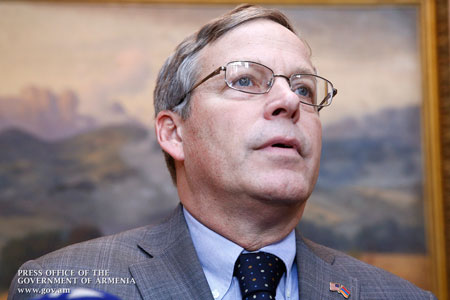
 On May 7, the US Co-Chair of the OSCE Minsk Group Ambassador James Warlick spoke at the Carnegie Endowment for International Peace in Washington, DC, on US policy for the peaceful resolution of the Karabakh conflict. Mr Warlick outlined six elements “that will have to be part of any peace agreement if it is to endure.” CivilNet asked US embassy in Armenia to comment on the intent and some of the elements of the document.
What is the general intent of the document?
The intent of the speech was to lay out US government policy toward the NK conflict on the eve of the twentieth anniversary of the cease fire. In addition, the speech was an attempt to give a boost to the negotiating process which had been at a bit of a lull in the last six months. Finally, the speech was an attempt to encourage the parties to the conflict, the governments and the people, to recognize the need for compromise in order to reach a negotiated solution. Any compromise will require differentiating between the status of Nagorno-Karabakh proper and the territories surrounding Nagorno-Karabakh. Ambassador Warlick’s speech highlighted the need of the parties to work together to achieve a negotiated solution. That will take political will from both sides.
The first element, according to Mr Warlick, is “mutually agreed and legally binding expression of will.” Can you please elaborate what the definition “mutually agreed” means?
Mutually agreed means that the modalities and timing of any legally binding expression of will are subject to negotiation between the sides. The parties should not take unilateral steps to decide the future status of Nagorno-Karabakh.
In the third and fourth elements, Mr Warlick points out that “the occupied territories surrounding Nagorno-Karabakh should be returned to Azerbaijani control” and “there should be a corridor linking Armenia to Nagorno-Karabakh.” There is no indication of the legal status of that corridor. Under which party’s jurisdiction would the corridor be under?
The details and specific modalities of each of the six elements is the subject of further negotiations between the sides. We're ready to support that in any way we can.

 Stories