 Civilnet
By Mark Dovich
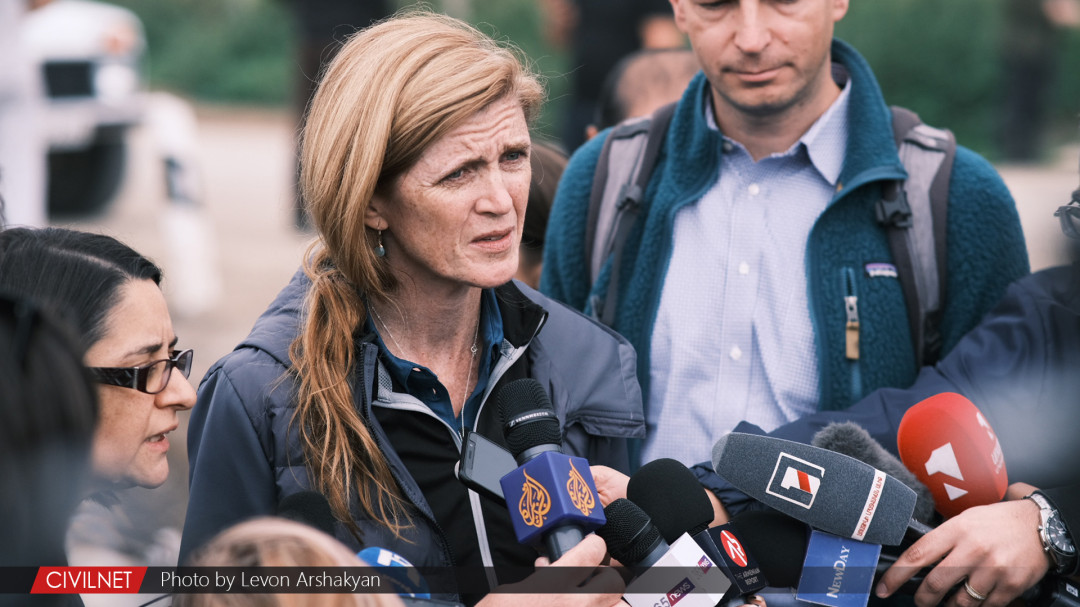
During a 30-minute, highly-managed press conference in Yerevan Monday, where only pre-selected media were allowed to ask questions, USAID chief Samantha Power pledged to support Armenia’s “sovereignty and territorial integrity,” but largely dodged questions on how the United States would respond to further military action in the region by Azerbaijan.
Also present at Power’s press conference Monday was acting Assistant Secretary of State Yuri Kim, who told senators earlier this month “we will not tolerate any military action, we will not tolerate any attack on the people of Nagorno-Karabakh.” Kim did not speak at Monday’s press conference, and reporters were not given the opportunity to ask her questions.
Power did not contribute anything new to the crucial conversation being had about the fate of the region’s Armenians, in both Nagorno-Karabakh and Armenia. She urged Azerbaijan to maintain a ceasefire, called for “an international humanitarian assessment and a monitoring presence” to be deployed to Nagorno-Karabakh, and said Washington will continue to support peace talks between Yerevan and Baku.
Power said Washington is reviewing its assistance programs to Baku — as is required as part of yearly Section 907 waiver requests — but otherwise would not provide any concrete information on steps the United States would be willing to take if Azerbaijan continues to use violence to control Nagorno-Karabakh and its people.
“I would not leap to any conclusions about American foreign policy or our reaction to the events that have just transpired,” Power said, referring to Azerbaijan’s move to launch strikes across Nagorno-Karabakh last week. “I don’t have anything to preview in terms of tools the United States might employ.”
Speaking with a separate group of reporters Tuesday in the southern Armenian border town of Goris, the site of caravans of cars fleeing Azerbaijan’s violence, Power again dodged questions about Washington’s potential responses to Baku’s actions, saying only the United States is considering “a range of options.”
After a more than nine-month blockade on nearly all food and medical care, and a ban on almost all travel, Azerbaijan launched air strikes across Nagorno-Karabakh, on September 19, killing at least 200 people, wounding more than 400 others, and displacing tens of thousands of civilians from their homes. Those numbers are likely to rise.
Also watch: ‘A bankruptcy of EU and US diplomacy’: What the Karabakh crisis means for the West


 Stories