 Civilnet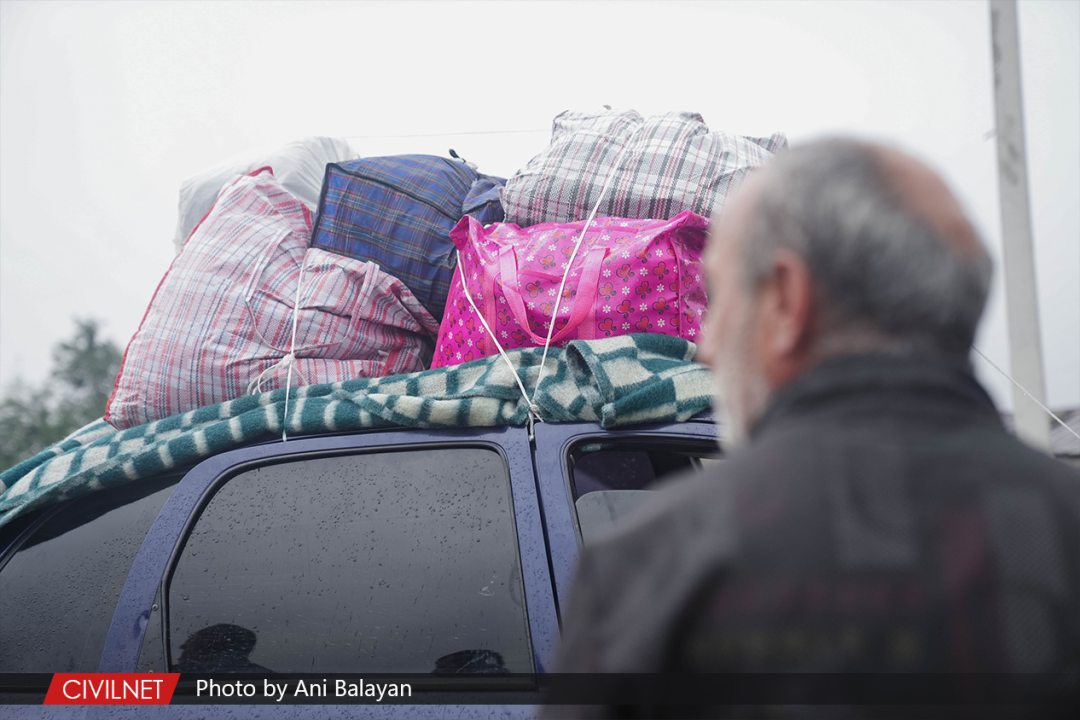
Aleksandr V. Gevorkyan, Ph.D.
In thinking about an opening statement for this brief sketch of ideas, I wondered about possible examples of economic responses to refugee crises like what Armenia is experiencing now, with over 100,000 people forced their homeland of the unrecognized, but until recently de facto self-governing, Republic of Artsakh (Nagorno-Karabakh). The scale of the human tragedy and the volume of intentional suffering that has befallen upon ethnic Armenians, just in this century, are not conceivable to today’s human intellect, even one that may have trained itself how to cope with constant tragedy and pain across the world.
So regarding examples, there are many of them, and so are the economic policy lessons in each case. To illustrate just a few and help guide the reader through the list of economic measures suggested below, consider just some of the events in the massive ocean of past and ongoing devastating refugee crises. We learn from the early days of the First Republic of Armenia that worsening humanitarian risks, poverty, and hunger can be allowed to continue if funding is insufficient and administrative resolve is limited for immediate, broad economic provisions. Similarly, Armenia in the late 1980s and early 1990s, yet again weak in economic, social, and political terms amid the downfall of the centralized system of the Soviet Union and the breakout of the First Karabakh War, was unable to fully absorb and provide a path to integration for hundreds of thousands of ethnic Armenian refugees from Azerbaijan and Nagorno-Karabakh. Many ended up moving to other countries.
Elsewhere, we also know from the experience of the 1980 Mariel Boatlift that the social aspects and politics of new migration shocks can be very complex, and the impact on the local economy may also depend on the skills and networks of the new immigrants, as well as the labor market’s absorption capacities. We understand from catastrophic natural disasters, such as the 2005 Hurricane Katrina, that proactive, yet random, resettlement of survivors may lead to profound ruptures in tightly knit communities, the loss of unique cultural heritage, destroying generations of communal support and safety-nets with long-term psychological distress. All that can, in turn, lead to the inability of the forced migrants to adapt to their new living conditions and enter new labor markets, as such not ever regaining their full livelihoods.
At the same time, there is the example of Israel’s absorption of the Soviet emigres in the early 1990s, which shows that a well-funded and rationally organized pragmatic policy of resettlement and integration of new migrants in the local and regional economies leads to net positive outcomes at the individual level, as well as overall for the national economy. The literature on refugee economics is incredibly diverse, technical, and broad in its scope. It is with such a multidisciplinary view that some initial thoughts on the possible ways for Armenia to conduct economic policy in the current situation are presented below. Some of these ideas I first shared in my public social media post on September 27, 2023, before any subsequent official policy announcements.
The overarching motivation here is humanistic: easing the economic burden for the Artsakh refugees, people who have lost everything but themselves, and helping Armenia as a country to sustain the inevitable, and still oncoming, socio-economic pressures. Any steps to prevent anything remotely resembling extreme poverty-like outcomes should be prioritized. By the same token, the adoption of any economic measures cannot result in a significant upset to the established equilibrium in the local markets.
There are three key risk factors to keep in mind here: 1) the impact on labor markets as new migrants enter the field and may be competing with the local workers; 2) relatedly, the impact on the real wage across sectors which is hard to measure at this time (the risk is that a sudden increase in workers with skills equal or similar to the locals might have a downward pressure on the overall wages); 3) challenges of outward migration (as first the refugees decide to leave for other countries, facing problems of economic adaptation in Armenia, and second the local workers may decide to emigrate) with related subsequent monetary outflows.
While in the past couple of days information on some economic measures by the Armenian government has started coming through the news channels, more is likely to be needed. The policy priorities may be allocated across short-, medium-, and long-term effects. Finally, it is possible that some of the funding for the measures proposed below may be out of funds previously earmarked by Armenia in its annual support for the Artsakh economy, which would appear to be no longer relevant and available for the current needs.
Humanitarian relief [short term]
Immediate provisions for food, shelter, and medical essentials, as well as any urgent means for survival, require the closest attention. Another question for the short-term is the provision of uninterrupted access to education and childcare for children and college-age teenagers. This can be done online while schools’ capacities are finalized and new residential settlement questions are resolved.
Refugee settlement [short- to medium-term]
Learning from international examples of refugee settlement, it is important to account for the factor of closely-knit communities and cultural connections across families fleeing from the same villages and areas in Artsakh. A settlement policy needs to consider grouping people from the same communities together across Armenia’s regions with comparable climatic conditions to their original homes.
Hence, settlement across the regions in Armenia must be done in a way that preserves that community’s identity, culture, knowledge, togetherness, and familiar social networks. Consider that not all urban residents can accept Armenia’s current rural (or even small town) living conditions. This may present a medium-term challenge to either invest in an upgrade or face urban sprawl in Yerevan and Gyumri and a build-up in city density. Adding to the overall complexity are the factors of job creation and access to adequate education, healthcare, and social services.
Housing and inflation [short- to medium-term]
Armenia is facing a challenge with adequate housing and a speculative real estate market, as the trends of the past year and a half have shown. In addition, possible jumps in core and services inflation may become a factor, especially in the urban areas. A feasible solution at this juncture is to introduce rent controls on rental real estate and price freezes on some essential goods and services.
These measures will inevitably lead the economy to some shock. Both steps would require some regulatory preparation and bringing at least part of the economy out of the shadows (e.g., some elements of New York City’s recent handling of the short-term rentals may be relevant here). Also, the economy is already in shock (if by that we also consider the real people affected by all the ongoing events) and one way or another, some control mechanisms will be required. Again, the trend of the past one and a half years offers sufficient evidence of negative distributional outcomes for native workers, especially in the lower income groups.
The rent and prices freeze (similar to COVID measures adopted in 2020 in Armenia and across different countries) would eventually be scaled back in phases as new housing (including some from public works, see below) comes on the market.
Survival income fund [medium term]
A Survival Income Fund may be established to act as a provision of basic income-like funds to each refugee. This provision would at least meet the national minimal necessary monthly expenditure. Initially, this funding may vary depending on the region and individual employment outcomes.
These cash transfers will also help avoid immediate extreme poverty and further rising economic and social inequalities. Lasting for a short period of time (a few months), these cash transfers can be either phased out depending on the changing employment and income situation of the recipient, or increased if the recipient remains in a difficult economic situation. Clearly, implementation of such measures calls for a corresponding transparency in employment and income reporting.
Children until the age of 18 qualify for extensions and so do people in other special categories that would normally be beneficiaries of any other government support programs.
Funding for this would initially come from the government funds (including the funds earmarked for Artsakh’s economic support mentioned earlier), but may gradually be supported by a combination of funding from the diaspora funds and multilateral donor agencies. Furthermore, those individuals who are able to find employment may also contribute to the Survival Income Fund. The contributions can vary depending on the income categories.
A modified version of the program may be piloted beyond the Artsakh refugee groups for all residents of the Republic of Armenia, with the above conditionality of reciprocal contribution once recipients achieve income levels more than the minimal poverty threshold.
Furthermore, as monetary transfers are phased out, the eligible recipients can continue to benefit from a food vouchers program distributed individually to each member of a household.
Job guarantees (medium to long term)
The government may initiate at least two programs of guaranteed employment, accounting for the diversity of skills of the refugees. Registering information on skills and experience, as is often the international practice for arriving migrants, may help determine employment alternatives similar to the refugees’ original occupations.
First, it may be feasible to create a system of public works directing much of the effort toward the infrastructure and construction needs across Armenia’s regions. The initial compensation may be coming from the government with a medium-term substitution with donor funding. Over the longer run, as local economies evolve, the upstart costs may be recouped from the tax revenue and economic activity brought through development.
The second option (more immediate) is that the government may initiate (again, with the diaspora’s participation) job placements through a sponsored employment program for high-skilled specialists across sectors by co-paying part of a worker’s salary directly to the hiring company. Alternatively, the government might offer a tax break or another type of incentive to companies hiring and retaining on their payrolls a fixed number of registered refugees. These measures would be scaled back over time (e.g., after six months).
For both individual entrepreneurs as well as rural workers in agriculture, vouchers or cash toward resumption of respective economic activities may be provided.
Banking and financial matters (medium to long term)
All Artsakh-based bank accounts need to be transferred to banks in Armenia with the full acceptance of banking cards. allowing refugees unrestricted access to their personal funds. Any residential mortgages, business, consumer, or other loans in Artsakh should be written off. In other words, what is needed is full debt forgiveness.
While it is expected that the Armenian banking community is to follow this path, on the regulatory side there may be a need for friendly oversight. Additional transparency and accountability measures may be needed to prevent any potential penalties on any future financial transactions for individuals or displaced businesses due to their past credit history.
A system of preferential rates on new commercial and individual loans (including real estate mortgages) may help provide additional reassurances. Here, the state can act as a third-party guarantor on some loans. The latter may depend on the type of the business loan or humanitarian considerations, especially for large families. Hence, additional financial provisions for families with more than two children and/or elderly people are needed.
Diaspora [short- to long-term]
Armenia urgently needs a cohesive, meaningful, proactive, comprehensive, strategic, and transparent model of engagement with the diaspora. Armenia’s global diaspora is multilayered, diverse, and idiosyncratic in many ways, which complicates any linear-modeled approaches. Yet, there remains a strong potential within the dispersion. One of the most difficult (age-old) obstacles appears to be that of trust within the diaspora and vis-à-vis Armenia itself. Incidentally, it is the challenge of mutual trust that is precisely why a popular idea of a Diaspora Bond, borrowing from the diaspora in the capital markets, is not the best approach to fundraise now. Potentially damaging the country’s international debt profile due to a possible restrained response from the diaspora and, subsequently, raising concerns over sovereign debt sustainability, are just two high risk factors (on top of several others) to be seriously accounted for before launching a complex program that may have limited success internationally.
Instead, given the current situation, Armenia can proactively work with diaspora groups with a presence in the country to identify each group’s capabilities and representation across the country’s regions. Hence, a comprehensive list of needs may be discussed with diaspora groups, each assuming operational responsibilities as per their respective functionalities and fundraising capacities across the countries of the diaspora.
A generic and fully transparent donations fund can be created as well, allowing individuals from the diaspora to contribute toward various developmental initiatives, including some of the ones mentioned above. The fund’s transparency can be ensured by inviting diaspora groups as co-founders and operational managers. However, diaspora capital cannot be the only financing option. Multilateral agencies and bilateral donors need to be approached as well.
It is feasible by working with target diaspora groups to contribute toward refugee job placement in Armenia. This can also be carried out by way of a digital portal for the job marketplace. As mentioned above, diaspora funding through the generic fund or individual sponsors may help ensure job sustainability. That can also be accomplished through the diaspora’s funding support of the government tax breaks or incentives to local businesses mentioned above, including for urban and rural job creation by directly engaging with all stakeholders.
Final points
As we discuss various measures of economic policy, for which the above list is probably just an incomplete draft, it is important to recognize the monumental socio-economic challenges rushing toward the Armenian nation. Migration study after migration study shows that even in rich economies. In cases of delaying or hesitating in introducing broad, bold, and all-encompassing economic measures to help local economies absorb new migrants, social tensions surface at lightning speed.
Armenia is not an exception to this rule. The rest is for the political scientists to tell us. But the scenarios of rising economic pressures, inequality, poverty, and internal instability with renewed waves of large outmigration are quite realistic at this stage. And if some of the economic measures discussed here may seem difficult to afford, the doomsday scenarios are even less affordable.
Aleksandr V. Gevorkyan, Ph.D. is Henry George Chair in Economics and Associate Professor of Economics at the Department of Economics and Finance of St. John’s University’s Peter J. Tobin College of Business. Dr. Gevorkyan is the author of Transition Economies: Transformation, Development, and Society in Eastern Europe and the Former Soviet Union (Routledge, 2018).


 Stories