 Civilnet
Op-ed by Vartan Oskanian, Armenia’s former foreign minister (1998-2008)
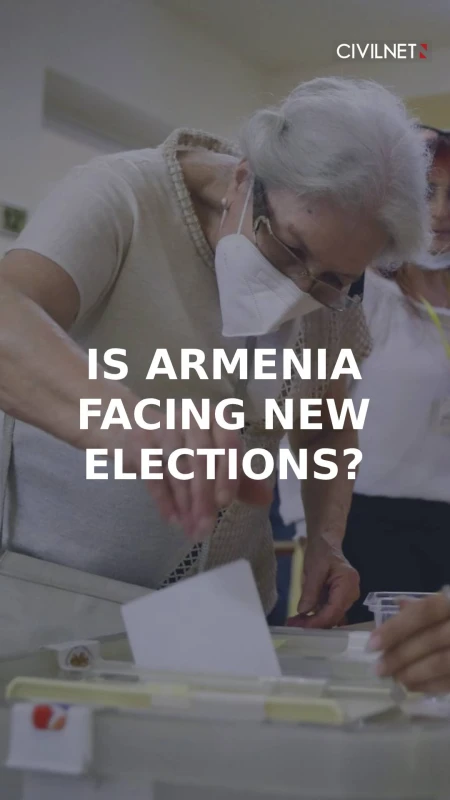
Armenia finds itself at a precarious moment in its democratic journey. The tenure of Prime Minister Nikol Pashinyan has become emblematic of a broader crisis—a faltering democracy that struggles to deliver accountability, stability, or progress. Despite historic lows in his approval ratings, Pashinyan’s continued grip on power exposes the weaknesses in Armenia’s democratic institutions and the inability of its opposition to present a viable alternative. As the country moves toward its next scheduled parliamentary elections in June 2026—or possibly earlier due to unforeseen developments—the urgency for political recalibration has never been greater.
Pashinyan rose to power in 2018 on a wave of popular support, symbolizing hope for democratic renewal. Yet, six years later, his administration has been marred by significant political and strategic failures. The catastrophic loss of Nagorno-Karabakh, the loss of human lives and injuries, and the occupation of Armenian territories stand out as monumental blunders. These events have not only weakened Armenia's geopolitical position but also shattered national morale.
Economically, while macroeconomic indicators might suggest resilience, this perceived strength largely stems from the unintended benefits of Western sanctions on Russia, which have redirected certain economic activities into Armenia. However, the majority of Armenians see little benefit. Rising living costs, stagnant wages, soaring foreign debt, minimal foreign investment, limited job creation, and excessive public excises and penalties have exacerbated public dissatisfaction.
Meanwhile, the misuse and abuse of taxpayers’ money for personal gain by the ruling elite have reached unprecedented levels.
In functioning parliamentary democracies, such a record would have led to the prime minister’s resignation or removal. However, Armenia’s parliamentary system, dominated by Pashinyan’s Civil Contract party, has insulated him from meaningful accountability. This political consolidation reflects a deeper flaw in Armenia’s democratic framework—a system designed to maintain incumbents rather than uphold the will of the people.
Pashinyan’s reelection in 2021 and his persistent leadership, despite his unpopularity, also underscore another troubling reality: Armenia has hardly witnessed a transfer of power through genuinely organic elections. Since independence, changes in government have been driven by resignation, internal elite negotiations or street protests, with elections mostly serving as mere formalities to legitimize these shifts. This entrenched pattern undermines democratic principles, reducing elections to hollow exercises rather than genuine contests of ideas and leadership.
Moreover, the institutions critical to a thriving democracy—an independent judiciary, free media, and active civil society—remain weak and subservient. Under Pashinyan, these pillars have further eroded, with his administration leveraging its dominance to marginalize dissenting voices. This environment fosters apathy and disillusionment among the electorate, leaving many Armenians skeptical of their ability to effect change through the ballot box. Furthermore, Pashinyan’s administration, driven solely by the goal of maintaining power, makes a transfer of power through elections increasingly difficult, if not impossible.
Another key reason for Pashinyan’s continued dominance, despite his failures, is the disarray of the opposition. Fragmented and disorganized, Armenia’s opposition lacks a coherent vision, a unifying leader, and a practical roadmap for change. Without these elements, even the most unpopular government can prevail by default. For the opposition to capitalize on Pashinyan’s vulnerabilities, it must undergo a profound transformation.
The foremost priority is to craft and present a clear, actionable program that resonates with the daily realities of ordinary Armenians. This program must address the nation’s most pressing concerns: economic revitalization, relief from excessive taxes and penalties, social justice, decent-paying jobs, enhanced security, and improved living standards. By offering concrete solutions to these challenges, the opposition can demonstrate its competence and present a tangible alternative to the current administration.
The opposition parties may also need to unite around a leader who embodies experience, credibility, and integrity—someone who can bridge the gap between disillusioned voters and the need for competent governance; someone who can foster internal unity and social cohesion; someone who can initiate and guide a national discourse to redefine the nation’s priorities, balancing new geopolitical realities with a firm commitment to its fundamental rights and identity.
Finally, the opposition must employ a dual strategy that combines electoral participation with street activism, building momentum that peaks on election day—in other words, a hybrid approach of street protests and engagement at the ballot box. Such an approach would not only mobilize disaffected citizens but also pressure the government to uphold democratic norms during the electoral process.
The path forward for Armenia’s opposition is challenging but not impossible. By addressing the pressing needs of the people, uniting behind a visionary leader and employing a robust strategy that fuses grassroots energy with political engagement, the opposition can transform itself into a credible alternative.
Such a transformation is essential not only for challenging the current government but for revitalizing Armenia’s democracy and securing its future in an increasingly complex world.


 Stories