Civilnet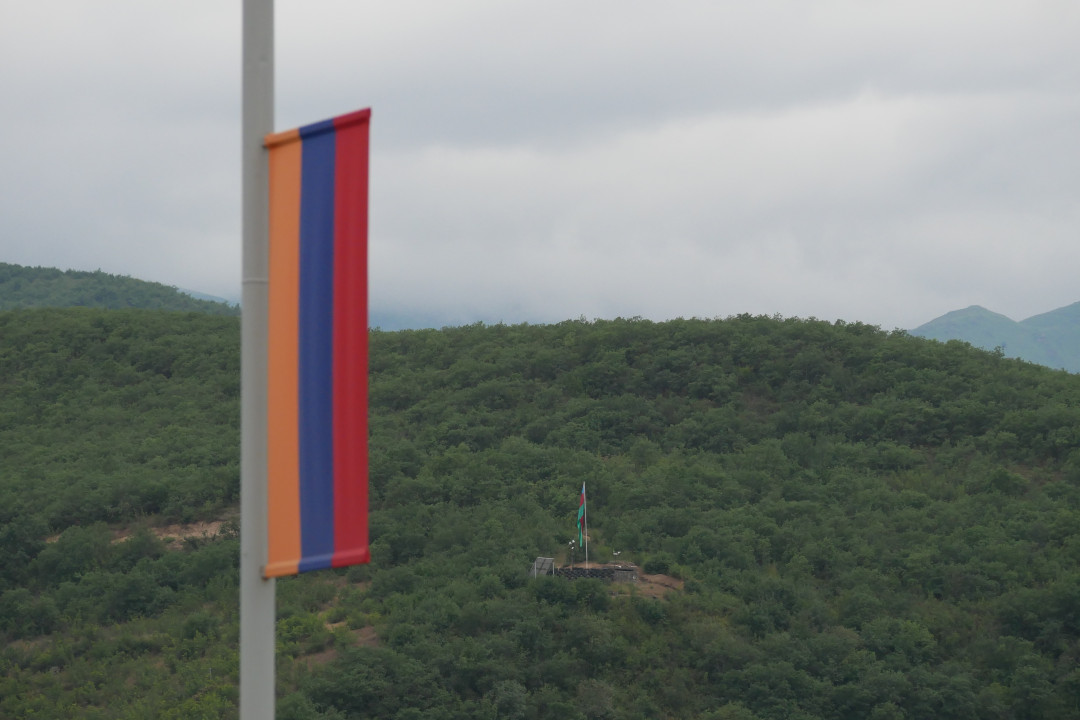
A new nationwide survey conducted by the U.S. International Republican Institute (IRI) between June 16 and 26 and published Monday reveals that only 36% of Armenians believe the country is moving in the right direction, marking the lowest approval in three years. The poll, which interviewed 1,505 adults across Armenia, demonstrates deepening anxiety over national security and stalled progress in border demarcation with Azerbaijan.
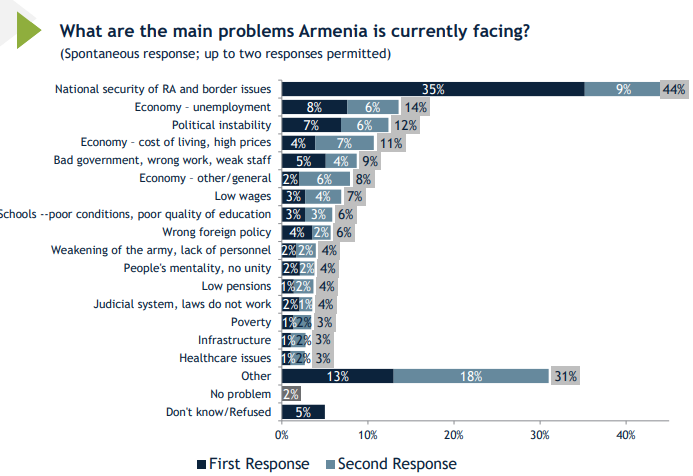
National security and border issues remain the public’s top concern, with 35% of respondents identifying them as Armenia’s most pressing problem, and an additional 9% listing them as their second major worry. These figures significantly outpace concerns such as unemployment, political instability, or rising living costs.
The continuing occupation of parts of Armenia’s territory by Azerbaijani forces since the September 2022 incursion, coupled with the slow and largely opaque progress in border delimitation talks, appears to have reinforced public unease. Despite government announcements earlier this year about progress in normalization talks with Baku, including the fully agreed, but yet to be signed deal, the poll suggests these developments have not changed how Armenians feel about their country's overall trajectory.
At the same time, only 6% of respondents identified foreign policy as a major concern, indicating that the public does not hold the Armenian government directly responsible for the slow pace of normalization or the ongoing occupation of border villages.
The poll also sheds light on shifting public confidence in key institutions. The Armenian armed forces have now surpassed the church as the most trusted institution in the country, with 72% of respondents saying they are very or somewhat satisfied with the military, while trust in the church is at 58%.
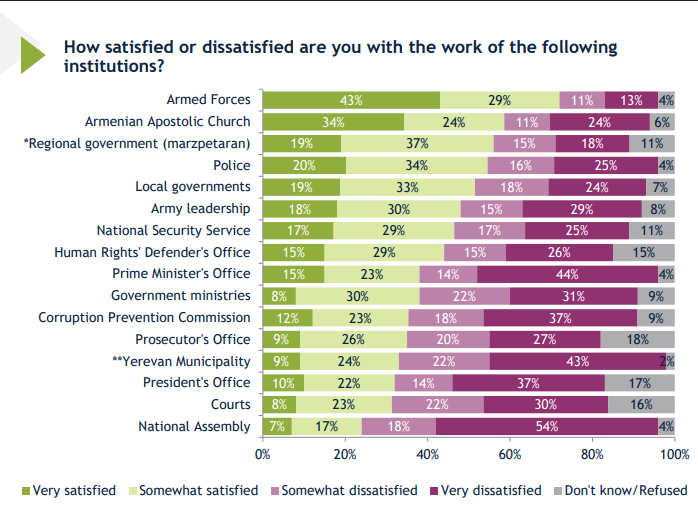
Interestingly, the poll differentiated between the armed forces as a whole and their leadership. Only 48% of respondents expressed satisfaction with army commanders, suggesting a divide between public admiration for soldiers and more cautious views on the military brass. This distinction may reflect a broader sentiment that views soldiers as young and courageous defenders of their homeland, while remaining skeptical about those in charge of defense policy.
The National Assembly, Armenia’s parliament, received the lowest marks of all state institutions surveyed. Just 24% of respondents said they were satisfied with how parliament represents them, while 54% said they were completely dissatisfied. The judiciary also scored poorly, with only 31% expressing satisfaction with the courts.



 Stories