Civilnet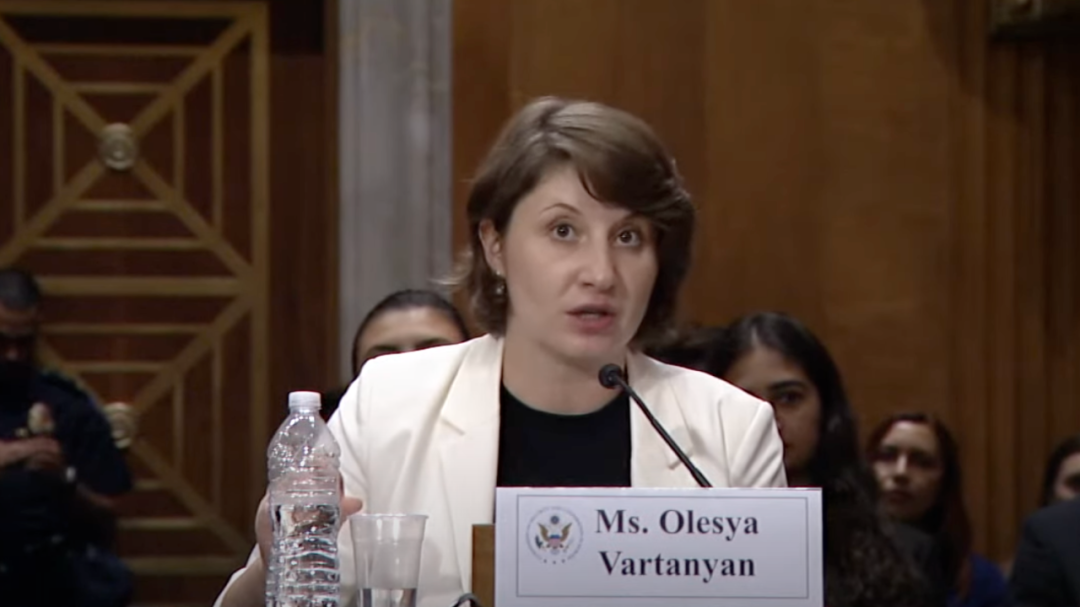
By Elen Muradyan
The United States has presented only a broad conceptual outline—not a finalized plan—for managing a prospective transit route through Armenia’s Syunik province, said South Caucasus conflicts expert Olesya Vartanyan in an interview with CivilNet. “Washington presented a broad idea, not a technical blueprint,” she stressed, adding that the lack of details leaves space for negotiation and adaptation. Armenia, she suggested, should seize this opportunity and engage actively in the talks to guarantee its rights.
The proposal, which envisions a private foreign company overseeing the route connecting mainland Azerbaijan to its Nakhichevan exclave, was first publicly revealed by Vartanyan in a July 1 article for the Carnegie Endowment for International Peace. According to her reporting, the U.S. plan builds on a similar European Union proposal and draws from international precedents where third-party commercial operators have been used in post-conflict areas or low-trust settings.
According to Vartanyan, Armenian officials should not have been surprised by the U.S. proposal, as they have discussed similar ideas both in negotiations and publicly in the past. Prime Minister Nikol Pashinyan in his July 16 press conference referenced third-party management, citing examples such as the Zvartnots airport, which is operated by an international firm without compromising Armenian sovereignty.
Controversy intensified after U.S. Ambassador to Turkey Thomas Barrack confirmed the existence of the proposal during a press briefing in New York. Barrack floated the idea of a 100-year lease on the 32-kilometer route (the actual length is approximately 42 kilometers) through Syunik and used language that many in Armenia found provocative, including a reference to “tribal points of view” blocking regional peace. While he did not use the term “Zangezur corridor,” his remarks marked the first public confirmation of the Trump administration’s intention to mediate the dispute through leasing. The ambassador’s framing—and the implication of U.S. control over Armenian land—sparked immediate backlash in Yerevan, where opposition to foreign administration of sovereign territory is considered a red line.
But Vartanyan argued that the concept is widely used in various parts of the world, particularly in contexts marked by conflict or mutual distrust. “It’s more akin to logistics or airport management. Armenia would retain full jurisdiction, while the company would simply ensure transparency and coordination. In emergencies or incidents, it’s Yerevan that would still take charge,” she said.
Vartanyan warned that the current U.S. proposal, focused solely on a single road through Armenian territory, risks sidelining broader concerns. Without a reciprocal arrangement and pressure on Azerbaijan to finalize a peace deal, she said, Armenia could remain isolated, with closed borders and no real resolution to over three decades of regional blockade.
Iran’s response has so far been measured. Officials in Tehran, Vartanyan said, are trying to understand the evolving situation and avoid premature conclusions. Russia, on the other hand, remains wary of any Western-led initiative in the South Caucasus and is likely to view the proposal as part of a broader attempt to sideline its influence.
The proposal also raises long-term questions about U.S. intentions in the region. In her Carnegie article, Vartanyan wrote that the model draws inspiration from the U.S.–Ukraine rare metals agreement, where commercial presence was used to anchor geopolitical stability. “But whether the Trump administration sees this as a strategic commitment or a tactical offer remains unclear,” she said.
Vartanyan warned that Armenia cannot afford to remain passive. “If Armenia doesn’t shape the terms of this proposal, others will,” she said. Rather than dismiss the idea outright, she urged officials in Yerevan to engage actively and push for guarantees that preserve sovereignty, ensure economic benefit, and support a longer-term peace agenda.
“This isn’t a finished offer. It’s an opening move,” she concluded. “What comes next depends on how seriously Armenia takes the task of defining the rules.”


 Stories