 Civilnet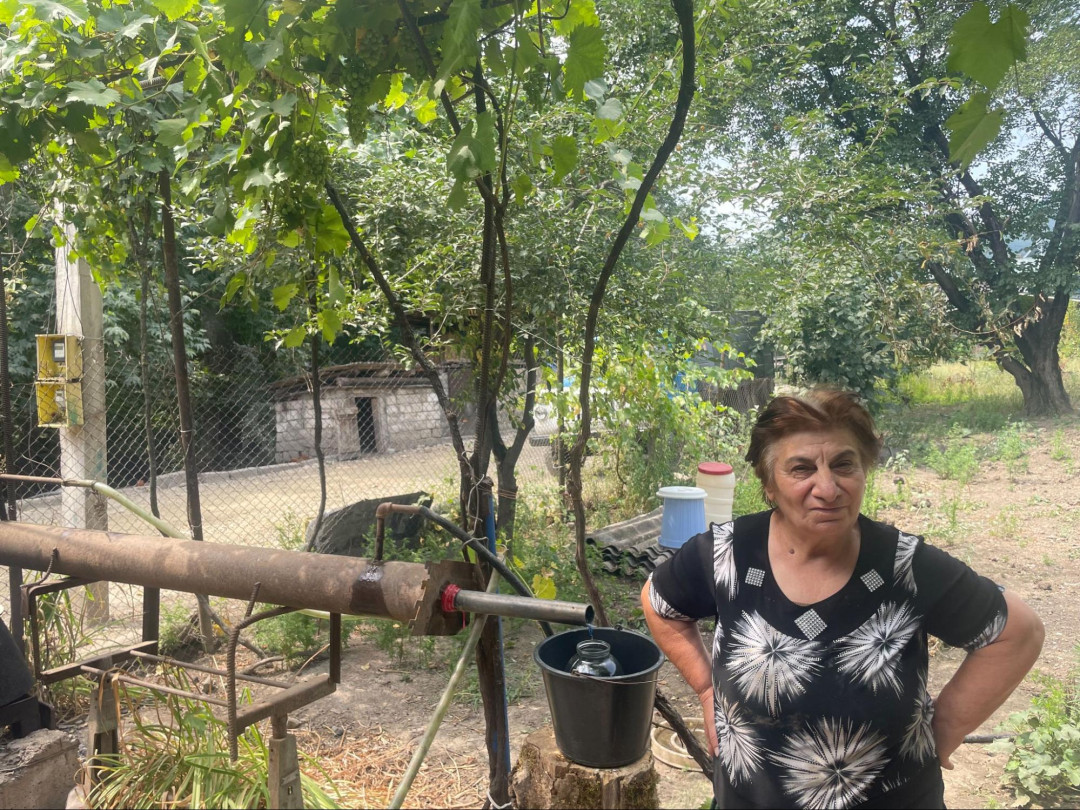
Martha Gathercole
Shielding from the scorching sun in the thick layer of forest surrounding Nerkin Нand, a village in southern Armenia on the border with Azerbaijan, I meet Hasmik, a resident there. She invites me into her back garden with eager hospitality. Before anything else she proudly displays her homemade contraption for making mulberry vodka. I am met with a full feast, with courses of lavash, local fruits, cakes, and multiple shots of that lethal vodka.
That day in Nerkin Hand, there had been three mine explosions in the surrounding fields. These were Azerbaijani mines. They have made themselves an unseen but ever-present part of everyday life here. Many more lie beneath the ground in this vulnerable border region. These frequent explosions harm cattle and make arable land dangerous, weaving anxiety into daily routines. Certain paths have gone untrodden since the war due to the presence of mines. “No one goes in that direction,” we were firmly told.
Hasmik and her husband Rafik are grandparents to Rafael, whose parents were at work that day. They are the biggest family in Nerkin Hand. The family tells me how they have lost an orchard to a mine explosion. Sources of livelihood are now threatened daily by fresh reminders of the war.
Since the 2020 war in Artsakh, Nerkin Hand has become a border region. Once on the administrative border of Soviet republics of Armenia and Azerbaijan, Armenians captured the region in the 1990s where from then it was under the control of Armenians. Whereas before the 2020 war the village was almost 150km from the border with Azerbaijan, now they are right at the frontier and suddenly acutely vulnerable. Nerkin Hand is located in a valley, and Azerbaijan has the high ground on a hill, visible from below. A schoolteacher points out an Azerbaijani military post. It is small but ominously conspicuous on the leafy hillside. He explains how there are often shots fired from there. Another man we see on the road tells us how these shootings destroyed his solar panels 20 days ago, a source of energy for his home.
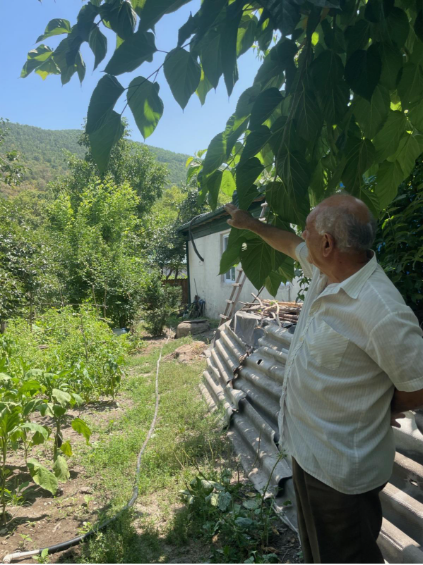
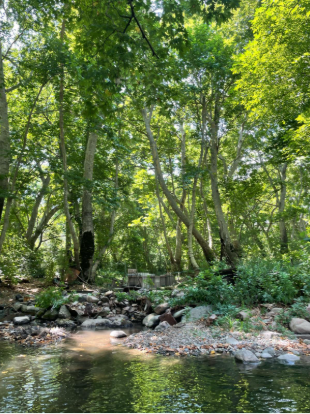
To the inevitable question, “Are you afraid?” answers are varied and uncertain. Hasmik acknowledges the stress and fear she feels daily. Rafik says he is not afraid but his grandson contradicts him, muttering under his breath that there is fear. I turn to him and ask what he is afraid of. He shrinks back and says he isn't afraid of anything. We ask him more about his hopes for the future. He hopes to join the army, saying that, if he did, his dad promised to buy him a weapon. The ten-year-old boy tells us how he wants to defend his homeland and then swiftly switches the topic, inviting us to swim in the stream with him. The contrast of boyish playfulness and a resolute determination to defend his homeland is stark.
The family describes how the village has been steadily losing population in the last few years. They say that in five years no one will be left. To them, the very act of staying in the village is an act of defiance against Azerbaijan. “As long as there is a population close to the border, they will continue to take advantage of that and to harm our settlement.” Armenians live so close to the border but Azerbaijanis do not, meaning the residents of Nerkin Hand are in an indefensible position. But, they go on, “We were born here and we'll stay here.” The teacher at the local school with a total of four pupils goes further. “Everyone here is a hero, a woman who gives birth here is a hero for dealing with the stress of life here.”
Rafael, however, remembers that, historically, the village of Nerkin Hand has shared trade, communication and even friendship with Azerbaijanis living so close by. The village used to trade petrol, butter and honey with neighbouring villages in Azerbaijan. He recounted an incident from the 1980s. He had gone to meet a friend on the other side of the Azerbaijani border, to pay back money he owed. He dangerously drove his car through checkpoints to get to Azerbaijan. At one point he was stopped at a checkpoint, and if it hadn't been for an Azerbaijani friend who came to help him and win over the guards, he would not have come back. “The money that I owed wasn't worth the adventure. I didn't realize the serious consequences.”
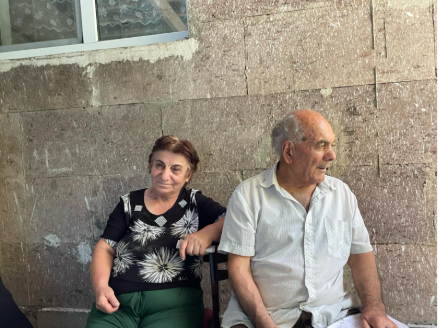
Although his wife declared Azerbaijanis outright enemies, Rafael found it harder to give a definitive answer, saying that it is the government that is corrupting them. When he went on to describe the damage they had brought on, I asked why he had said that Azerbaijanis like Armenians. He made a distinction between politics and people. “Politically, they want to destroy the village.” At the same time, the individuals carrying out orders at the border had once been his friends. This climate of stress and anxiety also has an undertone of memories of friendship with the Azerbaijanis, which some inhabitants, though not all, hold on to. Could this translate into harmony between the nations some day? Even in a village where the everyday reality of the conflict with Azerbaijan is most stark, there are glimmers of hope from inhabitants, who seem to be aware that this cannot go on forever. "I believe the younger generation doesn't need this hostility and if things get better, the communication can improve," Rafik says.
As our vodka was poured, we toasted to health, safety and to new friends in Nerkin Hand. It's fitting that for such a resilient family, throat-burning homemade vodka is merely a mid-day pick me up.
Acts of defiance, both past and present are part of the everyday life of Nerkin Hand.


 Stories