 Civilnet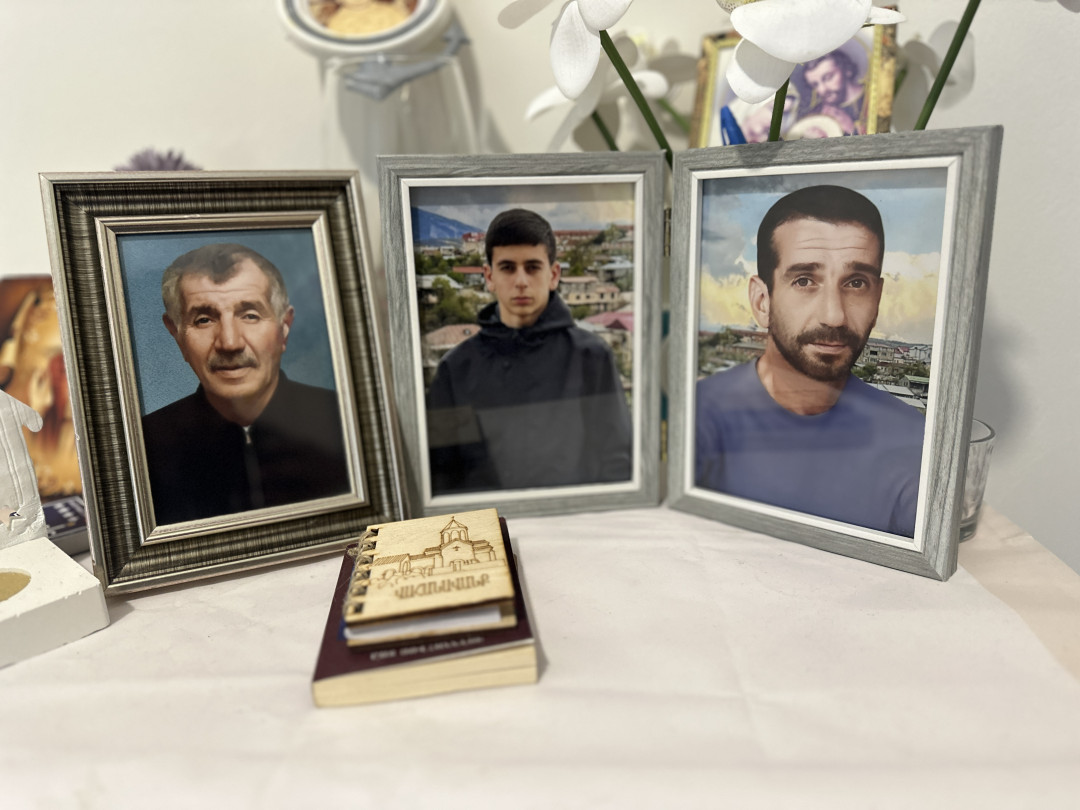
By Minahil Arif
The biggest privilege a person can have is being able to call a place home. For 120,000 Armenians from Artsakh (Karabakh), this privilege no longer exists. Before I came to Armenia, I extensively researched the horrors in this small mountainous region. The most recent international reporting, according to my research, was in 2023, when a mass exodus of Armenians from the disputed territory occurred.
My biggest problem with international media outlets is that their focus on underrepresented countries immediately fades once they conclude that the issue has “ended.” But I have always wanted to know what happened after. What occurred after several countries kicked out Afghan refugees? What happened after the attacks on Iran stopped? What happened to the people after? How do they cope with the aftermath? A story is always considered important while there is active tension but the aftermath is often ignored.
I wanted to know the same for the people of Artsakh. It seems that these days many parts of the world are experiencing conflict, but while living in California, I never once heard anyone talk about Nagorno-Karabakh. But when you come to Armenia, it’s all anyone can talk about. It’s incredible how much you can learn just by being present in the daily conversations of Armenians.
In September 2023, the ethnic cleansing of Artsakh by Azerbaijan led to the huge influx of refugees into Armenia. After living here for over two months, I’ve realised that for people in Armenia, the trauma is multilayered - one is the actual events that took place in September 2023 that led to the loss of Nagorno-Karabakh and another is that no one in the world cares to talk or learn about a huge loss to this country.
So my goal, as someone with limited knowledge, was not only to report on but also learn everything that happened after the loss of Artsakh. I tried to speak with as many displaced people from Artsakh as I could.
For my first story as a CivilNet journalist in Armenia, I found a market where women were showcasing their businesses and advertising their products. I found many women and many painful stories.
Several weeks after the market visit I got an email. There was a potential trip that I could join to Goris - a town in Armenia’s southern province of Syunik. Goris was the first stop for many refugees from Artsakh, given its close distance with the border of Nagorno-Karabakh. They registered there to receive resources the Armenian government was providing such as accommodation, food and temporary relief. While many dispersed all over Armenia, several people made Goris their home. I never knew this before I came to Armenia. I did not even know where Goris was.
So I leapt at the opportunity to visit Goris. We left early on a Monday morning with the volunteer group from the Paros Foundation – a non profit organisation that carries out humanitarian, educational, cultural and development projects in Armenia.
I was on four hours of sleep, but eager to finally be able to see for myself the place that many found refuge in.
The journey was spent learning more about the Nakhchivan border, while spotting checkposts on the hills, not knowing if they were Azerbaijani or Armenian. While on the road, I saw the biggest flag of Armenia, as well as an abandoned factory that had to relocate because it was too close to the Azerbaijani border and they couldn't keep up with intermittent attacks.
Passing by quaint buildings, fruit and wine stalls, we made it to Goris. It was 56 degrees Fahrenheit and clouds had filled the sky.
After spending all my time in Yerevan, Goris felt like an entirely different place. The simple lifestyle and quiet roads brought me an immediate sense of calm.
I got the chance to speak to a couple and two other women who were present in the building where Paros Foundation volunteers were working. The woman, Zabella, seemed eager to talk.
Zabella, 65, and her husband, 62, graciously invited me inside their simple room, with two single beds. I hesitated to enter their private space and suggested we go elsewhere, but they insisted and welcomed me into their chamber. I, unfortunately, do not speak Armenian, so I needed someone to facilitate our conversation.
My purpose in taking this trip was to learn more about the lives of displaced elderly people from Artsakh, those who find it more difficult than others to find jobs and means to support themselves. Naturally, that is where we started our conversation: with life after displacement.
Zabella and Artur had moved to the building less than a week ago. Zabella told me they moved a couple of times after they came to Goris. After the exodus, they lived with one of their daughters to support her, because her husband was killed in the war. Then, they moved with another daughter who lived close to the place they are now.
I was curious why they decided to settle in Goris. The translator smiled as she told me Artur’s reply.
“It will be a very easy and short road back [to Artsakh],” Artur said, smiling. It felt like a gut punch hearing that because I suddenly understood why my grandad never wants to leave his old town, no matter how much we convince him. When you are older, it is even harder to leave the place you spent your entire life in.
If you have a life as settled as Zabella and Artur's, you probably never imagine leaving. The couple worked in the same metal manufacturing company in Artsakh. He was a mechanic, and she worked as a housekeeper. They both earned well enough to support themselves and save.
Zabella burst into tears while remembering her house. For her, having a place in her motherland is deeply important. She said when she goes back, even if there is nothing left of her house, she will put a blanket on the floor and sleep there.
The pain of losing your home and then your loved ones, too, is something one hardly experiences together. But this was the reality for many in Artsakh. Artur said they were three brothers and two sisters, but two of his brothers were killed in the 90s. They were buried in Artsakh - in a place Artur can probably never visit again.
Zabella was still teary-eyed, and I did not want to push her to talk more. I asked them if they were comfortable taking a picture. Zabella was very excited about it and even picked the spot herself, but Artur did not want one. So we took a picture at the spot she picked. She checked to confirm that she liked the picture before she left.
When I moved on to meet Kraeva, 68, another lady in the building, I found her crying in the room because she had just met someone and spoke about the tragedy that changed her life forever. Entering her room, I couldn't help but notice three frames with a picture of an old man, one of a middle-aged man and one of a child, three generations side by side. I immediately knew what the conversation was going to be about.
I asked her if she wanted to speak to me. I asked her if I could take a picture of her frames, and she immediately agreed. For her, the most painful part was not displacement. It was losing her son and grandson just within a span of days.
In September 2023, as people were trying to get fuel to flee Artsakh, a major explosion at a fuel depot occurred near Stepanakert leaving dozens injured or killed.
When preparing to leave from Artsakh, her family was looking for fuel for their car. Her son and grandson had left the house to look for it. She recalled her grandson calling her to tell her to fix dinner, saying that they would be back soon, but she didn't know that was the last time she would be speaking to him.
Sometime later, she sensed an unusual smell filling the surroundings and heard the sound of an explosion. Her son was near the gas station, and died right there, while her grandson was hospitalized for 7 days and eventually passed away. As I held back tears while she was speaking, I tried to divert her attention elsewhere. I could never forget her face and how she cried. The image will be etched in my mind forever.
Since then, her health has deteriorated. Her husband already passed away in 2020. Due to trauma, she felt it was not fair to live with her other grandchildren and daughter-in-law so as not to impact them. She lived with her nephew for a while and received treatment, but she did not want to be a burden on them, so she moved to Goris.
Her only financial support comes from the government, which has been further reduced to $78.5 (30,000 AMD). I found her crying again before leaving the place. Does she have people to rely on when she needs it? I don't know.
For each person, loss has a different meaning, which I would have never known if I hadn't taken this trip. The visit to Goris made me realise that reporting on one traumatic issue can have multitude of layers to it because every person has a different story, a different lived experience, a different kind of pain.
Travel to Goris was facilitated by the Paros Foundation.


 Stories