 Civilnet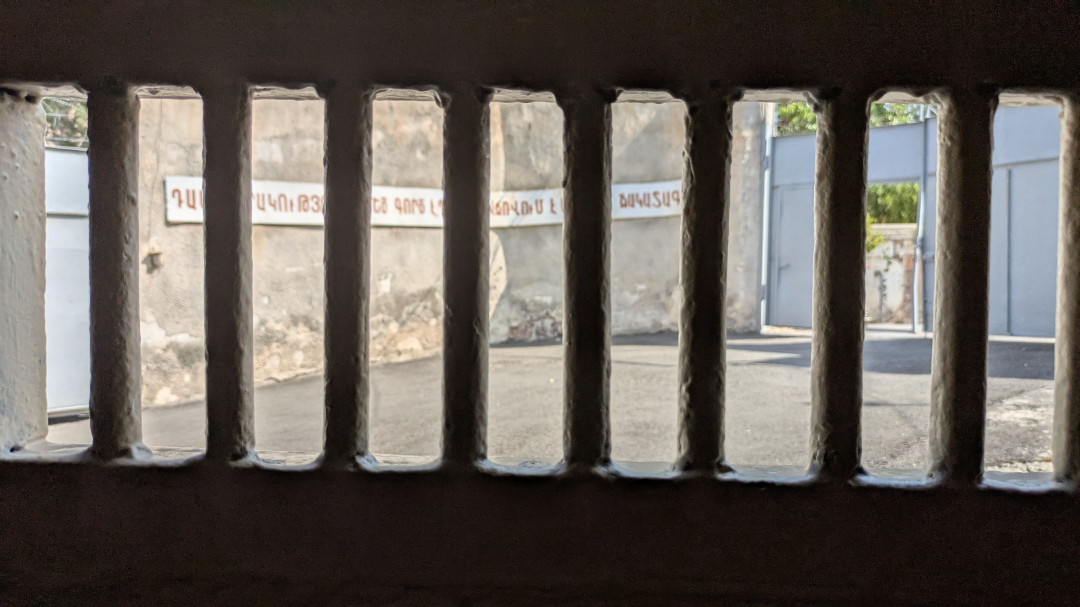
By Gevorg Tosunyan
In the town of Abovyan, on the outskirts of Yerevan, stands Armenia’s only correctional facility for women. Inside its high concrete walls, life is regimented and stark, punctuated by rare glimpses of sky through barred enclosures. For the women held here—convicted of crimes ranging from drug trafficking to violent offenses—time is measured in one-hour walks, mandatory routines, and the fragile hope of education.
The prison yard is divided into four small courtyards, each encased in metal bars. Here, women convicted of serious and particularly grave crimes are allowed to walk for one hour a day. On one such visit, a young woman strolled quietly, reading a Bible as she circled the enclosure. The only freedom offered in these cages is the open sky above. Others choose to spend their allotted hour in the gym, a modest space where exercise substitutes for freedom.
Inside the main building, three women share each cramped cell, furnished with bunk beds and little else. Books line the shelves of one cell, among them the works of the Armenian novelist Raffi. This is the cell of 27-year-old Marine (name changed), serving a sentence for drug distribution. Marine is unique in the prison: she is the only inmate pursuing higher education from behind bars. She is preparing to enroll in a psychology program. Inmates here are allowed to apply to only one university—Urartu University—which offers two disciplines: psychology and social work.
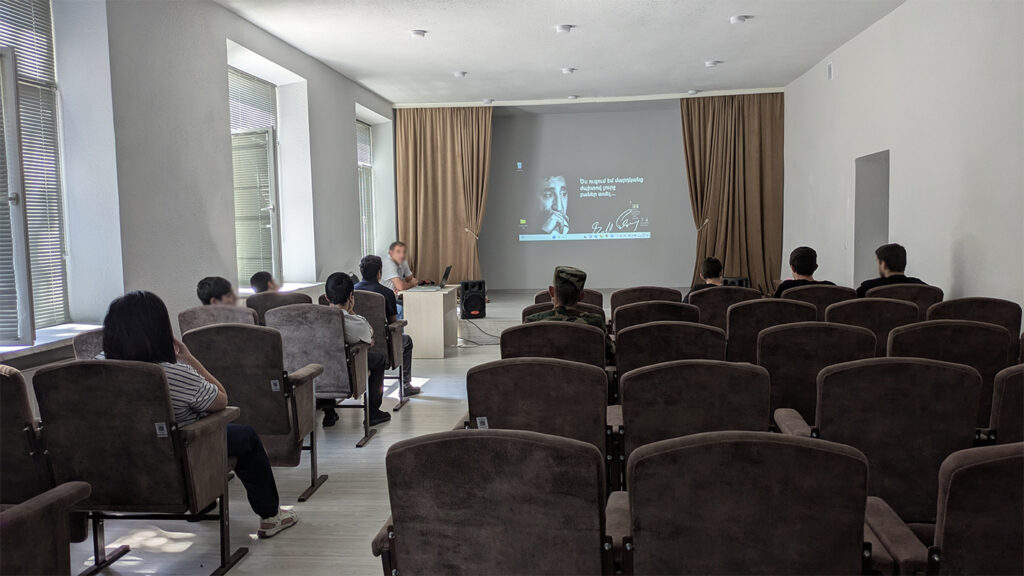
On the ground floor, seven underage detainees gathered to watch a film about hard work and perseverance. “A lazy person always finds excuses but never works,” a prison staff member told them afterward. “You must work to take care of yourselves and your families.”
The Woman in Charge
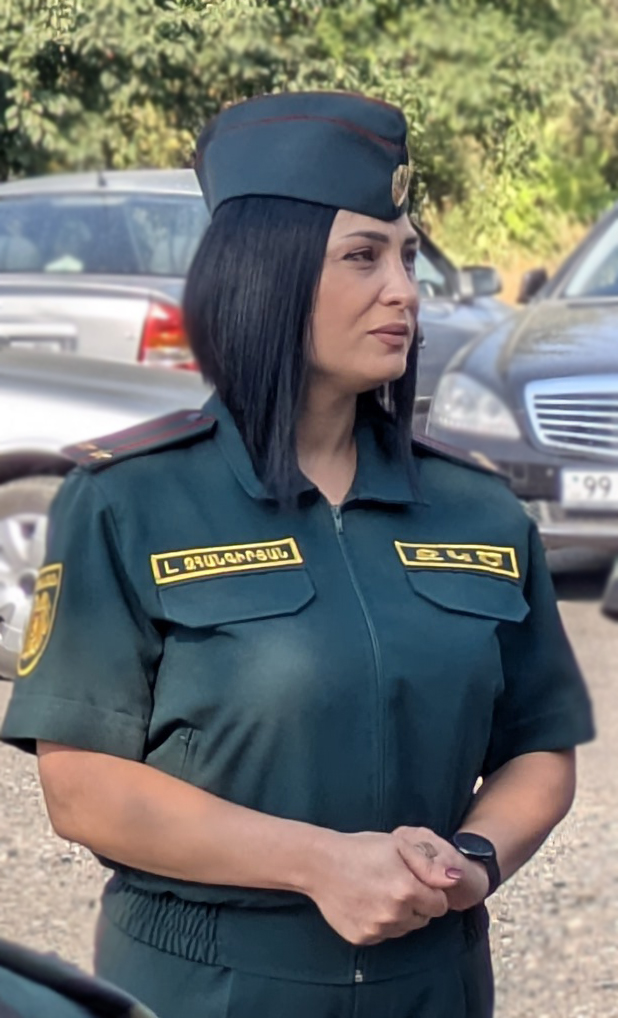
Lilit Jhangiryan, head of the prison’s security division, began her career in the police working with juveniles before moving to the penitentiary service. She stresses that staff must avoid pitying or emotionally merging with inmates, but also avoid treating them solely as criminals.
“You approach a person not as someone who has committed a crime, but as someone serving a sentence,” she explains. “If they have behavioral issues, it can be hard to communicate or find common ground. But you still try.”
Women, she notes, often struggle more than men with the isolation of confinement, especially when cells are overcrowded. “Many ask to be kept alone, but that can damage their mental health. Solitary confinement is not a solution.” For inmates who declare hunger strikes, the prison has a designated cell where they are kept under round-the-clock medical and psychological supervision.
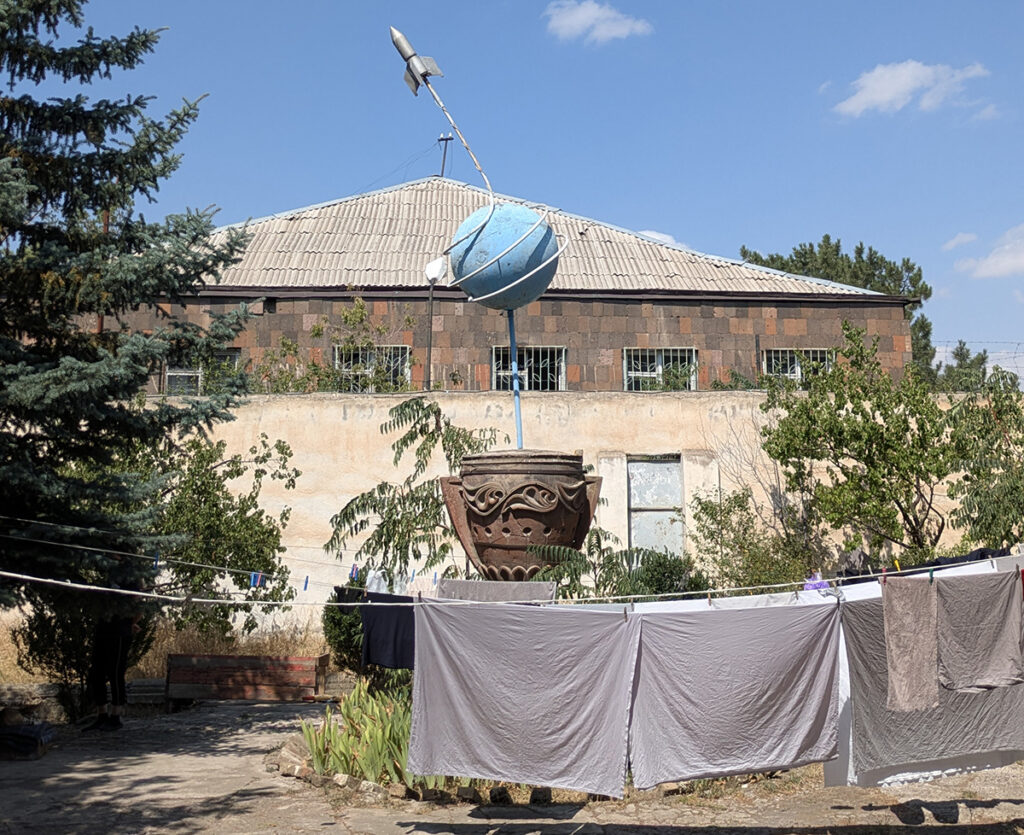
In the courtyard stands a strange relic: a Soviet-era sculpture depicting a spaceship leaving Earth’s orbit. Against the backdrop of prison bars, the monument takes on a dramatic symbolism—a reminder that even in confinement, the human mind yearns for escape. Other traces of the Soviet past linger. Educational posters once decorated every corridor, carrying moralistic slogans such as “Ignorance is the mother of all crimes.” These have since been painted over, with plans to replace them with updated messages.
Work inside the prison is done largely by the inmates themselves—cleaning, maintenance, and small jobs—earning wages that allow them to meet personal needs or send support to families outside. For Jhangiryan, the key is treating every inmate as an individual: listening, guiding, and balancing discipline with humanity. “It’s not about sympathy,” she says. “It’s about helping them survive this difficult chapter of their lives.”




 Stories