 Civilnet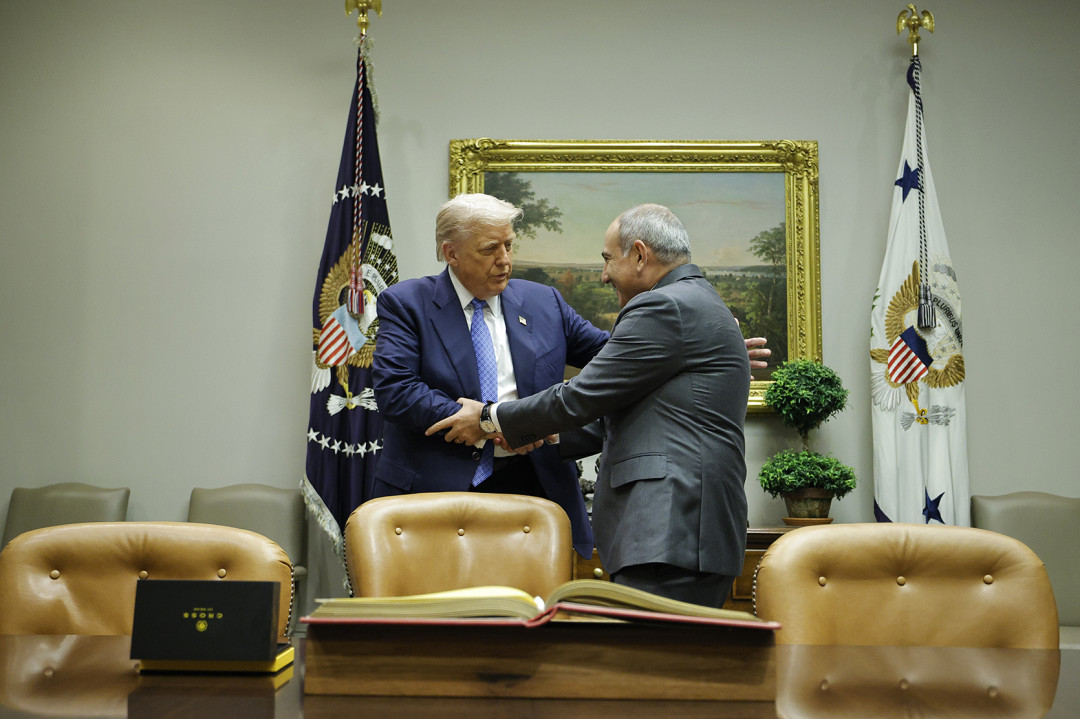
By Alexander Pracht
The three memoranda of understanding signed between Armenia and the United States in Washington earlier this month, and published by the Armenian government on Friday, make no reference to the so-called “Trump route” proposed through Armenia’s southern Syunik province.
The route, long demanded by Azerbaijan to secure a land connection with its Nakhichevan exclave through Armenia, was reported to be the central element of the August 8 trilateral arrangements at the White House, which brought together the leaders of Armenia, Azerbaijan, and the United States.
The project, agreed upon between the U.S. President Donald Trump and Armenian Prime Minister Nikol Pashinyan and later endorsed by Baku, is expected to involve a joint Armenian-American venture to manage the link. The route was specifically mentioned in the joint declaration, signed by the three leaders:
“The Republic of Armenia will work with the United States of America and mutually determined third parties, to set forth a framework for the “Trump Route for International Peace and Prosperity” (TRIPP) connectivity project in the territory of the Republic of Armenia. We confirm our determination to pursue efforts in good faith to achieve this goal in the most expeditious manner.”
Azerbaijani President Ilham Aliyev has repeatedly framed his country’s demand by insisting that Azerbaijani citizens and cargo must be able to pass through Armenian territory, ranging from calls for transit “with no border controls” to more ambiguous phrasing such as “without difficulties.”
Washington’s participation in the initiative was widely viewed as both a safeguard against Azerbaijani military pressure on Armenia and a move to bolster U.S. influence in the South Caucasus.
The agreement on the road was expected to be a bilateral deal between Yerevan and Washington, yet the full text of the deal, released Friday by the Armenian prime minister’s office, makes no mention of it.
The document, titled “Memorandum of Understanding regarding the Crossroads of Peace Capacity Building Partnership,” reflects Armenia’s preferred framing. Prime Minister Pashinyan has promoted the “Crossroads of Peace” concept as a counter to Baku’s “Zangezur corridor” narrative, presenting it internationally as a broader vision of regional connectivity. The initiative originally envisioned not only a transit route through Syunik but also expanded links across the Armenia-Azerbaijan border, as well as potential connections with Iran, Turkey, and Georgia.
The Armenia–U.S. memorandum, however, has no reference to any specific route or project. Instead, it outlines a general framework, stating its purpose as “to collaborate towards the improvement of Armenia’s infrastructure and border security, including through investment, resources, training, and partnership.”
The parties commit to encouraging private sector investment and facilitating the exchange of best practices between the U.S. Department of Homeland Security and Armenia’s Border Guard Troops. It further notes that participants will hold “regular consultations,” but provides no additional details.
The two other memoranda, also published, follow a similar structure but focus on an energy security partnership and cooperation in artificial intelligence and semiconductors. Their content is likewise vague, broadly echoing the spirit of the Charter on Strategic Partnership that Armenia signed with the United States in the final days of the Biden administration this January.
Speaking to journalists on Wednesday, Azerbaijani President Aliyev warned that “if any future government of Armenia, regardless of when it comes to power, questions what was signed in Washington, Armenia will face serious consequences, since the balance of power in the region is absolutely in our favor in every respect.”
He added: “After the 2020 Karabakh War, which ended in our victory, we could have taken this [territory] by force. Even over the past five years, doing so would not have been difficult.”
The November 2020 ceasefire declaration that ended that war envisioned that a road through Syunik would be overseen by Russia as a third party. Since then, however, Moscow’s influence in the region has sharply diminished, while the Armenian government stalled the implementation of the plan, paving the way for U.S. involvement instead. Reacting to the August 8 agreements, Russia welcomed Washington’s peacebuilding initiatives but stressed that it continues to regard the 2020 deal, along with its own role in the process, as valid.




 Stories