 Civilnet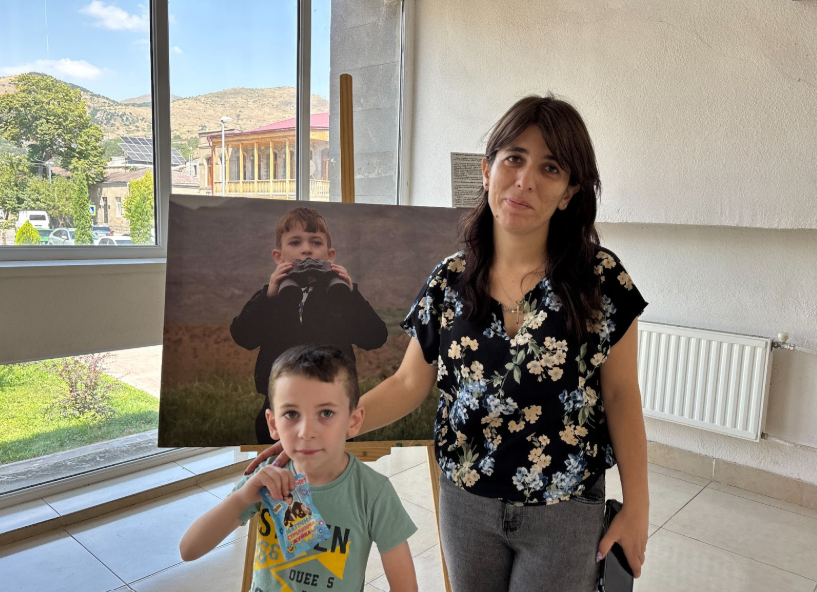
By Catherine Odom
Nairuhi Bayatyan’s husband, Ararat Sakanyan, has been missing for nearly five years, since the second Karabakh War began in 2020. His absence has been especially hard on their children, Monté, 6, and Arpine, 15.
According to Bayatyan Monté often tells her that he would go serve in his place if it meant his father could come home.
A photo of Monté holding his father’s binoculars, looking out for his return, was on display at the “Absent, but not forgotten” exhibition in Goris over the weekend.
The International Committee of the Red Cross (ICRC) hosted the exhibit to commemorate the International Day of the Disappeared (August 30), and honor their families.
On display at the Goris State Drama Theater were photos of people and objects connected to individuals who went missing during the recent Nagorno-Karabakh War. The ICRC has put on similar exhibitions twice before, first in Armavir and later in Vanadzor.
According to the International Commission on Missing Persons, nearly 800 Armenians are still missing from the First Karabakh War (1988-1994), and nearly 200 people went missing during the Second Karabakh War (2020-2023).
“For a family where a loved one has gone missing, the Day of the Disappeared is every day,” said Daphnée Maret, the head of the ICRC delegation in Armenia, during her remarks at the exhibition on Friday. She thanked the families for their “courage to share a personal story of suffering.”
Bayatyan tells CivilNet that the experience of having a loved one go missing is impossible to comprehend without experiencing it firsthand. But despite the pain she feels, she tries to keep hope alive and remain strong for herself and her children. She tells Monté stories about his father, who the boy hasn’t seen since he was one year old.
Roza Hayrapetyan, whose son went missing in October 2020, also during the second Karabakh War, said she trusts in God to bring him home. She says his final words to her were, “Mama, I'm going to return.”
Hayrapetyan’s son planted a tangerine tree before he left to serve, which she now tends to as she waits for him to return. A photo of the tree was included in the exhibition.
“I always remember his last words, and I'm sure that he will come back, so I'm waiting,” Hayrapetyan said through an interpreter at the event on Friday. “I believe in miracles.”
Lusine Sargsyan lost touch with her husband in October 2020. The last time they spoke, he assured her, “everything will be okay,” she said through an interpreter. She continues to believe her husband will return home safely because she “hasn’t heard anything negative.”
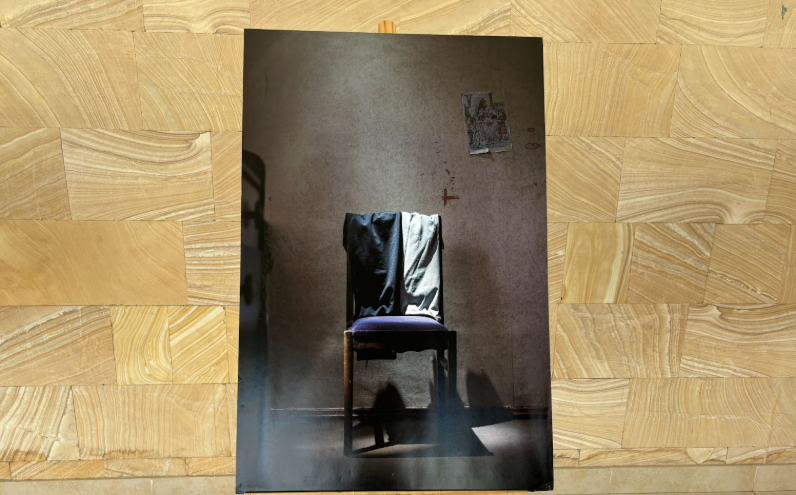
Sargsyan has kept some of her husband’s clothing laid on the back of a chair in her house since he left to serve in September 2020. A photo of the chair was on display in the exhibition.
This is a particularly sensitive time for the families of missing persons in Armenia. The ICRC will close its delegation in Baku this week at the request of Azerbaijani authorities. This leaves some families worried that there will be no third party organization left to help them clarify the fates of their loved ones going forward.
In addition to missing persons, an unknown number of Armenian civilians have been taken hostage since 2020 by Azerbaijan. Baku has previously acknowledged holding 23 ethnic Armenian prisoners, including eight former senior Nagorno-Karabakh officials. The prisoners are denied regular contact with family and do not have access to fair trials.
The ICRC has been the only organization to be in contact with the Armenian prisoners in Azerbaijan, providing critical updates to families. Maret said the ICRC “will continue to insist” they can keep up this contact, but it has not yet reached an agreement with the Azerbaijani authorities.
“We don't think that it will be the end of our capacity to operate,” Maret said. “All the work that has been done over the past years and decades will not be completely destroyed or forgotten.”
Maret added that the draft of the peace agreement initialed by Prime Minister Nikol Pashinyan and President Ilham Aliyev last month stated both parties will continue to address the cases of those who went missing during the war.
Through this, the families of the missing continue to wait and hope. For them, that agonizing uncertainty has become a part of everyday life.
“On a daily basis, you live with this,” Bayatyan said through an interpreter. “While you're smiling, it doesn't mean that you forgot.”

 Stories