 Civilnet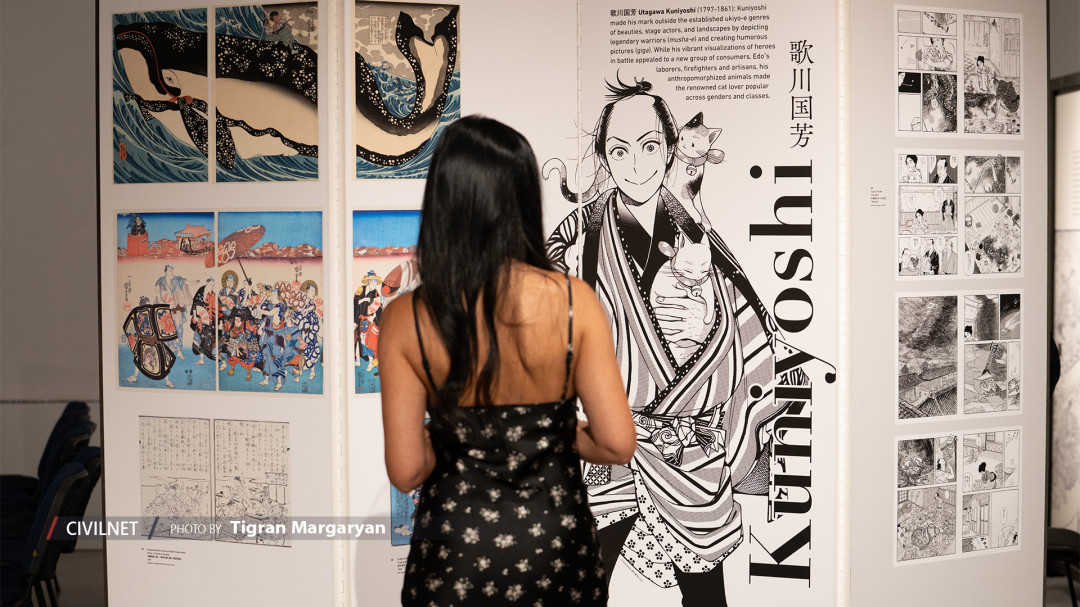
By Alik Garibian
For the very first time, Armenia is hosting Manga Hokusai Manga, an exhibition dedicated to the rich and two centuries old history of Japanese manga.
Organized by the Japan Foundation and the Embassy of Japan in Armenia, in cooperation with the Modern Art Museum of Yerevan, the show offers a dialogue between tradition and modernity, featuring works from the legendary 19th-century artist Katsushika Hokusai (1760–1849) — best known worldwide for his Great Wave — alongside creations by seven contemporary masters of manga.
Manga is a Japanese distinctive form of comic books and graphic novels. They follow a style developed in the country in the late 19th century, drawing on a long history of Japanese art forms. In Japan, “manga” refers broadly to both comics and cartooning while abroad the word usually points to comics published in Japan.
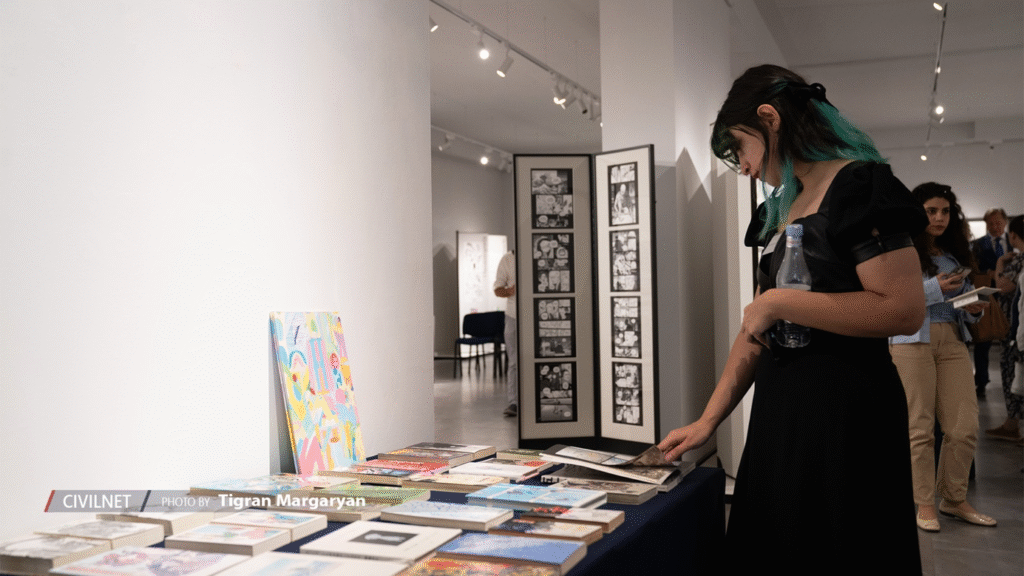
Noune Avetisian, director of the Modern Art Museum in Yerevan, highlights the diversity of the exhibit: “For the first time in Armenia, we have an exhibition retracing the entire history of manga. At the beginning, manga were more like illustrated stories, where the narrative was carried mostly by the drawings. After the Second World War, they evolved substantially, influenced also by foreign trends. Of course, there has always been a strong philosophical dimension in Japanese manga, especially in the older ones. That essence was never lost, even though the visual style changed a lot over time. Another fascinating aspect is the evolution of the technologies used in manga. But what makes this exhibition particularly special is that some of the works on display are originals. I believe this is an experience that could interest anyone who comes to see the exhibition.”
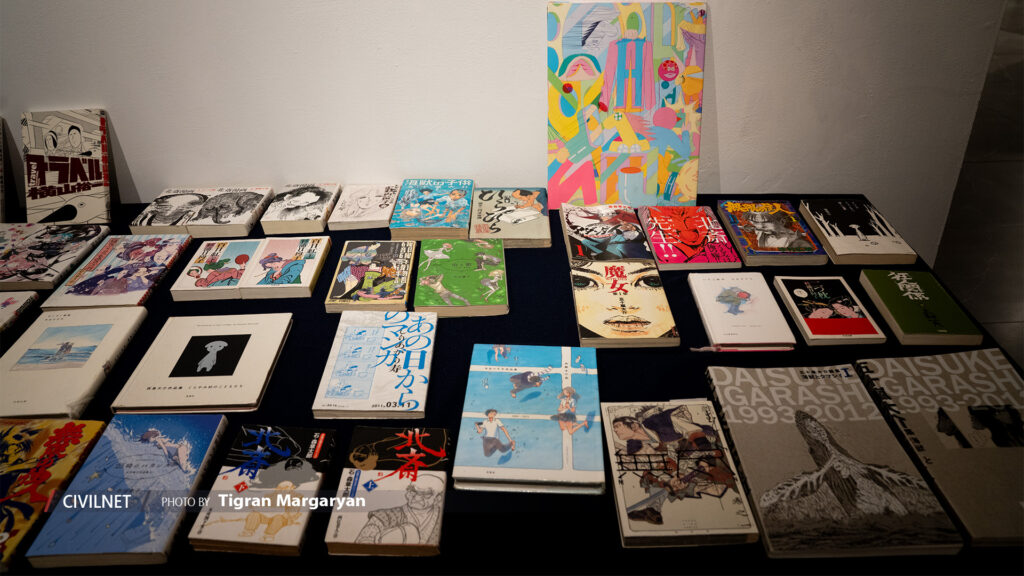
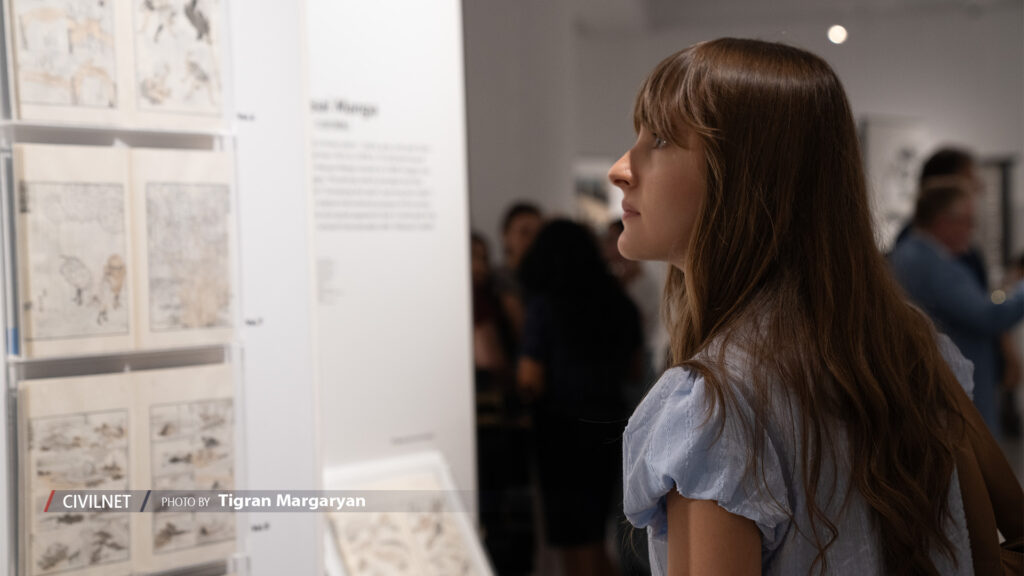
The exhibition is divided into four sections. It begins with Hokusai’s printed sketchbooks, which he himself called manga. These volumes span a wide variety of subjects, from everyday scenes to caricatures. The second section explores how Hokusai has been reinvented as a character in manga since the 1970s — often in playful or unconventional ways, quite different from his original Edo-period image. The third focuses on ukiyo-e, the “pictures of the floating world,” a genre that depicted daily life in the 18th and 19th centuries and laid important foundations for manga’s visual style. Finally, the fourth section presents Hokusai’s sketchbooks as reference manuals for art students, linking them to modern manga handbooks and showing how his legacy shaped the art form’s development.
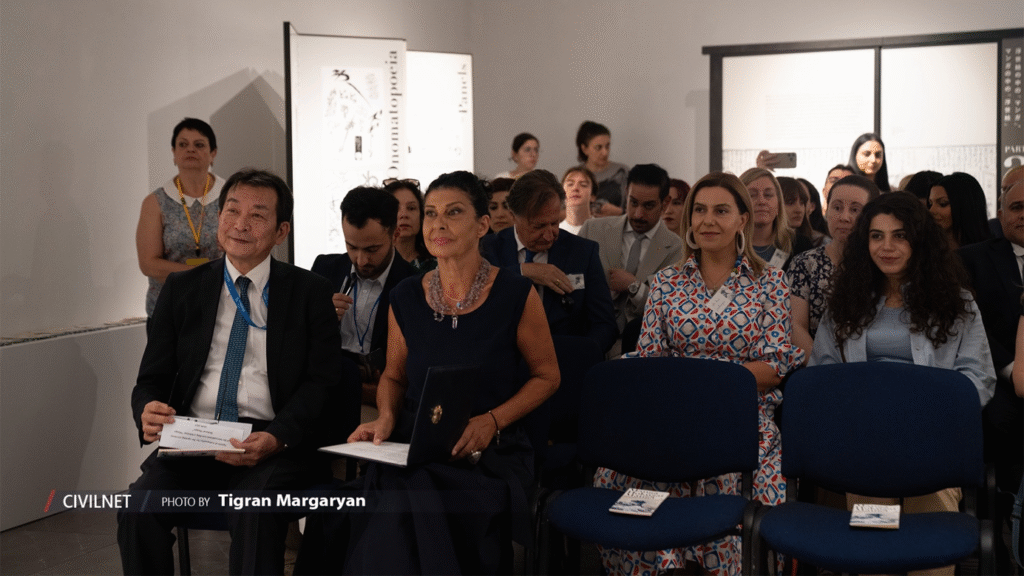
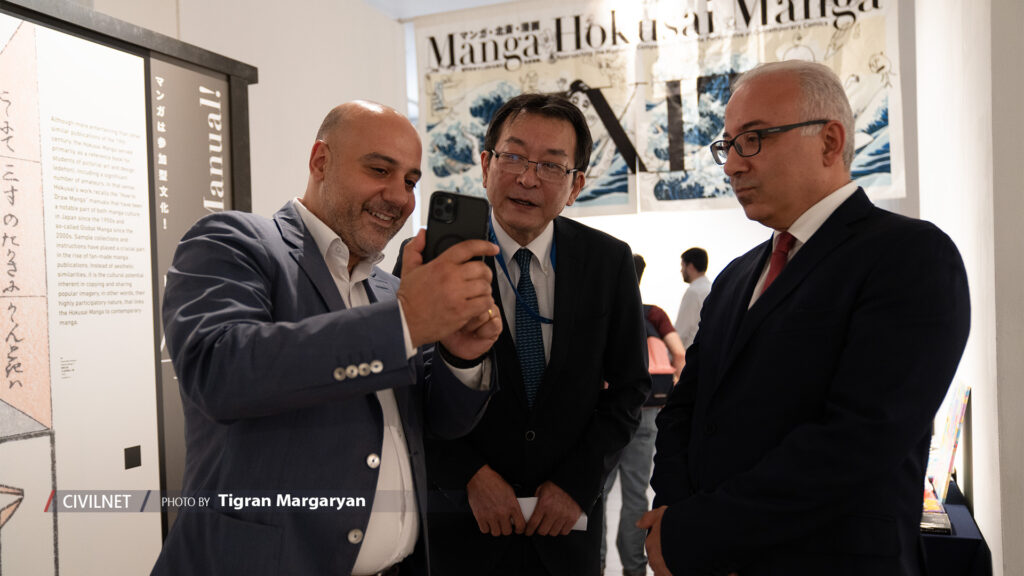
The opening ceremony took place on Wednesday at the Modern Art Museum. On this occasion, His Excellency Aoki Yutaka, Ambassador Extraordinary and Plenipotentiary of Japan, emphasized the cultural connection between Armenia and Japan.
“Our two countries share many similarities. Both have unique cultures and languages, which is why I believe Armenian people can truly appreciate and connect with Japanese culture,” the Ambassador noted.
The Armenian public will be able to admire the Manga Hokusai Manga exhibition in the Modern Art Museum of Yerevan September 11-30, 2025.


 Stories